Category: Podcast

That Thing That Got You to the Top Is Killing You
By Steve Moran
A long time ago, a really prominent senior living leader, one of the most prominent in the entire industry, reached out to invite me to dinner. He told me he was really curious about who I was and how I thought about the industry.
I was flattered and so, so nervous when the evening of the dinner came.
We got through the pleasantries and ordered our meal, and the conversation began. I asked him about a story he had told at another conference. He was off and running. He told me his entire life story. It was fun and interesting.
As he wound down his storytelling, a lightbulb went off in his head. “I forgot to ask about you and your story.” By then it was too late in the evening to have my turn, and we agreed to another meal. That was probably eight years ago, and I am pretty sure it will never happen.
I don’t think it was bait and switch, but he was so used to being the one on stage, the one talking, that it never occurred to him that he had abandoned his own agenda until it was too late to fix.
Continue reading on Practical Passionate Leadership (Substack) for free …

Senior Living’s Biggest Opportunity Is Radical Clarity
By Rebecca Wiessmann
In this episode of Murry Off the Mic, Murry and Margaret Cabell of A Place for Mom talk about family behavior, technology, transparency, and the future of senior living. You can watch the full episode here.
Senior living loves to say it is misunderstood.
And it is.
But at some point, the industry has to ask a harder question:
Are families misunderstanding senior living because they are confused or because senior living is not explaining itself clearly enough?
Margaret Cabell believes transparency is one of the biggest opportunities in the industry. Murry promotes the same idea from another angle, noting that many communities struggle to own who they are.
They want to be a little bit of everything.
A little hospitality
A little health care
A little lifestyle
A little luxury
A little affordability
A little active adult
A little assisted living
A little clinical
A little social
The result is often a mushy message that does not help families make decisions.
And families need help.
Families Want Agency
Murry raises an important point about agency in the digital process.
Senior living still funnels too many decisions through staff-controlled workflows. Families fill out forms, wait for callbacks, talk to salespeople, schedule tours, ask for pricing, request care information, and try to piece together the truth.
That may have worked better when families had fewer options and less information.
It does not work as well now.
Families are used to digital transparency in almost every other part of life. They can compare hotels, restaurants, schools, flights, doctors, contractors, and cars.
Then they come to senior living and often find vague pricing, unclear differentiators, confusing care levels, and marketing language that sounds like everyone else.
No wonder they are overwhelmed.
The industry says families wait too long.
Families might say the industry makes it too hard to start.
AI Can Help — But It Is Not the Hero
Margaret is clear that AI has a role to play, but she does not frame it as a replacement for people.
That is the right answer.
Senior living is still a human business. These decisions require empathy, judgment, listening, and experience. A chatbot cannot hold a daughter’s fear the way a skilled advisor or sales counselor can.
But AI can make people better.
At A Place for Mom, Margaret says AI is already being used to review calls, identify needs, understand objections, detect timeline triggers, spot budget confusion, and coach advisors.
That is practical. That is not shiny-object AI. That is AI being used to understand families better.
This may be where senior living should focus first, not on replacing humans, not on pretending technology can love residents. But on using technology to hear more clearly, respond more quickly, and remove friction from the decision-making process.
The Industry Will Be Embarrassed by Its Delay
Murry asks Margaret what senior living will be embarrassed about 10 years from now.
Her answer is technology adoption.
She compares it to the slow move from paper medication administration records to electronic systems. Looking back, it seems obvious that the industry should have moved faster.
The same may be true now.
Ten years from now, senior living leaders may wonder why they tolerated so much friction.
Why did families have to work so hard to get basic information? Why did communities fail to use data they already had? Why did staff spend time on tasks technology could have handled? Why did sales teams operate without better insight into what families were actually asking, fearing, and misunderstanding?
The embarrassment will not be that senior living failed to chase every trend.
It will be that it failed to use available tools to serve people better.
Differentiation Is Not Optional
Margaret says she would like to see operators better differentiate themselves and better understand how they overlap in a market.
That is a big idea.
In many markets, communities compete as if they are interchangeable. Same warm photos. Same smiling residents. Same dining language. Same care promises. Same “peace of mind” headline.
But they are not the same.
One community may be great for a highly social resident.
Another may be better for someone with complex care needs.
Another may be ideal for couples.
Another may be best for someone who wants independence but not isolation.
Another may have a culture that feels quiet, intimate, and family-like.
Another may feel energetic and full of programming.
These differences matter.
But they only matter if families can see them.
Transparency Builds Trust
Transparency does not mean every community has to be everything to everyone.
It means the opposite.
It means being brave enough to say, “This is who we are.” It means being honest about pricing. Honest about care capabilities. Honest about staffing models. Honest about lifestyle. Honest about what kind of resident thrives there — and honest about what kind of resident may not.
That kind of clarity may feel risky. But the alternative is worse: confused families, mismatched residents, frustrated operators, and a marketplace where everyone sounds the same.
The New Competitive Advantage
The communities that win the next decade may not be the ones with the prettiest brochures or the fanciest buildings.
They may be the ones who make the decision easier.
They will educate earlier. They will explain more clearly. They will use technology to reduce friction. They will give families more agency.
They will know who they are. They will say who they are.
And they will be transparent enough to help families decide whether they are the right fit.
Senior living keeps saying families need to understand the industry better.
That is true.
But the industry also needs to explain itself better.
Because the future may belong to the communities that are not just good at caring. It may belong to the communities that are good at being clear.

Senior Living’s Best Value Proposition May Have Nothing to Do With Care
By Rachel Hill
What if the real promise is not simply support, safety, or independence, but the chance for families to become families again?
Ask most senior living organizations to explain their value proposition, and you will hear familiar language: exceptional care, engaging lifestyles, beautiful environments, peace of mind, and greater independence.
Those things matter. But they may not be the thing families need to hear most.
In a conversation with Juniper Communities founder and CEO Lynne Katzmann, SMASH founder Bailey Beeken offered a much more personal possibility: “Reunite with your family.”
It is a simple idea with enormous weight behind it.
When an older adult begins to need more support, family relationships often change gradually and then completely. A daughter who once called to talk about the grandkids is suddenly coordinating medication refills. A son who used to stop by for dinner now spends the visit reviewing bills, checking the refrigerator, and confirming the next doctor’s appointment.
The love is still there. But it becomes buried beneath logistics.
Family members do not stop being daughters, sons, spouses, or friends. Yet caregiving can force them into roles they never expected and may not be equipped to manage. Their conversations become task lists. Their time together becomes work. Every visit carries another responsibility.
Senior living has traditionally responded by emphasizing what the community can do for the resident. Perhaps the stronger story is also what the community can give back to the family.
It can give a daughter permission to be a daughter again.
It can allow a spouse to spend an afternoon holding a hand instead of managing a medication schedule.
It can help a grandchild hear the old family stories because the adults in the room are no longer distracted by everything that needs to be done before they leave.
That is not a secondary benefit. It may be one of the industry’s most meaningful outcomes.
Independence Is Not Always What Families Think It Is
There is a persistent fear that moving into senior living means closing the door on independence. For many older adults, it can feel like surrendering control. For their families, it may feel like breaking a promise.
But sometimes the opposite is true.
When daily life has become a constant struggle to coordinate meals, transportation, home maintenance, medical appointments, and personal care, independence may already be disappearing. The person may still live in the same house, but the life they once enjoyed inside it has become smaller.
The right senior living environment can reopen that life. It can create room for friendships, interests, movement, purpose, and spontaneous connection. It can also remove enough of the caregiving burden that family members can reconnect emotionally.
That is a radically different story from “Mom needs care.”
The story becomes: “We want Mom back.”
Stop Selling a List of Services
Senior living marketing is often crowded with features. Three meals a day. Transportation. Wellness programming. Medication management. Housekeeping. Activities.
Every one of those services has value, but families do not make life-changing decisions based only on a checklist. They make them because they want life to feel better than it does today.
The best marketing helps people see that better future.
Show the daughter arriving without a folder of medical paperwork tucked under her arm. Show the spouse sharing a meal without worrying about preparing it. Show the family laughing together because someone else has taken responsibility for the tasks that once consumed every visit.
The industry should not minimize care. It should explain what excellent care makes possible.
That is the difference between selling services and communicating transformation.
A Question Worth Asking
Every operator should ask: If our team does its job exceptionally well, what relationship do we give back to this family?
The answer may be more compelling than any amenity, floor plan, or dining program.
Senior living provides care. At its best, however, it does something even more human. It creates the space for people to stop managing one another and start loving one another again.
Maybe that is the promise families have been waiting to hear.

Don’t Let This Happen to You
By Steve Moran
This happens in every single exit interview … there’s a version of the very same sentence: “I just felt like I’d hit a ceiling here.”
And, in fairness, particularly in smaller organizations on occasion, moving on to grow is the only way to advance the team member’s career. But mostly this is not true.
Here is what is worth thinking about: Nobody ever says this at the six-month mark. They only say it on their way out the door, which means you had a year, two years, three years to hear it first, but didn’t bother to ask.
There is an easy … kind of … one-question fix.
Not a program, not a training budget, not a new HR initiative. One question, once a month, actually acted on.
Continue Reading on Practical Passionate Leadership (Substack) …
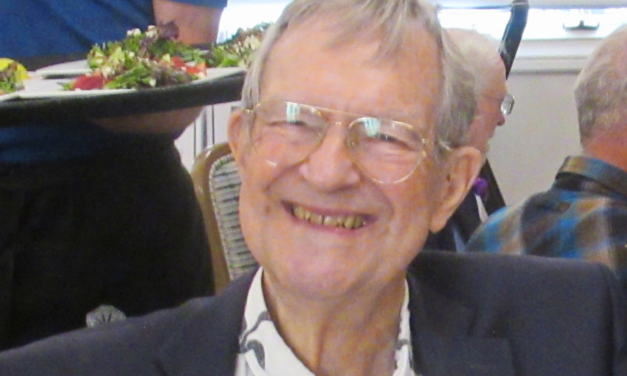
90th Birthday Tribute
By Jack Cumming
Festschrifts and tributes are rare in a business context like senior living, but I was greatly surprised this morning, on my 90th birthday, to receive the following compendium from many of my friends who have sought to lift the industry to its potential. I thank all of you.
Tribute to Jack Cumming on the Occasion of His 90th Birthday
September 9th, 2026
One of the important events in life is the opportunity to express appreciation for people who have influenced your career. Today is just such a day. Jack Cumming and I came to know each other some twenty years ago. That was rather early in my days of academic research into how consumers may need specific safeguards when planning for quality of life, housing, and care as they grow older.
When I first met Jack, I had already written my first, rather naïve article about the phenomenon known as “Continuing Care Retirement Communities” (or CCRCs, now also sometimes known as Life Plan Communities), which was published in 2004. Jack recognized I needed to deepen my knowledge of economics, administrative law, contract law, accounting principles, and actuarial science if I had any hope of persuading anyone that residents are consumers who deserve better protection for these important options for “senior living.” There were a few lessons in German philosophy, too!
I learned that Jack was a resident at a CCRC in southern California, but more importantly, I learned that he was highly educated, very thoughtful, and was fully aware of the need for sound financial planning. Yet he freely admitted that he had bought into a high-end CCRC without first investigating the actuarial soundness of that community’s contract promises to current and future residents. Jack became my most important tutor. He has shared articles, books, and advice. He never laughed at my naïve questions (although certainly he and I spend a lot of time laughing). He explained to me about his moment of blind trust as a prospective resident in an attractive, well-located senior living community. He taught me, “Do not be beguiled by superficial details.” Do not assume that the mere fact that this is an industry with some “regulations” that regulations are “enough.” Talented, dedicated people are needed for oversight and effective safeguards.
Along the way, Jack and I became good friends during my education process about risks and benefits of continuing care. We also became great friends with other movers and shakers in this area of law, financial sciences, and more, including A.V. Powell, Scott Townsley, Karen Miller, and a host of wonderful, engaged residents from coast to coast.
I deeply cherish the time I get to spend with my friend and mentor, Jack Cumming, and I regret that usually we have three time zones separating us. Jack is, quite simply, a fountain of youth, knowledge, and friendship. Thank you, Jack, and my very best wishes to you on your birthday.
Katherine C. Pearson, Professor of Law, Penn State Dickinson Law
A Birthday Tribute to Jack: A Champion for CCRC Residents and Prospects
As a NaCCRA member, I first noticed Jack’s contributions to the NaCCRA Forums in 2021 and reached out to him with a few questions. He was always very kind, patient, and helpful. Because of his innate modesty, it took me quite some time to fully appreciate his impressive background and his extensive knowledge of history and of the complex world of senior living. His depth and breadth of knowledge combined with his fantastic memory never ceases to impress me.
Jack generously gave me access to NaCCRA’s old website, which he personally financed and populated with a vast library of highly instructive articles. I still return to this website from time to time, as most of the information remains just as vital and valid today as it was when first published. NaCCRA wouldn’t be where it is today without Jack’s significant contribution for many years.
As a prospective resident, Jack helped me acquire the essential background knowledge I desperately needed to navigate the world of CCRCs. He not only tirelessly advocates for current residents, but he also empowers prospects to make educated life decisions. For a number of years, Jack even hosted weekly gatherings for a group of us, creating a space where we could benefit from his expertise and learn from one another.
In my book, Jack is an extraordinary, dedicated, and selfless expert, a rare blend of an analytical, math-minded actuary who uses his retirement to fight for the legal and financial safety of fellow seniors. I am immensely indebted to him. I wish him the absolute best for his upcoming 90th birthday, and abundant good health in the years ahead!
Thank you, Jack, for everything you have done for me, and for every CCRC resident and prospect!
Susan Farkas
There is no better advocate for residents of retirement communities than Jack Cumming. He has been tireless in helping residents all over the country understand the industry much better than we did when we first considered moving in. He understands the benefits as well as the detriments and can give advice on pitfalls we should try to avoid.
If providers were smart enough to listen to Jack and heed his advice to pay attention to their residents, we and they would be better off.
Thank you, Jack, for everything you have done and everything I am confident you will continue to do.
Karen [email protected] 374-9999
A Nomination for the NaCCRA Residential Medal of Honor
Jack Cumming, NaCCRA Research Director
For a lifetime of intelligent inquiring into the reality of aging in his time and place,
To recognize the many challenges that both providers and residents face and in crafting purposefully living for the aging,
For courageous and forceful communication of the reality of aging and constancy in forceful, effective voice in the public forum.
For the complete dedication of his considerable intelligence and analytical capabilities in support of residents,
For meriting a place of honor as THE best friend of the CCRC resident.
AS WE WISH YOU A VERY HAPPY BIRTHDAY, THE RESIDENTS OF YESTERDAY, TODAY, AND TOMORROW WISH YOU THE VERY BEST.
Personal Note: September 4, 2026
Thank you, Jack, for all you have provided me with; for your research and your writings. You set me a course of activity that I still pursue with vigor the well-being of my fellow CCRC residents. Your article, Not What We Expected, touched on the essential points that continue to vex an industry vital to an aging nation. To a friend, mentor, and critical thinker, and effective voice – Happy Birthday
Basil H. Pflumm, Brig Gen USAF (Ret’d)
Wade Taylor, Army Residence Community, San Antonio, Texas
Thank you for reaching out as Jack celebrates a significant “life well lived” milestone of 90 years. My short reflections (which do not do justice to Jack and his many contributions from my perspective) follow:
Jack is both a “legend in his own mind” (fondly said) as well as in the mind of many others. He has touched, influenced, and educated many with respect to senior living and CCRC/Life Plan living over his many years with NaCCRA and through other influential senior living associations and organizations. His early pioneer research published questions to ask before moving into a CCRC, and NaCCRAU videos influenced me greatly in my journey to search for a CCRC some 20 years ago. In sum, Jack’s published works/articles and his NaCCRA research were invaluable tools for many untold numbers of seniors.
More recently, our lives have intersected, and my relationship with Jack has become more personal, starting with my service as a NaCCRA Director, our Chat Group discussions, our personal correspondence, and his writings for Senior Living Foresight. His dogged, positive activism to critique/improve the business of senior living is notable. If there ever was a real “mover and shaker” in the senior living/CCRC/Life Plan business, it is Jack Cumming–a prolific contributor, activist, and good, decent person who has cemented his legacy many times over!
Wade Taylor
Ann Mackay, Charlestown Retirement Community, Catonsville, Maryland
I worked with Jack on the NaCCRA board over 10 years ago. I call him the “prophet” because he sees where we need to be, and he has worked very hard to educate residents and executive directors on the need for residents to be engaged and empowered.
Jack kept NaCCRA afloat with his time and money for the membership system and a website 10 years ago. He understands the importance of resident involvement and advocacy. Nara has emerged from those times with a stronger presence and strong leadership. I sometimes wonder if NaCCRA would have survived without his persistence.
He continues his thought-provoking, advanced thinking on a variety of topics, from community models to artificial intelligence and governance, in his regular senior foresight column.
Congratulations on reaching 90 years old. I will continue to read your columns and look forward to your continued contributions.
Ann MacKay, CAE (Ret.)
NaCCRA Past President
Gerard Hyland
Thank you for inviting me to contribute to Jack’s 90th Birthday tribute. Perhaps you can find something useful among some of my recollections of Jack.
My recollections of Jack go back to 2010 when I joined NaCCRA to learn about the CCRC business model. As I recall, Jack had joined NaCCRA sometime earlier than I. That might make Jack one of the longest-serving members of NaCCRA.
Jack was educated as an actuary and had a career as an executive in the life insurance industry in New York City. See attached copy of his bio.
He moved to a CCRC and became a NaCCRA member, well prepared with education and career as an actuary to contribute to NaCCRA. To explain, CCRCs were originally conceived by a faith-based organization and came into being in 1972, following the IRS Revenue Ruling 72-124. It allows homes for the elderly to qualify for tax-exempt status under Section 501(c)(3) of the Internal Revenue Code without needing to provide direct financial assistance or relief of poverty as long as the home satisfies three primary needs, that is, housing, healthcare, and security.
CCRCs intend to care for the elderly from independent living, through assisted living, and into skilled nursing, as required, without an increase in monthly service fees except for inflation, under the type A contract. Such a contract implicitly includes long-term care insurance. In the early years, CCRC bankruptcies were a big problem as faith-based and other organizations could not get the revenues correct to support the promised services to the elderly.
Professor Howard E. Winklevoss at the University of Pennsylvania, Wharton School of Business, came to the rescue by applying actuarial science to the problem. This story can be gleaned from “Life Care Communities: Promises and Problems,” Hearing before the Special Committee on Aging, United States Senate, May 25, 1983 (see attached). Jack, the actuary, retiring to a CCRC and joining NaCCRA was a perfect fit.
In recent years, Jack learned that I relocated from Oregon to Southern California, and I was then living in an assisted living facility that had been a CCRC. It was purchased out of bankruptcy by its new owner. Jack alerted me to the book by Patrick Dillon and Carl M. Cannon entitled “Circle of Greed.” The book is about the spectacular rise and fall of a lawyer who was instrumental in bringing a class-action lawsuit to court on behalf of residents in 14 CCRCs in California, Arizona, and Hawaii against Pacific Homes Corporation. (See Barr v. United Methodist Church, 90 Cal. App.3d 259 (Cal.Ct.App. 1979)).
Jack is the most intelligent, smartest, and more knowledgeable about CCRCs than anyone who I know. We have corresponded frequently over the years. I could ask him a short question and, to my amazement, receive a lengthy 15 pages of well-written, perceptive and intelligent response. See, for example, the attached review Jack wrote on the Government Accountability Office (GAO) report.
Jack had worked at New York Life Insurance Company (NYLIC), a company where my father had worked. When I told Jack, he promptly sent me a book on the history of NYLIC, for which I am most appreciative.
Jack told me the story of the problems that life insurance companies were having during the 1800’s when unscrupulous companies paid executives high salaries while the companies did not have the resources to pay benefits when the insured died. The industry was getting a bad reputation. The creation of the New York State Insurance Department (originally established in 1859 and the precursor to today’s New York State Department of Financial Services) is a landmark story of America’s transition from a chaotic, unregulated wild-west market to structured consumer protection.
The life insurance industry eventually embraced the legislation when they realized that strict, transparent regulation actually helped stable firms by weeding out fraudulent competitors and building public trust. All other states followed New York State in regulating the insurance industry. My sense is that Jack envisions an extension of state insurance laws to CCRCs to save CCRCs from themselves. As with life insurance companies, they resisted at first. Once regulation was implemented and clients had confidence in the industry, the life insurance companies were better off, as well as their clients.
Jack conveyed to me the impression that he was dismayed at the lack of similar strict, transparent regulation of the CCRC industry, given CCRC similarities to the insurance industry. He has tried to persuade the National Association of Insurance Commissioners to regulate CCRCs and to persuade LeadingAge to clean up their industry. Jack continues to work in support of the best interests of CCRC residents as well as the CCRC industry. He deserves thanks and appreciation of NaCCRA members.
Best regards,
Gerard Hyland
WHAT JACK WROTE ABOUT HIMSELF IN 2014
American Historical Association Perspectives Journal, Publication Date November 1, 2014, Career Paths
My career illustrates an opportunity that historians and humanists often overlook by leaving the preparation of business leaders principally to business and engineering schools. Skills familiar to historian analysis, writing, and integrity are what distinguish great business leaders. While case studies can bring a semblance of historical dynamism to business education, there is nothing like a historical perspective as preparation for business in a time of rapid change.
A transition in my preparation for a business career followed from a moment of insight on a warm early spring afternoon in 1956. My first two years of college were in engineering. I’d spent that afternoon in a laboratory measuring the strength of concrete blocks. Now that’s very important for engineers to know. No one wants a building to collapse under its own weight. But at 4:30 p.m., after three hours with those concrete blocks, I returned to my room to find my roommates still in heated discussion over a morning lecture on the Renaissance and Reformation. The lecture was given by “Jinx” Harbison, a consummate scholar and teacher. “My goodness,” I thought, “these guys are getting an education, and I’m crushing concrete blocks.”
The next day I initiated a shift in major from engineering to the humanities, specifically European area studies. I was afraid to jump right into a history major. History was considered formidable, and I lacked the prerequisite survey courses. Area studies allowed a historical focus with diversification into other humanities. I was fortunate to be allowed to start junior-level history courses after R. R. Palmer, the head of the history department, decided I could handle it. He had given me a stack of books, including his own, to read over the summer, followed by an informal oral exam in the fall.
Despite my shift to the humanities, my passion for a business career remained. Business serves to improve the human condition, to create employment, and to raise the overall standard of living. I wanted to be part of that practical world.
Until that moment in 1956 I had thought that an attraction to business and an interest in history were two dissimilar interests. As it turned out, that is not the case. It’s true that business is practical and history can be academic, but the academic can illumine the practical.
Like my passion for business, my interest in history began early. When I was nine years old, a captivating picture appeared on the front page of our local newspaper. Buchenwald had just been liberated, and we awoke one day to a photograph of a starving, under-clothed man standing by a bunk bed. You’ve likely seen that picture. The full horror of what our nation had been fighting suddenly was manifest before our eyes. How, I wondered, could such an atrocity have come to pass? Might it conceivably ever happen here, in the United States? Questions like these, I came to know, are the stuff of history.
My career has been as an actuary. Unlike many other business professions, including law or accounting, actuarial qualification does not require specific academic preparation. Fellows of the Society of Actuaries qualify by passing a lengthy series of examinations administered at worldwide centers. The opportunity to simply read a book and master the contents can spare the aspirant the tedium of vocational classes. The sole requisites are demonstrated mastery and good character. This can help a humanities graduate to establish the practical credentials that businesses expect.
After college I went to work in insurance, but my interest in history persisted. In that era, New York University allowed people to work for a PhD through evening courses. I was hungry to study history. The year was 1962, six years after my change of major, and four years after I’d earned my bachelor’s degree. I had become a junior officer at a major New York insurance company and was sitting for the actuarial examinations.
The self-study format of the actuarial program left me free to enroll at NYU. With the evening option, I was able to support my young family, to prepare for actuarial exams, and to pursue professional-level studies in history, all at the same time. The combination was perfect for me.
Working full-time at a demanding business position, while pursuing graduate studies at night, takes a toll. I reduced my sleep over a period of years to just three to four hours a night, though I made up for it on Sunday. To stay in shape I would run the distance from my office on 51st Street in New York City to the university building at 8th Street (roughly two and a half miles). Even though the combination of work and graduate school was stressful, I felt fortunate to have access to a first-rate university that offered evening classes.
I never revealed to my work associates that I was studying graduate-level history. They might have thought that I wasn’t serious in business, so I didn’t take that chance. I was ambitious for career advancement. I expected pushback from the business community and avoided it by studying covertly, but I was surprised to find that my dissertation adviser thought that, if I continued in business, I couldn’t be a serious history student. He wanted me to teach, but that had never been my intention. Finally, he told me he would never approve my dissertation since he couldn’t “certify” me as a historian if I remained in business. By that time, I had rewritten the first chapters of my dissertation three times. With his words I knew I would not progress. I dropped the pursuit of a PhD. Although I don’t have a degree to show for those years of effort, I gained the benefit of the education.
My business career blossomed, and I was given positions of increasingly higher responsibility. Those years of concentrated historical studies propelled my success. Historians are uniquely qualified to foresee change, to set change into context, to recognize practical innovation, and to manage the transitions from one era to the next. The sense of opportunity in a changing world distinguishes the historically trained businessperson from the graduate of a business program. It allows the historian in business to capitalize on change while others may only see change as an unpleasant challenge.
Beyond the historian’s grasp of change, practical skills from the humanities are critical to corporate leadership. Understanding of human nature tops the list. Other skills are nearly as important; not least among them is the craft of writing clearly, succinctly, and effectively. Good writing is followed closely by the ability to articulate a vision and to enlist others in the corporate cause. History provides a visionary perspective. Historians are trained to read rapidly and with comprehension; corporate leaders must absorb information quickly and cogently. Without these skills no business leader can be fully successful.
Of course, the pragmatics of business also matter. Businesspeople must know finance, accounting, marketing, organizational management, legal requirements, and the like. Historical preparation can facilitate even the mastery of these specifics. The rapid absorption of complex and varied information provides an advantage. Marketing requires deep understanding of people and what motivates them. Organizational management is not that different from the varieties of societal organization, which historians understand well. In short, a businessperson who has a strong grounding in the humanities and is rooted in history is well positioned to absorb the pragmatic vocational skills needed.
Graduate history programs can thrive if they avoid the narrow premise that graduate education is job training for teaching. Expanding the vision can bring wider awareness of the value of graduate-level historical training for business and other careers. Recognizing these broader career possibilities can create new opportunities for those with advanced history degrees.
Jack Cumming is a consulting actuary and research director for the National Continuing Care Residents Association. His aborted dissertation was on Walther Rathenau as a thinker, writer, business executive, and government official.
This work is licensed under a Creative Commons Attribution-NonCommercial-NoDerivatives 4.0 International License. Attribution must provide author name, article title, Perspectives on History, date of publication, and a link to this page. This license applies only to the article, not to text or images used here with permission.
WHAT THE INTERNET KNOWS ABOUT JACK
Jack Cumming is a prominent retired life insurance actuary and an active advocate, writer, and researcher in the senior living and housing industry. [1, 2, 3]
The biography below focuses on Jack Cumming, the life insurance actuary:
Career Summary
Insurance Background: Spent his core corporate career working within the life insurance sector as an actuary by training.
Senior Living Advocacy: After moving into a Continuing Care Retirement Community (CCRC) in 2006, he pivoted his focus toward senior housing and aging services.
Research Director: He serves as the Research Director for the National Continuing Care Residents Association (NaCCRA).
Credentials: In addition to his actuarial background, he qualified by examination as a Certified Aging Services Professional (CASP). [1, 3, 5]
Key Focus Areas & Publications
Industry Commentary: He is a frequent contributor to platforms like the Senior Living Innovation Forum and Senior Living Foresight, where he writes about leadership, AI law, financial business models, and operational safety in senior care.
Core Philosophy: He strongly advocates that the senior living market must evolve its business models to effectively sustain America’s rapidly aging population. [1, 3]
———————-
The digital footprint for “Jack” highlights several key facets of his life and career:
Actuarial and Corporate Background
Professional Roots: Before dedicating his time to senior living advocacy, Jack had a long and successful career in the life insurance industry. He is a Princeton University graduate and an actuary by training. [1, 2]
Interdisciplinary Expertise: In interviews, he often speaks about his diverse academic journey bridging engineering, history, and actuarial science, emphasizing the deep value of the humanities in business. [1]
A Leading Voice in Senior Living and CCRCs
Certified Expert: After transitioning to living in a Continuing Care Retirement Community (CCRC) in 2006, he fully immersed himself in the senior housing landscape. He went as far as qualifying by examination as a Certified Aging Services Professional. [1]
Prolific Writer: He is widely recognized on the web as a prominent contributing author for industry platforms like Senior Living Foresight. He frequently publishes deeply analytical thought-leadership pieces covering topics ranging from senior housing finance, corporate leadership, and industry ethics to the integration of technology and AI in eldercare. [1]
The “Memory” and “History” Connection: True to your draft’s mention of his great memory, internet profiles track him as a resident who deeply understands the legislative, financial, and moral “trust” that non-profit CCRCs owe to their residents. [1]
Advocacy and Community Building
NaCCRA Leadership: The internet tracks his regular involvement with the National Continuing Care Residents Association (NaCCRA), where he has documented conferences, pushed for better hospitality standards, and fought against bad actors in the senior living space.
Mentorship: He is publicly recognized as a passionate mentor who heavily champions consumer protection for prospective residents, matching your experience of him hosting gatherings to educate incoming seniors.
From the Board of the National Continuing Care Residents Association (NaCCRA)
The Board of the National Continuing Care Residents Association (NaCCRA) extends its heartfelt appreciation to Jack Cumming for his extraordinary dedication, generosity, and wisdom.
Jack has been a steadfast supporter of NaCCRA for many years. Whenever he has seen a need or an opportunity to strengthen our organization, he has stepped forward — generously sharing his time, knowledge, experience, and resources. Most recently, Jack demonstrated that commitment through a substantial financial gift to NaCCRA, offered simply because he recognized a need and wanted to help.
As Jack celebrates his 90th birthday, his passion and determination remain as strong as ever. He continues to speak out on issues affecting seniors and to generously share the wisdom gained through his many years of experience. Jack shows up — again and again — wherever there is an opportunity to advocate for seniors, exchange ideas, provide guidance, or help make a difference.
There are very few individuals who give so freely of themselves and remain so deeply committed to serving others. Jack’s 90 years have certainly not diminished his enthusiasm, his curiosity, or his determination to continue contributing.
NaCCRA has been truly fortunate to have Jack as a guiding light, trusted advisor, generous supporter, and friend. His dedication has strengthened our organization and inspired those of us who have had the privilege of working alongside him.
Jack, on behalf of the entire NaCCRA Board and our members across the country, we thank you for all you have done and continue to do. We congratulate you on this wonderful milestone of 90 years and look forward to many more years of your wisdom, friendship, leadership, and unmistakable Jack Cumming spirit.
Happy 90th Birthday, Jack — and with our deepest gratitude, thank you!
Luana Pinasco, President, National Continuing Care Residents Association (NaCCRA)
From Germany
Happy 90th birthday, Jack Cumming, the opener of worlds.
I first met Jack when I was 16 at Kolleg St. Blasien. During one of his visits to South Germany, he stepped in to teach a few English and history classes, sharing his vast knowledge simply for the joy of it. A year later, Jack and Valerie welcomed me into their home in Marina del Rey. For a teenager from the Black Forest, discovering Los Angeles opened an entirely new world.
That has always been Jack’s gift: helping people see possibilities beyond the limits of where they started. Over the years, he has positively influenced so many young people, encouraging them to pursue paths as varied as veterinary medicine, the film industry, and, in my case, the world of finance.
Decades later, my work in Mexico brought us closer again, and Jack remains a mentor to me. We now share memories of sunsets in Carlsbad, a family cruise with Jack and Valerie along the California coast, as well as a Kindle library that continually opens my eyes to questions outside my social bubbles.
Perhaps sharing Kindle libraries across generations should be a business model in itself: a way to keep our minds open.
This mentorship began before mentors became part of corporate development programs. It began unexpectedly when I was 16 and has quietly lasted a lifetime (although this post makes it a little less quiet).
Thank you, Jack, for opening worlds and enriching so many lives, including mine.
May your cup continue to run over.
Monika Rehner
Vice President Finance | International Finance & Business Transformation Executive | Strategy, M&A, Capital Allocation & Performance

When Your Life Is Not So Blessed
By Steve Moran
Years ago, the pastor of a church I attended would start his sermon saying exactly the same thing each week. He would look out over the congregation and say, “Chicago, we are blessed.” (not really Chicago)
I found out later it drove one particular member crazy. His life was a mess, not a bad week, a real mess, and here was this man telling him, in front of everyone, how blessed he was.
I think about that every time I catch myself about to say something similar.
Bad stuff happens to all of us, though scrolling through some people’s social media accounts, you could begin to think they have perfect lives 100% of the time.
Continue reading on Practical Passionate Leadership (Substack) for free …
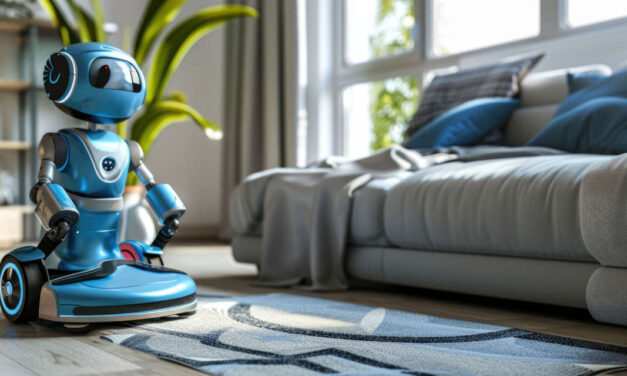
Why Senior Living’s First Robot Revolution Was A Flop
By Rebecca Wiessmann
In this episode of Directly Speaking, Steve talks with Justin Smith, Senior Manager of Innovation at Direct Supply, about how robotics and automation are beginning to reshape senior living staffing, care, and operations. Watch the full conversation here.
For years, robots in senior living have been more promise than reality.
Steve remembers seeing his first robots in the industry more than a decade ago and thinking they were going to be a game-changer. Then, mostly, they weren’t. Every once in a while, a community would roll out a dining room robot or some shiny new gadget, but the technology never seemed to gain much traction.
Justin says the reason is pretty simple: early robots were often novelties. They were interesting. They were fun. They might have been good for marketing. But they did not always solve an urgent operational problem.
That is changing.
The reason is not that robots suddenly became cute enough or futuristic enough. It is that labor is becoming more expensive, staffing is becoming harder, and operators are being forced to rethink how work gets done.
That is the shift.
Robots are no longer just a “wouldn’t that be cool?” technology. In the right use cases, they are becoming a practical financial and operational decision.
The Work Robots Should Be Doing
Justin frames the opportunity around what he calls the four D’s:
Dull. Dirty. Dangerous. Duplicative.
That is where automation makes the most sense.
Not replacing the people who build relationships with residents. Not turning senior living into some cold, mechanical version of itself. Not taking away the human moments that make a community feel like home.
Instead, the opportunity is to look at all the work that surrounds care: cleaning floors, moving supplies, transporting meals, handling routine deliveries, and maybe even helping residents get from one part of a large community to another.
This is the kind of work that has to happen, but it does not always require a human being to do every step.
Steve brings up seeing floor-cleaning robots all over the Minneapolis airport late at night. Justin says that kind of application makes sense in senior living, too. Pushing a vacuum up and down hallways for hours is hard, repetitive work. It is also not necessarily the best use of a staff member’s time when that same person could be interacting with residents in more meaningful ways.
That is the real promise of robotics.
Not less humanity.
More room for humanity.
From The Airport To The Senior Living Community
One of the more intriguing examples Justin shares comes from Japan, where he saw autonomous wheelchairs being used in airports.
Think of it as an indoor Uber.
A person gets into an autonomous wheelchair, selects a destination, and the chair takes them there. No staff person pushing them. No waiting for someone to be available. More independence. More autonomy.
Steve immediately connects that to senior living.
In many communities, a meaningful percentage of residents need help getting to and from the dining room. In larger campuses, the distance can be enough to keep some residents from going at all. Maybe they are tired. Maybe they do not feel well. Maybe the trip just feels like too much.
Now imagine a resident being able to request a ride from their apartment to the dining room.
That could change more than transportation. It could change participation. It could change social connection. It could change whether someone eats alone in their room or joins friends for dinner.
That is not a small thing.
The Best Technology Is Not The Point
Justin makes an important point: residents do not choose a community because it has robots.
They choose it because they want community. They want service. They want support. They want to age in a particular way.
So the question is not, “How do we get more robots into buildings?”
The question is, “How do we use technology to protect and expand what matters most?”
If a robot vacuums the hallway, the resident experience does not necessarily change. But if that frees a housekeeper to spend five more minutes in a resident’s apartment, talking with them instead of rushing to the next task, the experience absolutely changes.
That is where this conversation becomes bigger than robotics.
It is about whether senior living leaders can stop treating staffing shortages as a problem to endure and start treating them as a reason to redesign work.
The future of senior living will still be deeply human.
But some of the best human moments may happen because a robot is quietly doing the dull, dirty, dangerous, or duplicative work in the background.

Can Senior Living Be Medically Responsive?
By Jack Cumming
James Michener was a prolific author of my mother’s generation. In fact, she shared a small English class with him at Swarthmore. In his time, Michener was well known and highly regarded. Less well-known, though, is his heavily researched 1994 novel Recessional, about life in a CCRC.
Medicine in a CCRC
The significance for this article, though, isn’t that the novel is about a CCRC. The hero of the novel, the Executive Director for The Palms CCRC, is a medical doctor, buffeted by the winds of legal profiteering that can impact even competent physicians. Andy Zorn, MD, wants a safe harbor where he can use his knowledge for compassionate care. I don’t know of many CCRCs managed by physicians, but Michener makes it sound only logical. That’s significant.
Michener’s ED, Andy Zorn, though, is not hired to be a physician. John Taggart, the novel’s capitalist multi-facility owner of retirement communities, is strictly a businessperson, and he has sought out Andy Zorn more for his business acumen than for his medical knowledge. For Taggart, it’s central to his business success to be respected by physicians, but not to be beholden to them. Who better for that than an MD, who knows how to turn a profit?
1994 Approaches Continue in 2026
What stands out from reading this novel is how little senior living and medical delivery have changed since Michener’s 1994 book. The medical needs of older adults were central to aging then as now. Then as now, though, few CCRCs included medical services.
Yet there’s considerable evidence from PACE that interweaving medical practice with older adults as they go about their everyday lives improves outcomes and saves money. America spends more on health care than on any other industry. The financial opportunity is vast.
Senior living in general has not figured out how to profit from the opportunity. Some forward-thinking senior living organizations have worked out custom Medicare Advantage programs. Christian Living Communities and Juniper Communities come quickly to mind. St. Paul’s Senior Services in San Diego has a robust PACE (Program of All-Inclusive Care for the Elderly) program.
Not Our Job
Many senior living leaders say that primary medical care isn’t part of their responsibility. If anyone suggests that the continuum product offering might be better if it were fully integrated and responsive, they are apt to be told that isn’t part of what CCRCs do. And they’re right. They don’t.
Still, the problem of multiple medical bills confronting a frail or dying person who relied on a CCRC, as depicted by Michener on page 132, remains as big an injustice today as it was when Michener was leading the research for the book. Ask LeadingAge or other trade associations about the challenge, and it’s not even on their radar.
It Starts with Discussion
Here are some thoughts to get a conversation started, though it’s not my intent to suggest the solution. Solutions are for others, more entrepreneurial than I, to think through, to experiment with, and to find the solution that takes us into the second half of the 21st century.
One hope is that no ideas are rejected out of hand or just ignored by those responsible for senior care leadership. All ideas should be granted thoughtful consideration in comity with the suggester. Embracing ideas is a sign of excellence. Defensive naysaying is a hallmark of mediocrity. Who would have thought that Jeff Bezos could upend Sears Roebuck and seize that behemoth’s potential? Sears didn’t. Macy’s didn’t.
There are many approaches to transforming medical care in which senior living can play a beneficial part. Erickson Senior Living has communities of sufficient scale to support onsite primary care clinics, and residents love the convenience. Think of how many older adult residents fail to get the assistance they need because of the hassles of having to get themselves to a doctor’s office for the medical profession’s convenience, not for that of the patient.
Scattered Pilot Programs
Some providers are experimenting with custom Medicare Advantage plans. Others might lease onsite space to a local independent physicians association. Some “medical plans” try to get ahead of other medical providers by offering to come to a CCRC periodically or on demand when requested by residents. They only accept patients with original Medicare or contracted plans since that’s their business model. These “plans” have had mixed success, with some lacking reliability in keeping appointments or in handling pharmaceutical needs.
Another intriguing approach is for communities to hire EMTs as security guards. I know of one operator who does this with success. Better might be having paramedics to respond to those recurring emergencies. That is also a response to the expectation of many new residents: that there will be competent on-site staff to respond to them if an emergency presents itself.
What’s To Be Done?
Industry trade associations could take the initiative to seek an approach that benefits the industry, leads the nation toward better healthcare, and proves more responsive to the needs of older adults, particularly those who can no longer simply drive to a doctor’s office. Not long ago, Bob Kramer gave industry visibility to an article by the New York Times’s Paula Span calling for “geriatric ERs.” Why don’t more communities at least have a geriatrician on staff serving residents and the larger community beyond the walls? Many ER transports could readily be avoided with telemedicine or with a practitioner onsite licensed to evaluate middle-of-the-night falls, etc.
There’s a huge opportunity here for proactive discussions within the inner circles of trade associations or among strategic thinkers who guide enterprises serving older people. Responding to the needs of older adults should not be stagnant or socio-economically subdivided. Let’s look at the larger need and opportunity that can build on what the industry does well.
S8E14-Why Growing Older, Living Bolder: Challenging Ageism with Valerie Van de Zilver
What if growing older meant becoming bolder, more creative and more connected to who you truly are?
In this episode of Foresight Radio, Rachel Hill sits down with Valerie Van de Zilver, host of Always Ageless with Valerie V, to challenge the outdated assumptions society makes about aging.
Valerie shares how launching a radio show opened the door to powerful conversations with older adults who are writing plays, building fitness communities, hosting podcasts and creating meaningful new chapters later in life.
The conversation also gets personal. Valerie discusses caring for her nearly 107-year-old mother, the difficult transition into assisted living and the emotional and financial uncertainty facing adult children of aging parents.
Together, Rachel and Valerie explore:
• Why age should never erase someone’s identity
• How ageism shapes the way older adults are treated
• Why senior living cannot take a one-size-fits-all approach
• How communities can create more meaningful resident experiences
• The realities of caregiving and choosing assisted living
• Why purpose, creativity and possibility do not have an expiration date
This honest and uplifting conversation is a reminder to stop asking how old someone is and start asking who they are, what they have experienced and what they still want to become.

The MorseLife Mess, Part 3: The Reckoning
By Steve Moran
By the time I sat down to talk with Jack Scarola, Keith Myers’s attorney, the shape of this case had already shifted once. It’s worth walking through how, because it tells you something the press releases didn’t.
Myers’s original April 2026 complaint named MorseLife itself as a defendant, along with thirteen individual board and community members, and included a breach-of-contract claim over his severance. MorseLife responded by demanding arbitration, arguing that even though Myers never personally signed the Amplifii management agreement, his compensation claims still fell under that contract’s arbitration clause. Rather than fight that in court, Myers’s team filed an amended complaint that dropped MorseLife and the contract claim entirely, leaving thirteen pure defamation counts against thirteen individuals. Then, Amplifii, the company, not Myers personally, separately filed its own new lawsuit against MorseLife over the management agreement, attaching the actual contract as an exhibit.
So there are now three threads, not one: a defamation case, a contract case, and whatever gets resolved in arbitration. That’s worth knowing before you read anything either side says publicly, because each thread is being fought in a different forum with a different burden of proof.
A Conversation With Myers’s Attorney
Scarola was direct about one thing right away: he isn’t in the business of defending the board’s judgment. “I’m not here to tell you that this contract is a model of appropriate exercise of fiduciary responsibility,” he told me. “Our case is about whether Keith Myers stole money.”
That’s a fair distinction, and it’s the one a jury will actually have to decide. A board can make a genuinely bad deal with its eyes open without the person on the other end of that deal having committed a crime.
He also pushed back on the idea that Amplifii was a bare pass-through, pointing to the newly public contract and its lengthy schedule of duties, financial reporting, HR, recruitment, an entire fundraising operation. Fair enough, the contract is real, and it is detailed.
But when I asked him directly how many employees Amplifii actually had, he told me he didn’t know. That’s the same question I couldn’t get answered anywhere else in this reporting, and it’s the one that actually matters. A list of services tells you what was promised. It doesn’t tell you who did the work.
A Point Worth Considering
Scarola also made a point I hadn’t fully considered: that whether the fee was 5 percent paid to Amplifii or the same dollar amount paid out as salaries to three or four named executives, the money leaving the organization is the same. That’s true as far as it goes.
But it dodges the actual concern, which isn’t the size of the number in isolation; it’s whether the organization got a genuine third-party operating company for that money, or whether it got two of its own executives collecting a management fee for doing the jobs they were already being paid to do.
I asked him where the idea to structure it this way, rather than as ordinary disclosed compensation, actually came from. He said he didn’t know whether it originated with Myers or with the board. Neither, it turns out, does anyone else I’ve asked.
A Detail That Complicates the Board’s Story
Amplifii’s new lawsuit against MorseLife includes something that deserves more attention than it’s gotten. MorseLife terminated the management agreement in June 2025 without citing any of the specific grounds the contract required for termination, according to Amplifii’s complaint.
And separately, MorseLife required Myers to return money Amplifii had already been paid for 2023 and 2024.
Think about the timing. In December 2024, the compensation committee reviewed an independent reasonableness assessment and formally resolved that the fee was fair market value.
Six months later, the organization was demanding money back. Either the board’s confidence in that finding didn’t survive first contact with public scrutiny, or it was never as solid as the minutes made it sound. Both are worse than the story MorseLife has told publicly: that Myers deceived a board that otherwise did everything right.
Nobody Looks Good Here
At this point I don’t think the public record gives anyone in this story much to be proud of. The board did more homework on the Amplifii deal than it first appeared to, but that homework rested on an assumption about what Amplifii actually did that no one, including Myers’s own attorney, could independently verify.
The fee ran for years on a formula that skimmed a piece of every charitable gift before anyone fixed that specific problem. And when the arrangement became a public liability, the same board that had called it fair and reasonable six months earlier moved to terminate it and claw money back, without, as far as the record shows, ever explaining what changed.
Myers and his CFO benefited enormously from a structure they were far better positioned to understand than the people approving it, and the actual staffing behind that structure has never been demonstrated publicly, including now, with the contract itself finally in view.
And five years earlier, the organization’s own leadership treated scarce, life-saving vaccine doses partly as a fundraising channel.
Myers’s own lawsuit, notably, no longer asks a court to weigh in on the fairness of any of it. His claims are now purely about specific statements made about him. Amplifii’s separate suit is about a broken contract and an unpaid termination fee.
The question with the most to teach the rest of the industry, whether this was ever a real management company or a compensation structure wearing one, isn’t actually the subject of any pending claim. It’ll probably surface anyway, since truth is a defense to defamation, but it’s worth knowing that’s not what anyone is formally litigating right now.
The Industry Lesson
There’s a tendency in senior living, as in any business, to make ethical questions more complicated than they need to be. We hire lawyers. We commission benchmarking studies. We form committees. All of that has its place, and MorseLife’s board actually did more of it here than the early reporting gave them credit for.
None of it replaces the one question that would have changed both of these stories: if every resident, family member, employee, and donor understood exactly what we were doing, and exactly what we were and weren’t independently verifying before we approved it, would we still be comfortable defending it?
Nobody vaccinating 290 people from the same country club wants that explained to a family whose loved one in another building was still waiting. Nobody structuring a fee that included charitable gifts in its calculation for years, however many lawyers signed off on the concept, wants that explained to the donor who wrote the check.
That question is available to every leader and every board in every organization before a resolution is ever signed. At MorseLife, on two separate occasions five years apart, it doesn’t look like anyone asked it in a way that actually tested the answer. That, more than who wins any of these three lawsuits, is the part senior living leaders should remember.
A Word About Ownership
I want to add one more gentle note here. The not-for-profit portion of senior living frequently and very publicly portrays itself as being on the side of angels, suggesting that for-profit operators are somehow on the other side.
The truth is that there are some amazing for-profit operators who are serving residents and family members in remarkable ways. There are also some not-for-profit organizations that are doing some pretty un-angel-like things.
We need to be celebrating great operators regardless of ownership status and condemning bad actors regardless of their ownership status.
Doing that will go a long way toward making people trust and fall in love with senior living.

Are You a Force Multiplier or Something Else?
By Steve Moran
It always starts this way …
You get your first job, then another, and another. One day, someone notices that you are good at what you do as an individual contributor and decides that if you are that good, you should be a leader.
It’s perfectly logical but completely illogical. It is possible to be a great individual contributor and a terrible leader.
It is also possible to be a great leader and a not very good individual contributor … I think, since this almost never happens.
A Brand New Job
As a leader, your job isn’t to be either the smartest person in the room or the one doing the most work. The truth is that if you do those things …
Continue reading on Practical Passionate Leadership (Substack) for free …

The MorseLife Mess, Part 2: The Vaccines, and Who Was Supposed to Say No
By Steve Moran
Before the management fee scandal, there was another MorseLife story that is, if anything, harder to explain, harder to justify.
On December 31, 2020, in the earliest and scarcest days of the COVID vaccine rollout, MorseLife held a vaccination clinic through a federal program that was created specifically to protect nursing home residents and staff. Older people were, at that moment in time, among the people most likely to die from the virus.
Vaccine doses were treated like gold
According to the Department of Justice, 976 people were vaccinated at that clinic. More than half, 567 people, were not eligible under the program. This wasn’t a handful of leftover doses at the end of the day.
The DOJ alleged MorseLife’s fundraising arm was directed to invite donors and prospective donors. They further alleged the board’s vice chairman and his brother, widely understood to be David and William Mack, were allowed to bring in roughly 290 people with no prior connection to MorseLife, many from the same country club, some of whom reportedly flew to Florida specifically for the shot.
Documents
The documents … The DOJ released contemporaneous communications it attributed to MorseLife leadership.
In one, Myers is said to have encouraged the Foundation to focus on getting the wealthiest people vaccinated and to think about what gifts might follow.
In another, he allegedly told an ineligible person MorseLife would simply make them an “employee” so they could qualify for a shot.
A MorseLife Foundation strategy document reportedly described vaccine recipients as prospective donors who felt a sense of allegiance to the people who arranged their vaccination, and discussed using that goodwill to solicit major gifts.
The Aftermath …
MorseLife, the institution, paid $1.75 million in 2022 to settle the federal False Claims Act allegations, without admitting liability. In September 2025, Myers personally signed a separate $250,000 settlement with the HHS Office of Inspector General resolving allegations that he personally caused MorseLife to request federally funded vaccines for people who weren’t eligible.
According to Myers’s own account of the matter, MorseLife had agreed to indemnify him for that settlement, and it was ultimately paid through the organization’s D&O insurance carrier, not out of his own pocket. Neither David nor William Mack appears to have personally paid anything toward either settlement.
I want to be very careful here. Settling a civil claim isn’t a conviction, and MorseLife has denied wrongdoing.
But it’s hard to read the texts the DOJ released and land anywhere other than this: access to a genuinely scarce, life-saving resource was, at least in part, treated as a donor-cultivation opportunity.
If Myers’s lawsuit wants to frame him as scapegoated for something engineered entirely by the Macks, those contemporaneous texts, in his own words, are the hardest evidence for that framing to get around.
The Same Question, Twice
What strikes me is that both scandals, five years apart, come back to something close to the same failure. Someone in a position of trust and expertise did something that benefited the organization or benefited them personally, and nobody with the standing to stop it did so, or stopped it only partway.
With the vaccines, it seems to have been treated less as an ethical question and more as a logistics and fundraising opportunity. Who was in the room asking whether it was right to vaccinate 290 country club members while frontline caregivers elsewhere were still waiting?
Did the board know the scale of what was happening in real time, or only after DOJ came asking questions?
With Amplifii, it’s more complicated, as I laid out in Part 1. The board did real diligence. What it didn’t do, as far as anyone can tell, is verify the one fact everything else depended on.
Part 3 gets into what’s happened since both scandals became public, including a conversation I had directly with Keith Myers’s attorney, and a new detail that complicates the board’s account of how satisfied it really was.

The MorseLife Mess, Part 1: The Management Agreement
By Steve Moran
Setting The Stage
For nearly two decades, Keith Myers ran MorseLife Health System in West Palm Beach, growing it from a modest nursing home operation worth about $31 million into a $300 million senior care system, one of the largest Jewish-affiliated organizations of its kind in the country.
That track record is real and an important part of this story. This matters with respect to understanding both how much trust the board placed in him and why so many people assumed at first there had to be a defensible explanation for what came next.
In January 2025, an anonymous letter raised questions about executive pay at MorseLife. What it uncovered, once local reporters started digging, was a management agreement between MorseLife and a private company called Amplifii Management, owned by Myers and MorseLife’s CFO, Randy Wolan. Over four years, MorseLife paid Amplifii roughly $36 million. In 2023 alone, the figure topped $10 million.
The fee was calculated at 5 percent of what the agreement calls “adjusted gross revenue.” On its face, that is not an unusual number for a senior living third-party management contract, and MorseLife’s own outside counsel agreed with that read. Board and compensation committee minutes show attorneys from Holland & Knight told the committee that 5 percent of gross revenue is a typical fee, specifically when the management company is running all of an organization’s operations.
That is the load-bearing assumption behind this entire arrangement. Every justification anyone has offered, then or since, rests on Amplifii actually being that kind of company.
Now We Have the Contract
For months, the actual Amplifii Management Agreement wasn’t part of the public record, only board minutes describing it. That’s changed. Amplifii has since filed its own breach-of-contract suit against MorseLife, and the agreement itself, along with a lengthy attached schedule of duties, is now an exhibit in that case.
It is genuinely detailed. It lists general accounting, accounts payable, HR and recruitment, and an extensive fundraising function: cultivating major donors, staffing capital campaigns, identifying new donor bases, running a legacy giving program, attending community events on the organization’s behalf. It goes on for pages.
So the contract is real, and it’s not thin. What it still doesn’t tell you, and what nobody has told me despite my asking directly, is how many people actually did this work. A contract that lists duties tells you what someone promised. It doesn’t tell you who performed it, or whether it was substantially the same two executives doing the jobs they already held, just relabeled.
In a typical management company arrangement, the fee also covers a company’s overhead: an accounting and HR infrastructure separate from the client’s own staff, recruiting and training systems, compliance functions, purchasing leverage, and a bench of people beyond the names on the contract. Amplifii has a registered office in Boca Raton, which is more formal than a shell. But nobody I’ve spoken with, including Myers’s own attorney, can tell me how many employees Amplifii had. That’s not a small gap. It may be the whole question.
This Matters a Lot
That distinction should have mattered enormously to anyone reviewing the deal, because comparing it to a typical third-party management fee is comparing two very different things and slapping the same label on both.
Like comparing a real Rolex timepiece with one you can get for $35 at a flea market. The paperwork can look similar. What’s actually inside it is the whole ballgame.
There is one more detail that should bother every donor who ever wrote MorseLife a check. For years, the fee calculation included charitable contributions, not just program revenue. Every time someone gave MorseLife a gift meant to support care for older adults, a slice of that gift became income for Amplifii.
Also based on MorseLife’s own tax filings, Myers doesn’t appear to have taken any direct salary from the organization at all. This wasn’t a percentage on top of a salary. For Myers especially, Amplifii wasn’t a bonus layered onto his pay; it was his pay, run through a company he owned.
Here Is Where I Think the Board Deserves More Fire, and Where the Story Gets a lot More Complicated
Board members approved the Amplifii arrangement in 2018. What has since come out in court filings is that the board did more diligence on it than the early reporting suggested.
In March 2024, the compensation committee brought in outside tax attorneys from Holland & Knight and pushed them on real questions: is a 5 percent fee typical, are management company arrangements common in healthcare, does the fee calculation expose board members personally?
In December 2024, they commissioned an independent fair-market compensation and reasonableness assessment from PYA, a healthcare compensation consulting firm, which concluded the fee was fair and commercially reasonable.
And in April 2024, months before any of this became public, the board negotiated Amplifii down from its own proposed fee structure and removed donations entirely from the calculation.
This was not a board that never asked a question.
But here’s what still bothers me. Every one of those reviews, the lawyers, the compensation consultant, the board’s own satisfaction, rested on one unverified premise: that Amplifii was actually running MorseLife’s total operations, the way a real third-party operator would.
The board’s own minutes describe being told exactly that. Nothing in what’s public shows anyone independently testing whether it was true, staff count, org chart, anything beyond a services list and Myers and Wolan’s own account of what they were doing.
That’s not Governance 101 anymore; that’s a subtler failure. It’s the difference between skipping your homework and doing your homework based on an answer key someone handed you. If Amplifii’s actual staffing was thin, the lawyers’ entire opinion and the consultant’s entire reasonableness finding were built on a fact pattern that wasn’t real, and it’s fair to ask why nobody on that committee, across two years and multiple meetings, asked to see it demonstrated rather than described.
I’ll also say, because it needs saying: it’s not hard to imagine a version of this where someone on that board understood exactly how thin the “total operations” claim was and signed off anyway, for reasons that had nothing to do with governance. I have no evidence of that, and I’m not accusing anyone of it. But it’s the kind of question a room full of smart, connected people should have been asking itself before the fourth reaffirmation, not after a newspaper found the number.
Part 2 gets into the earlier controversy that first put MorseLife’s name in the news, the 2020 vaccine rollout.
Part 3 covers what’s happened since, including a conversation I had directly with Keith Myers’s attorney, and a detail buried in Amplifii’s own new lawsuit that complicates the board’s “we were satisfied” story even further.

The Death of Feedback Sandwiches
By Steve Moran
We all learned the “Trust Sandwich” that technique leaders use when they need to correct someone but don’t want to be the bad guy.
These things you’re doing are great
There’s this one thing that isn’t
But overall you’re amazing
It seems logical. Even kind. But you know the truth, the only thing you actually wanted to say was #2. And if you’ve ever been on the receiving end, you know the compliments feel forced, which somehow makes the criticism worse, not better.
There’s a proven, research-backed way to do this that actually works for you and for them. Take a look.
Continue Reading on Practical Passionate Leadership (Substack) …

The Most Underserved Person in Senior Living …
By Steve Moran
Every senior living operator I’ve ever talked to says they care about families. Most of them mean it. And most of them do very little to actually care for them. I know because I am a senior living consumer who is happy with the community caring for my loved one, and yet…
Three Opportunities
1. The decision process – In most cases, the adult child is making the decision to move a loved one into senior living, and it is one of the hardest things they’ve ever done. They’re usually working full-time. Managing their own household. Carrying a weight of guilt they can’t fully articulate, because even if they know this is the right decision, it feels like a betrayal of some implicit promise that family takes care of family.
Most communities treat the family member as an obstacle to be overcome, someone to be convinced. All the salesperson has to do is respond to their objections. Answer their questions. Get them to yes.
When it is done right, the community sees the family member as the primary customer/prospect. Someone who needs help understanding why the move to senior living is the right thing, and why it will be better for the older one and the entire family.
They will be the customer who receives services and support because they often need support and community as much as, or more than, the residents.
2. Post Move-in – This is where the failure becomes most evident. The move-in has occurred, the checks are flowing, and care is being provided … to the resident. The family comes to visit, and it is awkward and confusing; it is often hard to know what to talk about.
Family members are full of guilt but don’t really know why. They feel no real sense of connection to the community or the staff. It’s just “the home” where they put mom.
They mostly hear from the community only with periodic blanket updates, when there is a problem, or when care charges and/or rates are going up.
But what if every day it was fun stories and photos? What if it were simply an occasional message along the lines of “We love your mom and here is why”?
3. This is the biggest and most interesting one … and the most underdeveloped. – Most adult children of senior living residents are in their 50s, 60s, and even 70s. They are in their own period of social transition. Their career is winding toward its final chapter. Their own friend circles are starting to thin; the same physics I described when talking about their parents are starting to apply to them, too.
They’re quietly beginning to have some of the same questions their parents are facing.
What if the community built something for them?
Not just a family lounge. Not just a holiday party. Real events. Dinners that feel worth attending. Interest groups that they could actually join. A genuine sense that they belong to something here, not just that their parent does.
3 Generations
Your senior living community then becomes the hub for three generations: grandkids who beg to visit, adult children who genuinely want to come, and residents who feel at home. When this happens, you have built something almost impossible to compete with. It’s not a product anymore. It’s a relationship. And relationships are the most durable competitive advantage there is.
Nobody is doing this well yet. Which means the opportunity is wide open.

Old Enough to Not Matter
By Jack Cumming
The article, smack in the center of the front page of the New York Times for August 18, 2026, instantly caught my eye. The headline: “At 92, Nader Is Still Asking You to Listen.” It can be unsettling to see yourself reflected in a contemporary. Ralph Nader was three years ahead of me when I was in college. He was Princeton ’55, and I was Class of ’58. I’ve been aware of his intensity for the past 72 years. I don’t remember how I first became aware of him when I was a Freshman, but I did.
Unsafe
Ralph Nader first came to public view when he published a book, “Unsafe At Any Speed,” in which he alleged that the auto industry put marketing before safety. General Motors responded by initiating a campaign of intimidation in which they investigated Nader to try to dig up dirt on him; hired women to try to entrap him; and tried to smear him as anti-Semitic. The book led to the National Traffic and Motor Vehicle Safety Act of 1966.
Mr. Nader was a national force for justice and other causes in his time, but his time passed. He ran four times for President, first with the Green Party and then as an Independent. He formed a group of young activists called “Nader’s Raiders” to pursue causes. He’s always lived an ascetic, frugal life, which was an advantage when GM unleashed its resources on him.
Benjamin Oreskes in the Times article puts it this way: “Communicating with Mr. Nader typically means talking to him via his landline. He does not own a cellphone, a computer, or even a credit card.” Mr. Oreskes continues: “He lives an almost hermetically sealed life in Washington, D.C., where he shares a home with his 98-year-old sister, Claire Nader.”
Lessons for Senior Living
This has many lessons both for senior living and for me. I’ll get to me later. Senior living has no entity with the scale that General Motors had when Nader’s book appeared, unless we view the collective membership of LeadingAge as an entity. LeadingAge has emphasized providers’ beliefs, combating ageism, and semantics. Recently, there has been a flurry of negative media coverage, which providers counter either as unjustified or as isolated exceptions. That’s not dissimilar to where the auto industry was before the Motor Vehicle Safety Act. In 1953, the CEO of GM said something like, “What’s good for General Motors is good for the country.”
What might a book comparable to “Unsafe at Any Speed” do to the senior living industry’s reactive defensiveness? I’ll let you imagine what the title might be. Thinking of possible hostile book titles can be, and should be, unsettling. Fortunately for the industry, the book, “Inflamed,” hasn’t caught on with the public and wasn’t titled “Unsafe for Habitation.”
That book’s description on Amazon reads: “The dramatic story of hundreds of senior citizens left in the path of a ferocious firestorm and what the quest for accountability reveals about the increasing risks to our most vulnerable population.” The best approach would be a proactive effort to give people what they could embrace with no more reservations than the cruising industry draws.
Thinking Constructively
Coincidentally, today, August 18, 2026, John Cochran, CEO of HumanGood and one of the most respected senior living industry leaders, posted a profound message on LinkedIn. He calls for focusing the mission on “more good years for more people.” There’s no mention of minimum age, what the product is called, or nonprofit/for-profit. Just a simple call for the industry to improve the lives of people.
That would require dynamic, charismatic leadership at the national level. It would require transforming the mindset of the industry to see customers instead of residents. And, yes, that’s a semantic change that LeadingAge might miss. It would require seeing those customers as individuals and not as a collective. Our cars are safer today because Ralph Nader took on an industry and started a movement toward customers instead of corporate aggrandizement. Think of what “more good years for more people” could do for you, and for all of us.
My Cause
Now back to the “me” part. I’ll be 90 on September 9th, so I’m entering that twilight zone that Ralph Nader now inhabits as detailed in today’s New York Times article. For the past twenty years, I’ve tried to persuade the industry that it’s in the industry’s own interest to listen to its customers. I’ve done that in every way I can think of, including writing articles like this one.
Frankly, I don’t think that effort has made much headway. Senior living is not an industry that takes resident thinkers seriously. Despite the move to have minority resident representation on senior living community boards, LeadingAge has not one single resident on its Board, much less one who could actually speak authoritatively with providers about their challenges and opportunities. I don’t regret one iota of what I’ve done.
Still, reading about Ralph Nader today held up a mirror to me. As we move into our 90s, the world sees us as having run our course, even as kinda cute as we continue with what would have been taken seriously just a few years ago. It’s time for a younger generation to step forward to make a difference. We can improve our world, or we can stagnate. The future beckons. It will be whatever we choose to make it.
We oldsters – beyond mere older adults (the term that now seems semantically to be superseding “seniors”, “elders”, “retirees”, etc.) – still care about the world. We oldsters still believe we have something to contribute. But the truth is that in the eyes of the world, we’ve run our course. “Weep no more, my lady. Oh! weep no more today!” As one generation moves on, another comes to take its place.

Let the Bubble Rise or Burst!
By Jack Cumming
Has the question occurred to you, “Why are the AI giants going public just now?” One possible takeaway is that those best positioned to know believe their businesses are overvalued and that it’s time to fold and cash out. That would leave the public vulnerable, with those who now have the most ownership selling out to an overoptimistic public just when valuations are set to drop to more realistic levels. As I write this on June 12, 2026, we’ve just experienced the optimistic takeoff for the SpaceX IPO.
What does that have to do with senior living? The answer is that senior living is caught up in the big question: How should we come to grips with AI? Is it the boon that will allow fewer care providers to care for a large old age demographic? The alternative view is that AI is enormously overrated and that wise money will wait for more sensible times before buying the AI vendor marketing hype.
We’ll return to senior living after gaining perspective with an intro to “hard knocks” investor wisdom. Remember that buyers, including senior living vendor customers and even resident move-ins, are also investors. They invest in what they buy, promises in the case of senior living move-ins.
Market Wisdom
Three words of advice from mentors come to mind. Mike Lynch, an owner of mines and shipping lines, gave me my first break when, at age 16, I worked the first of two summers in a silver mine. He taught me the common wisdom, “A bull and a bear make money. A hog never.” Then there was Frank Raab, an insurance company president, who taught me the value of networking. His teaching, “The guy with the idea thinks he’s God. And the guy with the money thinks he’s God. At the end of the day, the guy with the money is God.”
For senior living, though, I turn to a mentor whom I only met through reading. Bernard Baruch began his career as a broker, executing deals for others. Then, he trended into successful speculation. His wisdom, for which there was no quip, was that brokers should not be speculators. The analogy is that senior living leaders should never be speculators.
Senior Living Realities
Why? Senior living involves other people’s money, the money they need for living. That is a trust undertaking. The money that senior living bankers, developers, and operators play with is money given in trust, and that requires prudence to keep it safe. Lending money to an enterprise with an impaired balance sheet is speculation that future gains will offset the deficit of the past. Investing in real estate in Mexico is pure speculation. Other speculative senior living investments are less obvious, e.g., expansion can meet a need, but it’s also risky.
For now, it may be better that senior living is talking more about AI than actually letting it handle critical life-sustaining applications. It’s no secret that senior living has lagged in adopting technology. Some providers still rely principally on paper, while most others look to vendors to lead the way. Providers often have technology departments that are more buyers than proactive, creative thinkers, much less masters of underlying technologies.
The opportunity is there to use emerging technologies, including AI, to upend senior living for the better, though I see no organization showing the insight to take the lead. An intriguing example, though, is Amazon’s AI-driven medical assistant. Whether Amazon still has the creative spark, though, to build a business that disrupts medical services as it disrupted retailing seems unlikely.
Learning From Amazon
Why am I skeptical about Amazon? Looking at Amazon’s current approach, for one thing, for Rx, they are partnering with Cigna’s Express Scripts instead of Mark Cuban’s more imaginative initiative. It’s like what Amazon did with its Smart Properties program for senior living. Instead of duplicating what Jeff Bezos did with books, the current Amazon leadership is partnering with established entities instead of leveraging convention, such as Ingram Books, in the case of Bezos, to disrupt the market for the end user.
If Bezos had tried to compete with Ingram instead of usurping them, Amazon would not be the giant it became. When Bezos started, anyone could have copied him with a website and Ingram’s distribution. But Bezos didn’t let them get ahead of him. He moved so fast that he was dominant before potential competitors realized they’d been scooped. Imagine senior living ever becoming known for moving fast. Senior living is like the booksellers in the pre-Bezos era.
The Opportunity Is There
The Amazon initiative is indicative of what might be possible for senior living. It could even be the industry’s best opportunity. The industry has been banking on a short-term demographic wave to give it effortless prosperity, but that seems shortsighted to anyone familiar with history.
Is AI now overhyped? It sure seems like it is. If it’s not, then the disruption will itself be a thing of social terror. Let’s try to get perspective on AI’s future and garner the potential while avoiding excess. The opportunity is there. The question is, who will have the wisdom to gain from it? It could be senior living. Is anyone ready to disrupt geriatrics? It’s more than cute, friendly AI companions.
Does AI have enormous potential, especially for senior living? I think so. Are we in an AI market bubble with the players now rushing their IPOs? I again think so. For those gifted with realistic wisdom and good judgment, Bernard Baruch had a word of advice: “Be who you are and say what you feel, because those who mind don’t matter, and those who matter don’t mind.” That’s as good now as when he first said it.

What If Every Resident Had a Book Inside Them?
By Rebecca Wiessmann
In a recent episode of Tech Tuesday, Steve sat down with Charlie Greene, co-founder and CEO of Remento, for a conversation about memory, legacy, family connection, and the surprising power of technology to help preserve the stories that matter most. You can watch the full conversation here.
For years, families have known they should ask more questions.
What was childhood really like?
What did Grandma dream about becoming?
What was Dad like before he was “Dad”?
What stories are hiding behind those old photos in the shoebox, the phone camera roll, or the hallway picture frame?
The problem is not that families do not care. The problem is that they wait.
They wait for the right holiday. The right visit. The right quiet afternoon. The right question. The right technology. The right moment when everyone has time.
And then, too often, the stories are gone.
That is the problem Remento is trying to solve.
A Memoir Without the Writing
Remento, Charlie explains, is built around a simple premise: Parents, grandparents, and even great-grandparents should be able to preserve their life stories without having to sit down and write a memoir.
The platform sends prompts by text or email. The storyteller clicks a button, records an answer, and Remento turns the spoken response into a printed hardcover book. Inside the book are QR codes that allow family members to scan and hear the original voice recording behind each story.
That voice component matters.
A written story is powerful. A photograph is powerful. But hearing someone’s actual voice — the pauses, the laughter, the cadence, the way they tell the story — adds something a book alone cannot fully capture.
It becomes more than a record.
It becomes presence.
For adult children and grandchildren, that may be the most valuable part of all. The book preserves the story. The QR code preserves the person.
The First Question Matters
Steve shared that he had purchased a Remento subscription for his wife, but she was finding it intimidating. Even with voice prompts, sitting alone and talking into a computer can feel awkward.
Charlie’s advice was practical: start with a softball.
Not every first prompt should be deep, emotional, or heavy. In fact, it probably should not be. One of Remento’s favorite opening questions is, “Tell us about your favorite room in your childhood home.”
It is specific. It is visual. It is gentle. It usually brings a smile.
Even better, Charlie suggested starting with a photograph. Upload a picture and ask the person to share the story behind it. A photo gives the storyteller something to react to. It unlocks memory in a way a blank question sometimes cannot.
That matters because the goal is not performance.
The goal is momentum.
Once someone tells the first story, the second one often becomes easier. And then the third.
Stories Do Not Have to Be Perfect
One of the fears people have about recording stories is that they will mess up.
They will forget something. They will tell the story out of order. They will say “um” too much. They will realize halfway through that the beginning was wrong and circle back.
Charlie says that is not a problem. It is normal.
Most people do not speak in perfect paragraphs. They wander. They revise. They remember details halfway through. They start over without really starting over.
Remento gives users options. They can preserve a cleaned-up transcript that keeps the storyteller’s words mostly intact, removing filler words and adding punctuation. Or they can use the technology to restructure the story so it reads more like something shaped by a professional writer while still preserving the storyteller’s voice and word choice.
That distinction is important.
The point is not to turn Grandma into an American novelist.
The point is to make Grandma sound like Grandma — just a little more readable on the page.
The Magic of Follow-Up Questions
One of the most interesting parts of the conversation came when Steve asked whether a family member could sit with a loved one and ask follow-up questions while Remento records.
Charlie said yes.
And in many ways, that may be where the richest stories live.
Professional interviewers know the best material often does not come from the first question. It comes from the second, third, or fourth question — the one that asks, “What happened next?” or “How did that make you feel?” or “Who was there with you?”
Charlie said Remento is working on conversational interviewing features that can ask those kinds of follow-up questions inside the product.
That is a big deal because many families do not know what to ask. They know they want the stories. They just do not know how to pull them out.
The right follow-up question can turn a simple memory into a family treasure.
A Senior Living Opportunity Hiding in Plain Sight
For senior living leaders, this conversation gets especially interesting.
Steve raised the possibility of using Remento not just for individual families, but for entire senior living communities. Imagine a community creating a 2026 resident storybook, with one story from every resident who wants to participate. Then another in 2027. Then 2028.
Charlie said yes — absolutely.
This is where storytelling becomes more than a family keepsake. It becomes a community-building tool.
Senior living constantly talks about loneliness, isolation, engagement, purpose, personalization, and the resident experience. Storytelling touches all of those things.
When residents share their stories, neighbors learn who they live with. Team members learn who they are serving. Families discover things they never knew. Communities gain a deeper sense of identity.
It is easy to think of residents by apartment number, care plan, dining preference, or activity attendance.
Stories break that pattern.
Stories remind everyone that each resident had dreams, adventures, losses, careers, romances, ambitions, disappointments, and surprising turns long before they ever moved into a senior living community.
Better Care Begins With Better Knowing
There is also a care implication here.
When team members know more about residents’ lives, they can serve them in more human ways. A resident is no longer just “Mrs. Thompson in 214.” She is the woman who grew up in France, lost a beloved sister, raised three children, loved jazz, wanted to be a teacher, and still lights up when someone asks about Paris.
That kind of knowledge changes interactions.
It gives caregivers more ways to connect. It gives activity teams more meaningful programming opportunities. It gives sales and marketing teams better stories to tell. It gives families a reason to engage more deeply.
Senior living communities are full of extraordinary stories.
The industry is just not very good at capturing them.
And even when it captures them, it often does not tell them very well.
This is where thoughtful technology can help — not by replacing human connection, but by making it easier to preserve and share.
The Stories Are Already There
Near the end of the conversation, Steve reflected on learning something about his own father only after his death: that although he had been an emergency room physician, he may have really wanted to be a forest ranger. Steve knew his father loved the outdoors, but he had never heard that deeper longing directly from him.
That is exactly the kind of story families wish they had asked about sooner.
The lesson for senior living is simple: The stories are already there.
They are sitting in dining rooms.
They are walking down hallways.
They are framed in old photographs.
They are tucked inside residents who may be waiting for someone to ask the right question.
Technology like Remento does not create the meaning. The meaning is already present.
It simply helps preserve it before it disappears.
S8E13-Why Senior Living Needs a “Culture of Yes” with Honor Barrett of Birchgrove
Based on the Foresight TV livestream aired on Jul 24, 2026.
What would senior living look like if communities stopped defaulting to “no”?
In this episode of Foresight TV, Steve Moran speaks with Honor Barrett, CEO of Birchgrove, the United Kingdom’s first company dedicated exclusively to later living for rent. Honor shares how Birchgrove is challenging the UK’s deep attachment to homeownership while creating independent living communities where older adults are treated as neighbors, not simply residents.
They explore the differences between senior living in the United States and the UK, the realities of marketing a new rental model, and why storytelling is critical to increasing occupancy. Honor also explains Birchgrove’s “culture of yes,” an approach that gives residents greater choice, encourages employees to pursue new opportunities, and makes each community feel more like home.
The conversation covers:
How Birchgrove introduced later living for rent to the UK
Why pricing can influence the average resident move-in age
The challenge of overcoming resistance to renting in later life
How a “culture of yes” improves the resident and employee experience
Why Birchgrove calls its residents “neighbors”
The role of storytelling and customer education in senior living sales
How Birchgrove achieved an 85% employee retention rate
What senior living operators in the US and UK can learn from one another
This episode offers practical ideas for senior living leaders seeking to improve culture, occupancy, employee retention, and the overall resident experience.

Why Boomers Will Force Senior Living to Rethink Everything
By Rebecca Wiessmann
In this episode of Tech Tuesday, Steve sits down with Bruce Lederman, president and CEO of Charles E. Smith Life Communities, for a conversation about technology, aging, AI, robots, home care, middle-market senior living, and what happens when the first baby boomers turn 80.
The short version?
Senior living is entering a new era. And the winners will not be the organizations with the flashiest tech.
They will be the ones who use technology to give older adults more agency, more connection, more safety, and more control over how they live.
Technology That Actually Solves Problems
Bruce leads Charles E. Smith Life Communities, a 116-year-old faith-based organization serving older adults in the Washington, D.C., region. The organization sits on 36 acres in Montgomery County, Maryland, and serves up to 1,200 older adults across skilled nursing, independent living, affordable senior housing, assisted living, memory care, and private-duty home care.
That breadth matters because Bruce does not talk about technology as some shiny object floating above the organization.
He talks about it as a practical tool.
Steve asks him about something Bruce has said before — that too much technology has been “tech looking for a solution.” Bruce says it is getting better. Today, he sees more technology that actually serves older adults, families, operators, and even regulators.
That is the right test.
Not: Is this cool?
But: Does this make life better?
AI As Connection, Not Replacement
The conversation quickly turns to AI, especially AI companions.
Steve admits he has mixed feelings. He remembers first seeing robotic cats years ago and thinking they were creepy — until one was placed in his lap and he found himself petting it. He also describes talking with ChatGPT during a long drive and feeling as if he was in a real conversation.
Part of him liked it.
Part of him found it unsettling.
Bruce’s answer is exactly right: transparency.
If an AI tool is being used, people need to know it is AI. It may behave in ways that resemble human interaction, but it is not human. That distinction matters.
At Charles E. Smith, Bruce says they are replacing their traditional voice-of-the-customer survey vendor with an AI-based tool. Instead of a person racing through a fixed list of survey questions, the AI system can have a real dialogue.
If a resident says dining was good, the tool can ask follow-up questions: What made it good? Was there a team member who made the experience special? What should the organization know?
That is a big deal.
Senior living organizations are often sitting on mountains of stories — stories about team members changing lives, families finding peace, residents rediscovering purpose — and we are terrible at capturing them.
AI may become one of the most powerful tools for listening better.
The Real Workforce Opportunity
Bruce gives one of the best examples of technology in senior living because it sounds almost boring.
In their skilled nursing center, blood pressure machines and scales automatically send readings into the electronic health record.
No paper notes. No retyping. No chasing down data later.
This is not the kind of technology that gets a standing ovation at a conference. But it matters. It saves time. It reduces errors. It supports the people working closest to residents.
Bruce also talks about AI being used in post-acute admissions. When hospitals are ready to discharge a patient, skilled nursing centers can use AI to quickly review medical records and determine whether they can meet the patient’s needs.
Steve points out that this same information can also help create a better care plan before the person ever arrives.
That is where technology starts to become powerful — not because it replaces judgment, but because it gives humans better information faster.
Robots Are Coming — But Maybe Not the Ones We Imagine
Steve then pushes Bruce on robots.
Why have robots not become more common in senior living?
Bruce’s first point is important: Stop imagining humanoid robots.
We are a long way from trusting human-shaped robots to transfer residents from bed to wheelchair or wheelchair to toilet. But other kinds of robots are already showing up in health care and public spaces — floor-cleaning robots, delivery robots, environmental services robots.
The challenge in senior living is infrastructure. Many skilled nursing buildings are older. Hallways, layouts, flooring, thresholds, storage, and workflows were not designed for robotic support.
Bruce is not dismissive. He is cautious.
What surprises him more is that senior living has not seen greater adoption of exoskeletons — wearable support devices that can help workers lift, bend, and move with less strain.
That may be one of the most interesting points in the whole conversation.
If senior living is serious about reducing workplace injuries and supporting caregivers, technology that protects the bodies of workers deserves more attention.
Boomers Will Demand Agency
Then Steve asks the big generational question: What happens as boomers reshape senior living?
Bruce frames it around agency.
Boomers are used to a world that has, in many ways, been shaped by their size and expectations. They are unlikely to be satisfied with passive programming or a lifestyle in which decisions are made for them.
They will expect to direct their own lives.
Steve connects that to a note he received from a resident who was unhappy with several things in their community. As he listened to Bruce, Steve realized the complaints all seemed to come down to one thing: a lack of agency.
That is the future senior living has to understand.
This is not just about better activities calendars. It is about creating communities where residents are not passengers. They are directors of their own lives.
Bruce points to the industry’s shift from “continuing care retirement community” to “life plan community” as one sign of this evolution. The old language sounds passive. The new language suggests direction, planning, choice, and control.
That is not just branding.
It is a signal.
Home Care Is Not the Enemy
One of the strongest moments comes when Steve asks Bruce about home care.
Many senior living operators still treat home as the enemy. Bruce does not.
For Charles E. Smith, the mission is not to fill buildings. The mission is to lift up older adults and create meaningful life experiences.
Some people should live on campus. Some people want to remain at home. If the mission is truly about serving older adults, then the organization should be present in whatever way best supports the consumer.
That is the line senior living needs to sit with.
What if every senior living organization saw itself not as a building business, but as an aging-well business?
Buildings would still matter. Communities would still matter. But they would become part of a broader promise, not the whole promise.
The Middle Market Challenge
Steve closes by asking about the middle market.
Bruce says this is a critical issue. Many organizations and investors understand where the margins are, and that often pushes them toward luxury and upper-tier housing. Serving the middle market is much harder.
Charles E. Smith is working to convert one of its 250-unit apartment buildings to better serve that market. It is a 30-year-old building, and repositioning it requires real investment.
But this may be one of the biggest opportunities in senior living.
Not everyone can afford luxury. Not everyone qualifies for a deep subsidy. The middle is where millions of older adults will live — and where senior living still has too few answers.
Data Lakes, Not Data Silos
Steve ends with a great question: What technology still needs to be invented?
Bruce’s answer is simple and profound: data lakes instead of data silos.
Senior living has lots of systems. Wearables. Monitors. Health records. Engagement platforms. Family communication tools. Dining systems. Staffing platforms.
But too often, the data is trapped inside each product.
The real opportunity is to bring that data together so providers can better understand residents, see patterns sooner, and support people more intelligently.
That may not sound glamorous.
But it might be the holy grail.
The Future Is Not About Hype
This conversation is ultimately not about AI, robots, surveys, or EHR integrations.
It is about what kind of aging experience senior living wants to create.
Technology can make senior living colder, more automated, and more transactional.
Or it can make it more human.
It can help residents stay connected. It can help team members spend less time typing and more time caring. It can help families understand what is happening. It can help leaders hear what residents actually experience. It can help organizations serve people at home, on campus, and everywhere in between.
But only if senior living leaders remember the real goal.
Not more technology.
More agency. More connection. More dignity. More life.

The 9-Year-Old Sales Closer: Senior Living’s Secret Weapon
By Steve Moran
While at Senior Living 100 a few weeks ago, I heard something from the state that has been rattling around in my head as a brilliant idea. I have not been able to stop thinking about it.
A couple of operators talked very specifically, but not very emphatically, about creating something that is brilliantly simple; something that will be and should be a trend.
Building amenities that specifically appeal to grandkids. Here are some ideas … the list is really long.Bocce ball courts (low barrier, all ages, very social)
Cornhole/lawn games area (permanent, weather-appropriate setup)
Pickleball courts (huge right now and work across generations)
Putting greens (outdoor, lower cost than a full simulator)
Golf simulator
Mini golf course
Shuffleboard (classic, and the residents already know how to play — instant advantage over the grandkids)
Horseshoe pits
Croquet lawn
Basketball half-court or adjustable hoops
Ping pong/foosball (should be in every real game room)
Pottery or ceramics studio with a wheel
Woodworking shop (supervised, tool-equipped)
Art studio with proper supplies, not just a craft table
Photography darkroom or digital editing station
Recording studio or music room with instruments
Cooking/baking demonstration kitchen where residents can teach grandkids family recipes
Soda fountain or old-fashioned candy shop corner
Drive-in movie setup (outdoor screen, golf carts as “cars”)
Jukebox lounge
Pinball machines (this deserves its own call-out from generic arcade)
Vintage board game library with the classics – not just chess but Stratego, Risk, Battleship, Mousetrap
Fishing pond, if land allows
Outdoor amphitheater for performances or movie nights
Fire pit/s’mores station
The big idea here is to create spaces that kids would actually want to be in and come back to over and over again. Imagine a bunch of kids becoming your brand evangelists, which of course would make their parents and grandparents brand evangelists, and which in turn would make your residents brand evangelists.
It Seems So Obvious …
The more I think about it, the more I think this might be one of the most underexplored ideas in senior living.
Here’s how I see it: when you build amenities that grandkids love, you turn the resident into the destination grandparent. The one the grandkids beg to visit rather than the one they’re dragged to see. The one who has the cool stuff. The one who gets to host. The one who is, in the eyes of the most important audience in their life, the fun one.
Imagine what this will do for your marketing efforts. Imagine how much easier it will make the selling process.
Stop This
Right now, the conversation about moving a parent into a senior living community is almost always the same: an adult child trying to convince a resistant parent. It’s guilt-laden. It’s difficult. The parent feels like they’re losing something. The adult child feels like they’re taking something away. Everyone loses a little.
Everyone hates it!
Now imagine a very different scenario. The family comes for a tour. The grandkids see the golf simulator and the laser tag setup and the real game room. On the drive home, the 9-year-old says unprompted, with genuine enthusiasm, “Grandma, that place is so cool. Can we go back?”
It becomes a completely different conversation. The kid just became the most persuasive voice in the family. Not because anyone coached them. Because they genuinely want to go back.
And the grandma … who has been resistant, who has been telling herself she’s not ready, who has been hearing her adult child make logical arguments, then finding reasons to dismiss them, hears something different from her grandchild. She hears: This would make me more connected to the people I love most. Not less.
Downstream Impacts
There are downstream impacts that are huge:
The total number of visitors goes up, and when they return home, nothing but positive vibes.
The adult child who used to feel guilty about not visiting enough now has a reason to come: their own kids are excited about it.
The resident gets more regular, more joyful family contact. Family contact is one of the strongest predictors of resident wellbeing and satisfaction.
A community full of kids laughing on a Saturday afternoon doesn’t feel like a waiting room or a hotel lobby. Instead, it feels alive. It sends a signal to every prospective resident who tours that day: This is a place where life is actually happening.
I think about this from my own life. My grandkids are important to me. The idea of being the grandparent they can hardly wait to see is huge.

Your Next Great Leader May Already Be In Your Hallway
By Rebecca Wiessmann
In this episode of Heard in the Halls, Lindsey Daugherty sits down with Serina Durrah, VP of Operations at Clayborn Senior Living, to talk about leadership, residents, frontline teams, and what happens when a caregiver grows into an executive leader. Watch the full episode here.
There is something powerful about a senior living leader who remembers what it feels like to be a caregiver.
Not in a sentimental, “I started there once upon a time” kind of way.
In a practical, operational, decision-making kind of way.
Serina started as a caregiver. She worked her way through multiple roles before becoming an executive director and then moving into broader operational leadership. Her path is not just inspiring. It is instructional.
Because senior living has a leadership pipeline problem sitting in plain sight.
The next great executive director, regional director, VP, COO, or CEO may already be working in the hallway.
The question is whether anyone sees her.
Speak Possibility Into People
Lindsey asks Serina what she would say if she could go back and talk to her caregiver self.
Serina says she would tell herself she is proud of her.
Then she adds the lesson: Never forget where you came from.
She also says she would tell her younger self, “You are more talented than you think.”
That may be one of the most important leadership responsibilities in senior living: speaking possibility into people before they can fully see it in themselves.
Caregivers often enter the industry unsure of what is possible. Some are young. Some are raising families. Some are working multiple jobs. Some are exhausted. Some are incredibly talented but have never had a leader say, “You could do more.”
Serina says someone gave her a chance.
That is how leadership pipelines are built.
Not with posters.
Not with slogans.
With leaders who notice talent, mentor it, challenge it, and open doors.
Do Not Delay
When Lindsey asks what Serina would say to a caregiver today, her answer is direct: Do not delay. Do not worry about what you have or do not have. Do not worry about what others think you can or cannot do. Keep moving forward.
That message matters because senior living needs more leaders who understand the work from the inside.
It needs leaders who know what a rushed shift feels like.
Leaders who know how family members talk when they are scared.
Leaders who know what residents notice.
Leaders who understand that a “minor” process change may land like a brick on a care team.
Leaders who know that compassion and performance are not enemies.
One of the most hopeful things about senior living is that it still offers a path upward. A person can start on the frontline and grow into leadership. Serina’s story proves it.
But it does not happen automatically.
It requires mentorship.
It requires trust.
It requires leaders who are secure enough to grow people who may one day outgrow them.
Serina says watching people grow has been one of the happiest parts of her career. That is the kind of leadership senior living needs more of.
Residents Are Watching
The conversation eventually turns to residents, because residents are in the middle of all of this.
And Serina makes another point leaders should not miss: Residents notice.
They notice when a caregiver is not doing a great job.
They notice when a leader is not doing a great job.
They notice when someone never leaves the office.
They notice when staff members are supported — and when they are not.
Residents may not understand every operational challenge. They may not know about the financial call, the budget deadline, the labor target, the staffing issue, or the regional report due by 3 p.m.
But they know presence.
They know warmth.
They know when a leader is visible.
They know when the community feels healthy.
They know when the team is strained.
They know when nobody is listening.
That should sober up every leader in senior living.
Culture is not hidden from residents. It leaks into every hallway, every dining room, every apartment, every family interaction.
Get Lost In The Halls
Serina says one of her favorite things when visiting communities is talking with staff and residents. Sometimes she gets lost in those conversations.
That is not inefficiency.
That is leadership.
Senior living executives should get lost in the halls more often. Not because it sounds nice. Because that is where the truth lives.
The halls reveal what reports cannot.
They reveal whether residents feel known.
They reveal whether staff feel seen.
They reveal whether leaders are trusted.
They reveal whether the community is actually living its mission or merely printing it on brochures.
A leader who never gets lost in the halls will eventually get lost in the business.
The Game Changers
Lindsey closes by telling Serina that leaders who start as caregivers and work their way up are game changers.
She is right.
They are game changers because they carry the memory of the work. They understand both sides of the business: the human side and the performance side. They know that results matter, but they also know how results are created.
They are created by people.
By caregivers who show up.
By nurses who stay calm.
By dining teams who know resident preferences.
By housekeepers who notice changes.
By executive directors who build trust.
By regional and corporate leaders who listen before they launch the next initiative.
The Bottom Line
Senior living talks a lot about workforce challenges.
But perhaps one of the biggest opportunities is already inside the building.
Find the caregiver with spark.
Find the med tech who asks good questions.
Find the housekeeper residents love.
Find the dining team member everyone trusts.
Find the frontline person who sees problems and says, “There has to be a better way.”
Then mentor them.
Challenge them.
Promote them.
Speak into them.
Because the next great senior living leader may not be outside the industry.
She may already be in the hallway.
Changing the Narrative
By Jack Cumming
As a teenager, I loved the line from Shakespeare’s Hamlet, “Frailty, thy name is woman” (Act 1, Scene 2). It fit both sisters and fickle girlfriends. Of course, it’s best read in context. That was then. Now I’m approaching 90, and I’m the one who’s frail.
Like Tumbleweed
This was brought home to me recently when I attended the LeadingAge California BOLD conference in Desert Springs, CA. I went to sit down on a chair, somehow missed, and tumbled backwards, smacking the back of my head on the floor. I felt fine, but I reached back to where my head had landed, and there was blood. Lesson: Humans are built to fall forward, not backward.
In case you’ve never had the experience, a wound on the skull bleeds profusely, which is probably a good thing. The result was much unwelcome attention and transportation to a nearby hospital. After this and that, a physician took a staple gun and slammed three staples into my head as though he were posting an ad on a telephone pole. In short, old age can really suck, and surprises are not always the fun kind. It was embarrassing.
My Bad
Truth to tell, I probably shouldn’t have been there with advanced age creeping up so unexpectedly. I knew I had been getting wobbly and had even ordered an exoskeleton to see if that would help.
Last year, I attended the Boston meeting, and that was a strain. This year, I thought that a meeting closer to home might work better. It turned out I underestimated the effect of desert air, or something, because it turned out to be a reach too far.
Unwelcome Attention
I can share with readers who have not yet crossed this threshold into frailty, that it can become the unwelcome center of attention. That’s something best avoided. It’s a mortifying experience, but everyone was very nice about it, and I’m more than grateful to one particular person who knows who she is. I don’t want to embarrass her, but the industry needs more executive directors like her.
Thanks
I hope to continue to share what I can, but it’s probably wise to stay closer to the CCRC where I live. I apologize to anyone whose session was disrupted. Thank you, Jeannie Parker Martin, Pat Girczyc, Paula Diggernes, Lola Rain, Anna Hall, and many more.
Life is a grand adventure. Enjoy every moment of it. And Shakespeare/Hamlet got it wrong. It turns out that we’re all frail in the end. Moreover, women usually outlive us men.

The Frontier Airline School of Executive Leadership
By Steve Moran
It feels like Frontier Airlines hires gate agents based on how bad they can possibly be.
Here is just one example.
A man flew from Raleigh-Durham to Boston after a week of business travel. He got to the airport with about 50 minutes to spare. Frontier’s rule is you have to check in 60 minutes before departure or pay a fee to check in at the counter.
He didn’t know he’d missed the window. When he found out, the gate agents told him he’d need to pay $25 to check in. He pushed back. According to his account, the agents piled on, telling him it was his fault for not checking the website, and not in a kind way.
After 20 minutes of arguing, he agreed to pay. As he said it, he muttered that he was never flying this airline again. That’s when it really went sideways. The agents started mocking him, quoting his own words back at him, laughing, pulling out their phones to film him while denying him service. He filmed them right back. The video went viral. Frontier eventually said the two people involved were contractors and are no longer associated with the account.
Watch that video, and you’ll find that it is hard not to feel something close to disgust. Two grown adults, being paid to represent a company, decided the best use of their time was to humiliate a paying customer.
And that’s just one story. There are dozens of them, maybe hundreds: missed weddings, missed funerals, not being in time to say goodbye to a grandmother, grandfather, parent, or child.
Continue reading on Practical Passionate Leadership (Substack) for free …

The Future of Senior Living: More Demand, More Pressure, More Opportunity
By Rebecca Wiessmann
In this episode of Foresight TV, Steve sits down with David Schless, president and CEO of the American Seniors Housing Association, for a wide-ranging conversation about where senior living is today — and where it needs to go next. You can watch the full conversation HERE.
David has spent his entire professional career in senior living. He helped start ASHA in 1991, back when senior housing was still emerging as a distinct industry. Thirty-five years later, he has seen the sector through growth cycles, downturns, COVID, capital freezes, labor shocks, and the steady march of demographic change.
His view of the industry today is both optimistic and cautious.
On the optimistic side, senior living has momentum again. Occupancy has recovered. Capital markets are showing renewed interest. The demographic case is obvious. Older adults are living longer, families need support, and the best communities are proving every day that senior living can create a better life.
But David also acknowledges what many operators feel: Even in a strong moment, there is still a sense of nervousness.
That nervousness is not irrational. The industry lost a development cycle during COVID. Construction costs remain difficult. Labor remains a serious constraint. New projects have to pencil out in an environment where capital, land, labor, and operating costs are all more expensive than they used to be.
And then there is the biggest issue of all: senior living cannot simply build only for the very wealthy.
The Labor Crisis Is Not Going Away
Steve raises one of the most important questions in senior living: How much of the labor crisis is truly a labor shortage, and how much of it is a workplace culture problem?
There are operators, Steve notes, that are not struggling in the same way. Some organizations have built cultures where people want to work. They have more applicants, lower turnover, and stronger teams because they have made the employee experience a strategic priority.
David agrees. He says the industry is increasingly aware that reducing turnover, creating growth opportunities, mentoring team members, and building better workplaces are not nice extras. They are central to successful operations.
ASHA has begun capturing employee turnover data in its State of Seniors Housing research, and early data shows turnover improving between 2023 and 2024. That matters. It suggests operators are paying attention.
But David also believes culture alone will not solve the problem.
He sees the workforce as a structural crisis that will require policy solutions, especially around immigration. ASHA has been advocating for a new visa category designed for essential workers in senior living and related care settings. Existing visa programs work better for industries like agriculture and hospitality, but senior living needs a pathway for caregivers and other frontline workers.
David is clear that this is complicated politically. It is not simply a Republican problem or a Democrat problem. Both parties understand the workforce pressure, but immigration remains difficult terrain.
Still, he believes operators need to keep talking to elected officials. Senior living, skilled nursing, home care, and hospitals are all facing the same demographic reality. Without more workers, the system does not work.
Affordability Is the Problem No One Can Ignore
Steve brings the conversation home by sharing his experience as a caregiver for his stepfather, who lives in senior living. His stepfather has the resources to pay for what he needs. But Steve says the experience makes him think about families who do not.
If the cost of care is out of reach, the alternative is often family caregiving at home. And for many families, that is overwhelming.
David says senior living’s affordability challenge is part of a broader housing affordability crisis in the United States. More housing is needed across the board: single-family, multifamily, independent living, assisted living, and everything in between.
But building more senior housing is harder than it used to be. Development costs are high. Labor is tight. Interest rates may have improved somewhat, but the savings can easily be offset by construction and workforce challenges.
David believes there are policy changes that could make development easier and less expensive. But for lower-income older adults, he says the bigger solution likely requires some level of subsidy.
That is not an easy answer in a federal budget environment already strained by Social Security, Medicare, and Medicaid. But it may be unavoidable.
He also sees promise in models that combine senior living with services such as PACE, adult day programs, and home care. These hybrid approaches may help create more affordable ways to support older adults who need more than housing but cannot afford traditional private-pay senior living.
Better Buildings Are Part of the Story
For all the challenges, David is encouraged by how much the product has improved.
He says many newer senior living communities now feel like the best of multifamily housing and hospitality combined with care and services. They are more residential, more contemporary, and more appealing than what the industry built 30 years ago.
Steve agrees. He talks about visiting newer communities in Southern California that look much more like “life before senior living.” One had a full-service bar that opens at noon — not because it is trying to be flashy, but because it feels normal.
That matters.
For too long, senior living has been seen as a place people go when they have to. The future belongs to communities people choose because they want the lifestyle, connection, support, and ease.
What Happens After the Baby Boom?
Steve closes with a provocative question: What happens after the baby boomer wave?
For years, the industry has talked about the demographic surge coming its way. But eventually, that wave crests. What happens to all the senior living buildings after that?
David believes there will continue to be demand for senior housing. Some older properties may be repositioned to serve less affluent older adults. Some may be repurposed. And some specialized settings may change dramatically with advances in medicine.
Memory care is one example. David, who has long been involved with the Alzheimer’s Association, believes viable treatments for Alzheimer’s and other dementias are on the horizon. If that happens, the industry may need to rethink some standalone memory care settings.
That is not bad news. It is a reminder that senior living must keep adapting.
A Moment Full of Possibility
The conversation ends with Steve reflecting on how exciting this moment is for senior living. There are real problems: labor, affordability, development costs, public perception, and policy barriers.
But there is also more creativity, more passion, and more willingness to rethink the model than ever before.
Senior living is at a crossroads.
That sounds scary.
But it may also be exactly where the industry needs to be.

Beyond Boring: Making Residential Living Attractive
By Jack Cumming
Have you noticed how boring modern apartment buildings are? It’s as though architectural schools only taught industrial design. I’ve never wanted to live in a factory. But architects regularly display pictures of factory-like dwellings with pride. Don’t they know better? My best guess is that most architects wouldn’t want to live in the multi-family buildings they design, including those lookalike designs for senior living.
The Attraction of “Aging in Place”
I grew up in a single-family house on Tillou Road in South Orange, NJ. It was a lonely childhood. You don’t have the kind of neighborhood abounding with children that less isolated, urban living offers. What I remember particularly was walking home from the Village Center past an apartment house at the corner of South Orange Avenue and Ridgewood Road across the street from the church our family attended.
As a child, I always thought it would be wonderful to live in a building like that. It was sturdily built with brick, which meant it wouldn’t burn like our neighbor’s house did after she fell asleep while smoking in bed. Moreover, it had inviting windowed corners, which I thought would be nice for dining with a view. Plus, in my childish imagination, a building like that with many families would likely have children I could play with.
Recently, I checked Google, and that inviting building is still there, though the windows now have air conditioners in them. When I was growing up during World War II, air conditioning was rare. I zoomed in on a sign and found that the building is called “The Ridgewood Apartments.” Not too imaginative. In front of the name sign was another smaller sign, “Please pick up after your pet.” I don’t remember that from my childhood either.
Beyond Rectilinear and Massive
Returning to the here and now from that reverie of long ago, I thought how nice it would be to have the industrial lines of modern senior living buildings broken up with bay-window niches or other minor touches to make a building interesting and a place where a resident might feel pride in residence. Instead, senior living buildings shout, “Abandon hope, all ye who enter here.” Architects and marketing departments can try to spin it otherwise, but the evidence of monetized old age is everywhere.
These thoughts flooded my mind after I watched a recent video about a more imaginative living possibility. It’s been some time since I wrote of the Villa Vie Odyssey, the affordable residential cruise ship that has many similarities to senior living. I had to wonder why senior living developers don’t learn from material like this. Does a development mindset create Scrooge McDuck out of the creative wonder of Donald Duck and the magic that imagination can bring?
Learning From an Alternative
The insight is that most of the same things that make shipboard life attractive are no different from what can make senior living attractive. Moreover, many things that make senior living less attractive are not present on the Villa Vie. The presenter details the pros and cons of ship life. Here are some of the pros, reconstituted as potentialities for senior living.
Community & People: Residents and staff are exceptionally friendly, welcoming, and hardworking. The [executive director] is communicative and advocates for residents.
Notes: There is no mention of corporate here, though it’s inferred. The experience is unique to the local community, and either that community rises or it falls. The smaller the corporate staff, the more there is for the local community. Sales and marketing, though, for the Villa Vie Odyssey are at the corporate level.
Food: Plentiful options (buffet, made-to-order pasta/omelets, grill) with breakfast, lunch, and dinner included. Caters to various diets (vegetarian, gluten-free, sugar-free).
Notes: Our cruiser lists food as number 2 after co-residents and staff, and that is probably the right priority. Food service is both a big expense and a big attraction for CCRCs. Wait staff can be a major expense, so it’s notable that the buffet is mentioned. Cruises are known for their buffets. Senior living less so. The cultural trend, though, is toward less formality and more plenty.
The cruiser continues detailing further features of the Villa Vie experience that make it attractive. These have direct parallels in senior living. She praises (1) the bundling that makes living “all-Inclusive and affordable”, (2) convenience, (3) inclusion of a business center, (4) no exclusions but a natural bend toward adults over children, etc., and (5) opportunities to give back to those less fortunate.
Click here for the whole discussion of insightful pros and cons about living on a cruise ship. After all, senior living hospitality is often compared with life on a cruise ship. Note that the cruiser was offered a three-month trial residence before having to make a larger commitment.

I Blew It Bad …
By Steve Moran
A few months ago, we published an article that blew up in the wrong kind of way. It insulted some people, it made others mad, and it was not helpful to anyone … don’t go looking for it, because I took it down.
I was upset by it, my team was upset by it, no one was happy.
I called an all-hands Zoom meeting to talk about it. It was all on me, no one else. My stomach started hurting before the meeting; it hurt all the way through.
Here’s the thing nobody tells you about being the boss: everybody already knows when you screw up. You’re not hiding anything. The only choice you actually have is whether you say it first, or whether you let everybody whisper about it while you pretend it didn’t happen.
At one point in time, I believed that being a leader meant looking like I had it together. Turns out that’s exactly backwards. The bosses I trusted most were the ones who let me see them sweat.
There’s a simple, slightly terrifying practice that fixes this. It takes about fifteen minutes, and it might be the most uncomfortable thing on this whole list. It also might do more for your team than anything else here.
Continue Reading on Practical Passionate Leadership (Substack) …

Does Your Community Help Humans Thrive?
By Rebecca Wiessmann
This article is based on Steve Moran’s conversation with Gaurie Rodman on Directly Speaking. Watch the full episode HERE.
The Human Beings Always Come First in Senior Living
There is a temptation in senior living to believe that the solution is mostly about real estate, technology, or operations.
Build a better building.Install better systems.Create tighter workflows.Improve the margins.
None of that is unimportant.
But in Steve’s conversation with Gaurie Rodman, the clearest takeaway is also the simplest: senior living is a people business. Real estate and technology are the backdrop. Human beings come first.
That sounds obvious. Yet the industry forgets it all the time.
The Old Disconnect No Longer Works
For too long, senior living development has often been split into camps. Owners and capital partners on one side — operators on the other. With designers and product partners brought in along the way. Each group striving for its own version of success.
That fragmentation creates predictable problems.
Developers build something beautiful. Then they go look for an operator who can make it work. So, the operator inherits a building that does not really fit their service model. Staff struggles to function efficiently. Residents feel the seams, even if they cannot name them.
Gaurie is blunt about it: that model does not work.
The better model is collaborative from day one. Site selection, market understanding, operator alignment, design strategy, workflow planning, technology integration — all of it needs to come together early.
Not because collaboration sounds nice. Because misalignment is expensive.
Cookie-Cutter Senior Living Is a Dead End
One of the strongest ideas in the conversation is that senior living cannot be cookie-cutter.
That should be obvious in an industry serving human beings with different identities, preferences, care needs, and lifestyles. But too often, the product has still drifted toward standardization. Same playbook. Same assumptions. Same building logic.
Gaurie argues that an operator has to understand exactly who they serve and how they serve them. Without that clarity, the building has no real foundation. A community is not successful because it exists in the right demographic pocket. It is successful because the entire model fits the people it is trying to serve.
That fit matters more than industry habit.
Stop Asking for Drawings — Start Defining Needs
There is a great line in the interview that should probably be printed out and posted in a few conference rooms: “I am not your mechanical pencil.”
What Gaurie means is that operators often come to designers with a fixed solution instead of a clearly defined problem. They say they want a specific desk, room, or layout rather than explaining what function needs to happen there.
That is backwards.
Operators know what they need a space to do. Designers know how to solve for it. The best outcomes happen when each side stays in its lane long enough to collaborate well.
That requires humility.
It also requires trust.
The industry does not need more people prescribing details they are not experts in. It needs more people defining outcomes clearly and building together from there.
The Biggest Miss: Staff Well-being
When Steve asks what operators should be paying more attention to, Gaurie does not hesitate. Staff health and well-being.
That answer matters.
Senior living leaders talk a lot about staffing, but too often the conversation stays trapped in hiring, scheduling, and labor costs. Those issues matter, but they are incomplete. Caregivers are not a commodity. They are the human connection residents experience every day.
If the staff is depleted, unsupported, or treated as interchangeable, the resident experience will reflect that.
And this is not just about compensation, though that matters too. It is about environment. Break spaces. Access to fresh air. Places to breathe. Workflows that reduce unnecessary stress. Schedules that respect life outside the job. Systems that support instead of frustrate.
The people doing this work carry a heavy emotional load. They deal with decline, grief, urgency, and responsibility every day. If leaders do not actively design for their well-being, they are not just failing staff. They are undermining the entire community.
Superman Suits
Gaurie says staff need “Superman suits.”
That is a memorable way to put it, but the point is practical. Senior living does not have an unlimited labor pool. The answer cannot be to simply throw more people at broken systems forever.
Buildings, workflows, and technology have to help staff succeed. They have to reduce friction. They have to support better care and better daily experience without exhausting the people delivering it.
That kind of design thinking is not flashy. It does not always show up in a brochure. But it may be one of the most important competitive advantages a community can build.
The Real Lesson
This conversation starts with design, but it ends somewhere bigger.
The future of senior living is not really about whether the lobby is impressive, whether the dining room has the right finishes, or whether the wellness suite photographs well.
It is about whether the environment as a whole helps human beings thrive.
Residents. Staff. Families. Operators. Everyone.
That means aligning the business model with the care model. It means building around identity instead of just acuity. It means recognizing that staff well-being is not separate from resident well-being. It means remembering that technology and real estate are tools, not the mission.
The human beings always come first.
That is not sentimental.
It is strategy.
S8E12-The Future of Senior Living Technology: Why Tech Tuesday Is Becoming Trending Tuesdays
Based on the Tech Tuesday livestream aired on 8/4.
One thing became clear. Technology is no longer a nice to have in senior living. It is essential.
In this special farewell episode of Tech Tuesday, Steve Moran looks back at some of the most memorable conversations with innovators, operators and entrepreneurs who are transforming senior living through technology.
From AI and robotics to dining innovation, resident engagement and founder stories, these discussions reveal what separates meaningful innovation from empty promises.
Along the way, Steve reflects on lessons learned from guests including leaders in dining technology, age tech, LinkedIn strategy, robotics and product innovation.
The common thread was never just the technology itself. It was the people determined to solve real problems for residents, families and frontline caregivers.
The episode also marks the beginning of a new chapter.
Starting next week, Trending Tuesdays will deliver fast paced conversations, industry headlines and real time reactions to the biggest stories shaping senior living.
In this episode you’ll learn:
Why technology has become essential to successful senior living operations
How AI and automation can support caregivers instead of replacing them
The role robotics may play in reducing isolation for older adults
Why real time resident feedback is changing dining operations
Lessons from founders who built products to solve real problems
Why Foresight is launching Trending Tuesdays
If you’re interested in senior living leadership, aging services, healthcare technology, AI, innovation and the future of aging, this episode is for you.

Your Life Is the By-Product of Your Lifestyle
By Steve Moran
Here’s what that means in real life.
We have dozens, maybe hundreds, of things we do each day with little or no thought.
We wake up with an alarm or without one. We go to bed early or late. We spend time in prayer, meditation, or journaling, or we don’t. We check email the second we open our eyes, or we wait. We hit Starbucks, Buc-ee’s, or Dutch Bros for coffee and maybe a pastry. We work out, or we don’t. We’re the kind of person who’s on time, or the kind who’s always fifteen minutes behind, and everyone who knows us already knows which one.
None of it feels like a decision. That’s the point. We call this collection of behaviors “your life,” but it’s more accurate to call it a system. And that system determines the quality of your life. It shapes how you lead, how you treat people, how happy you are or aren’t.
Continue reading on Practical Passionate Leadership (Substack) for free …

AI and the Law
By Jack Cumming
Sam Altman introduced AI to the world with explosive force on November 30, 2022, by offering ChatGPT as a no-cost preview. People tried it, were astonished, and suddenly we no longer needed to be told that AI meant something called “artificial intelligence.” We played with it ourselves. Love it, or hate it, it quickly became known by its nickname, “AI.”
It’s Not as New as It Seems
Although it seemed sudden and brand new, the term “artificial intelligence” had been coined at Dartmouth in 1956. In fact, in 1949, Edmund Berkeley published a popular book, Giant Brains: Or, Machines That Think. The term “artificial intelligence” may have been unfortunate since it makes what we now call AI sound magical, as if it were beyond human understanding. That leads to fear and awe.
The result: what Sam Altman unleashed on November 30, 2022, immediately led to reactive opinions, many of which called for legislation. Politicians love calls for legislation in the midst of popular controversy, and immediately there were hearings and much wringing of hands in the halls of the law. That’s where we are now. There’s no settled law for AI.
Quest for Historical Parallels
We can think historically to look for parallels to aid us in thinking through and regulating the legal issues with which AI confronts us. After all, stare decisis is central to legal philosophy, particularly in the English-speaking world and in other nations influenced by English law. We get so struck by novelty that we quickly think that our times are unique and that there is no precedent from which we can learn. So, we pass new laws and may miss the benefit that the steady hand of innovation has just brought us.
But, with AI, there is a precedent, and it’s an obvious one. AI models vary in character, integrity, and reliability from one model to the next just as people vary from one individual to the next. The applications of AI also vary in credibility, just as individual people vary from the pathologically criminal to the most gifted, giving people. Individuality exists in AI just as individuality exists in corporations.
The Corporate Parallel
We think of the 19th century as the age of industrialization, which was as dramatic an evolution as computers and AI are today. Central to the economic advances of industrialization was the inauguration of limited liability corporations. The corporate legal structure did not emerge overnight. It took decades.
Corporations began with joint-stock companies in the 1600s and took life in the U.S. with the New York State 1811 Incorporations Act. Corporations have evolved to the point where the Supreme Court has ruled that money is a corporation’s protected speech. In law, corporations are a kind of an unnatural person with many of the rights of individuals.
AI does a better job than corporations at using words of its own agency to speak for its interests. Moreover, it’s less corrupt in doing so than are corporations with money as speech. Hence, it’s time to recognize AI personages as a new form of unnatural person. Such a person should have all the responsibilities of natural persons and should be fully subject to existing laws that now apply to natural and unnatural persons.
Can AI Be Trusted to Practice Medicine?
The area that seems, to my observation, to be evolving the most quickly is the use of AI for people to seek medical information and advice, as they might interact with physicians if physicians were more affordable and more readily accessible. We have laws that regulate who can practice medicine. Many of those laws are protective of consumer-patients. Others are protective of the incomes and privileges of licensed physicians.
Medical laws can be readily adapted to AI, provided AI responses adhere to the high professional standards of physicians qualified to have medical conversations, i.e., to practice medicine. Essential is that any AI personality be identified as what it is and that it never impersonates without proper authorization a human person living or dead.
Call for Action
For now, there is a tendency to mystify AI and to make it seem more magical than the reality of what it is in any instance in which it is used. There are cries for special laws to hold those who deploy AI accountable for their actions. There are also fears that AI may take over and subordinate living humans. That seems unlikely without human creativity guiding it. Bringing AI personalities within the scope of precedent law, analogously to the inclusion of corporate personalities, could simplify much of the current legal speculation.
Disclaimer: I am not an attorney, and I do not practice law. Still, as an historian, which I am by education in addition to being an actuary, I sometimes look at the law from the outside and comment on it in the larger context of its historical course.

Your Friend Circle Is Shrinking. And Nobody Is Talking About It.
By Steve Moran
I want to say something that senior living marketing almost never says out loud. Something that I think is more emotionally true and more powerful than almost anything else we could say to a prospective resident.
Your friend circle is shrinking. And making new close friends at this stage of life is really hard.
There are a few reasons why we don’t talk about it:
It’s negative, and we don’t like talking about negative things.
Most salespeople are young enough not to have really experienced the shrink in any meaningful way.
Before Your Old …
When you’re in your 40s, friends accumulate almost automatically. Through work. Through your kids’ activities. Through the neighborhood. Through the organizations you belong to. You don’t think about it much; it just happens. The structures of your life generate connections without you having to manage them.
Then things start to change. You retire. The professional relationships that felt like friendships turn out to have been mostly about proximity, and they fade. Your kids move away, and the friendships built around their school and their activities go with them.
The neighbor, who was one of your closest friends, relocates to be near their grandchildren. Someone you’ve known for thirty years gets sick. Someone dies. Someone simply drifts.
And Then One Day …
Then one day, usually so gradually you don’t even notice it, you realize that the people you used to see without thinking, you now have to schedule. And you schedule them less and less. Not because you don’t want to. Because life is complicated and distance is real and everyone is busy, and it’s harder than it used to be.
Nobody wants to admit this is happening because it feels like failure somehow. Or like admitting to something embarrassing. But it isn’t failure. It’s physics. It’s what happens when the structures that automatically created connections in your life start falling away.
Friend-Making Machines
Imagine that all the senior living communities out there committed to be “Friend Making Machines.” (Maybe I should trademark that term, but I won’t, and you are free to use it.)
Not the passive kind of friend-making, where you hope people will connect. The active kind, where proximity, shared meals, regular programming, and a physical environment designed for encounters create the conditions for real friendship to develop. Hallways where you see the same people every day. A dining room where you sit with different neighbors and actually talk. An interest group where you meet someone who shares a passion you thought you’d have to pursue alone.
That might be the most important thing we can offer. More important than the safety features. More important than the care. More importantly, honestly, than almost anything else we could put in a brochure.
So why aren’t we saying it?
Why aren’t we selling it?
Why is senior living marketing full of language about shallow vacation-style experiences (that are great but lonely) or about care, fall prevention, medication management, and peace of mind, when what a 72-year-old who hasn’t made a new friend in five years really wants to hear is: Come here, and you will find your people?
I am convinced a big part of the problem is that naming the loneliness feels presumptuous. Like we’re pointing at something people haven’t invited us to point at. It’s a legitimate concern; it needs to be approached carefully, without making anyone feel exposed or accused.
But done right, naming this truth is an act of profound respect. It’s acknowledging something very real about growing older. And the prospect who hears it who recognizes it as true for their own life feels seen and heard in a way that no amount of language about amenities and safety features can achieve.
The friend-making capacity of a good senior living community is a powerful health benefit. The research on social connection and longevity is clear and compelling. We’re not overselling when we lead with it. We’re finally telling the truth.
A Fresh Start at Brookdale
By Jack Cumming
As a shareholder and senior living resident, I’ve long had an interest in Brookdale Senior Living. I bought in many years ago when the stock was at $37. As I write this, on June 4, 2026, it’s trading at $11.87 in after-hours trading.
Enter Nick Stengle
Today, Senior Housing News hosted an exclusive conversation with Nick Stengle, CEO of Brookdale. Mr. Stengle has been CEO for less than a year, and I confess I was skeptical of his hiring after learning that the first 11 years of his career were with the Air Force’s “Top Gun” operations. There can be a disqualifying arrogance that goes with such indoctrination.
Today’s conversation convinced me that I was unjustly biased. In short, I was very impressed by Mr. Stengle’s modesty, warmth, and common sense. I was late to the one-hour program after I got entangled elsewhere (I’m sure you know how that can happen), but the part I heard convinced me that Mr. Stengle has almost all the right instincts about how Brookdale might become a force for senior living again.
People Before Property
What impressed me the most was his repeated assertion that senior living is a people business. That seems obvious to me, but I hear industry insiders regularly talk of “buildings” and “properties” instead of the people who live, work, and visit those inert buildings and properties.
Mr. Stengle also expressed his belief that a happy, talented workforce will make for a contented clientele. Of course, there’s truth in that, and he may be imagining that all residents are a bit non compos mentis, but they are still people. It’s obvious he understands that he and his workforce work for those people, but it would have been nice to have heard him concede that residents are still people and that they still matter.
Only once did he talk about the company’s “real estate,” as though that were the business purpose. Some Board members have seemed to act as though their enrichment from property trading were more important than people. It certainly does matter for a business with property, but it’s not the purpose.
The purpose is people, and the company’s real estate serves that purpose. Sure, real estate can be a source of profit, but increasing occupancy, as Mr. Stengle noted, is a stronger path. Mr. Stengle appears to be a people person, and senior living needs more of them and fewer of the rest.
What’s the Future
What was missing, at least from what I heard and inferred about what I had missed, was a vision for the future. Mr. Stengle did mention home and community-based care services, but noted that eventually many, perhaps most, of those served by HCBS require a residential setting like the assisted living and memory care environment at Brookdale’s core. What if residential living became more attractive than the current preference for staying put? In other words, put Brookdale living first before HCBS.
Mr. Stengle is a quick learner, and he’s still learning how the industry now operates. I believe that he will soon move beyond the now to envision the future. I wonder if he has any knowledgeable, gifted residents to whom he listens in addition to listening to his associates and his Board.
Then, there’s the CEO’s responsibility for attracting talent. Civilian experience is better than military experience in advancing talent. If Mr. Stengle has an eye for talent and how to motivate and retain the best, he will be well on the way to restoring Brookdale to the potential it once had.
That last mention brings me to my dearest hope for Brookdale. My hope is that Mr. Stengle can handle the Brookdale Board and get them to resist intervening while insisting that they know best. So-called real estate experts have not fared well when they’ve interfered with management at Brookdale.
Opportunity Beckons
The future is bright for Brookdale if Mr. Stengle is allowed full freedom and support. Perhaps that’s where his fighter pilot background may come in handy. He should have the courage to stand up to intransigent board members when they push too hard with their egos.
On today’s call, Mr. Stengle knew his occupancy figures. He noted that at the time of the Emeritus merger, occupancy was at 89%, and that it’s now about 83%. The most recent quarterly resident fee revenue was roughly $730 million. Getting back to occupancy levels at the time of the merger would add $43 million to quarterly revenues, $172 million over the year. That’s not chump change, and Mr. Stengle seems to have the flexibility of vision to recognize that potential for profit gain. Perhaps, he can do better than in the past. Many communities are at 95%.
Transforming Life’s Last Stage
We still have to hear what Mr. Stengle’s vision will be for a transformative future that brings Brookdale positive buzz as the best place for aging. For some years, we’ve watched LCS™ grow both with sound acquisitions and stellar occupancy, while Brookdale has floundered and shrunk.
LCS™ leader, Chris Bird, came to LCS™ from Brookdale. Now, Brookdale may have the leadership it might have had if it had handled talent more adroitly. That means that these two organizations may now be in a fair race. Brookdale is publicly traded, while LCS™ remains privately held.
While a competitive race can be effective, one can’t help but imagine what these two leaders and their organizations might have been able to achieve as partners. It will be exciting to see what Mr. Stengle is able to achieve as he grows in the job.

This Is the Only Thing That Really Counts
By Steve Moran
I have horrible sinuses, and I live in Northern California, which means a lot of pollen and agricultural pollution. Not a great combination.
It got so bad that about 15 years ago I had surgery to go in and scrape away all the tissue, giving them a kind of fresh start.
It was better, but I still suffer through several miserable sinus infections each year. Over the last few months, it became one every few weeks, which won me a golden ticket to a new ENT.
The first time I saw him, he took a look with a scope up my nostrils, told me what he saw, showed me what he saw, and offered a treatment plan, and it has been a lot better.
I was back last week for a follow-up.
He could have run the whole appointment in four minutes. Look at my records, look up the nose, ask the perfunctory “How are you doing?” question. Tell me what to do, move on to the next patient.
Instead we talked through what was actually going on, what my options were, what he’d recommend and why. Then we ended up talking about something else entirely, how he’s been using AI in his own work. He is, right now, my favorite doctor. Not because he agreed with me about anything. Because he treated the ten minutes he had with me as an opportunity instead of a transaction.
That is the whole idea of people-first, and almost nobody actually means it when they say it.
Continue reading on Practical Passionate Leadership (Substack) for free …

The Most Brilliantly Insane Leadership Pay Structure
By Steve Moran
Can you imagine interviewing a senior living executive director, or a manager of any division or location, and after finding the one you want to hire, saying to them, “The job is yours if you would like it, but one more thing. You will have to pay $25,000 to get the job.”
This is exactly what Texas Roadhouse does with each of their restaurant managers.
I get it, restaurants are not like senior living, or any other business. A manager who cuts a few minutes off ticket times or gets a table turned faster is directly, measurably moving the number that determines their paycheck.
Senior living is a lot messier. Every business has its own kind of messy, some more, some less, which means you have to be careful about what you borrow. You cannot bolt Texas Roadhouse’s exact formula onto a company and expect it to work the same way.
I don’t have the formula. I’m not sure anyone in our industry does yet. But somebody is going to figure this out first, build a comp plan where their best leaders have real skin in the game, and the rest of the industry is going to spend years trying to catch up. I’d love to see it be someone reading this.
Continue reading on Practical Passionate Leadership (Substack) for free …

When Words Fail, Photography Tells the Story of Dementia
By Rebecca Wiessmann
On this episode of Foresight TV, Steve talks with Gina Martin, founder of the Bob and Diane Fund, and photojournalist Leah Hennel, the fund’s 2025 grant recipient. Their conversation explores how photography can make Alzheimer’s and dementia visible — not as abstract diagnoses, but as human stories of love, caregiving, grief, adaptation, and daily life. You can watch the full livestream HERE.
Gina started the Bob and Diane Fund 10 years ago while working at National Geographic. Her mother had Alzheimer’s, and her father was her caregiver. Surrounded by world-class photography, Gina saw how images could help people understand something they might otherwise keep at arm’s length.
So she created a grant for photographers working on projects related to Alzheimer’s and dementia.
The organization’s goal is not simply to document disease. It is to create visual awareness. It is to help people feel empathy. To bring to light something that too often lives in the shadows.
Over the past decade, the fund has supported 10 grant recipients. Their work has appeared in roughly 150 publications worldwide, including The Washington Post, The New York Times, NPR, BBC, and other major outlets.
This year’s recipient, Leah Hennel, brings a deeply photojournalistic approach to the work.
Her project, “In the Time We Have,” follows Joan and Alan, a married couple in Calgary, Alberta, as they navigate life with Alzheimer’s.
The Ordinary Moments Are The Story
Steve connects to the work immediately.
His 93-year-old stepfather has dementia. For a time, he lived in Steve’s home. Eventually, Steve and his wife reached the point many family caregivers reach: they could no longer keep him safe at home or keep themselves safe while trying to care for him.
He now lives in a small senior living setting.
That lived experience changes the way Steve sees Leah’s photographs. They are not distant or theoretical. They are familiar.
A doll in a laundry room. A nap in a favorite sunny spot. A ride in the car. A kiss on the cheek. A spouse hovering nearby, always watching, always adjusting, always protecting.
Leah says she is drawn to human emotion. Not only sadness. Not only joy. The full mix of what people experience every day.
Her connection to dementia is personal, too. Her father-in-law had dementia, and she watched her husband’s family wrestle with the disease. One of the things that surprised her most was the silence around it. Some family members did not want to tell friends. People did not know how to respond. Friends wondered whether they should still invite him for coffee or visit if he might not remember them.
That stigma became one of the reasons Leah wanted to do the project.
The Shrinking World Of Dementia
One image that hits Steve especially hard shows Joan holding a doll.
For Steve, it captures something many families know but struggle to explain: the shrinking world of dementia.
His stepfather had once been a Silicon Valley executive. Later, he moved into a one-bedroom in Steve’s house. Now he lives in a senior living community with a few photos and mementos.
The world contracts.
But Leah’s photograph does not reduce Joan to loss. Joan is still living, still holding, still feeling, still moving through ordinary moments that matter.
Leah explains that Joan often holds dolls or stuffed animals. She wraps them like babies. She carries them around the house. These small comforts become part of daily life.
That is the power of the project. It does not turn dementia into a clinical issue. It shows the laundry room, the grocery list, the favorite sweater, the hallway, the car ride, and the routines.
People are still living their lives.
Love Does Not Disappear
One of the most powerful photographs captures a fleeting moment between Joan and Alan.
Joan says Alan’s name — something he had not heard from her in years — and then kisses him on the cheek.
Leah admits the photo is not technically perfect. The moment happened too fast. But emotionally, it lands exactly where it needs to land.
Gina says this is what drew her to Leah’s project. It captures true love.
So much dementia storytelling focuses on loneliness, disappearance, and loss. Those things are real. But in this story, Alan remains by Joan’s side. He advocates for her. He adjusts his life around her. He helps her keep living.
Gina says people often think of Alzheimer’s as a death sentence. Eventually, it can be. But Leah’s work shows something else, too: Joan is living with Alzheimer’s. Alan has not disappeared from life either. They are living through it together.
That distinction matters for families. It matters for senior living leaders. And it matters for anyone trying to communicate about dementia with more honesty and humanity.
Living In Their World
One of the most practical lessons comes near the end of the conversation.
Steve asks what senior living operators need to understand about dementia from the perspective of families and caregivers.
Gina’s answer is direct: You are now living in their world.
People living with dementia cannot simply change the way they process information. They cannot be argued back into reality. They cannot be corrected into clarity.
The rest of us have to change.
That means learning how to communicate differently. It means resisting the impulse to rationalize, explain, argue, or correct. It means understanding that dementia is a disease, and if people could change what is happening, they would.
Steve connects this to an article he has started writing titled “I’m So Tired of Lying.” Editorial Note: This referenced article should already be published by the time this one is, please find the article and link to it.
Anyone who has cared for someone with dementia understands what he means. Families often have to step into an alternate reality over and over again. They redirect. They soothe. They answer the same question eight times in 20 minutes. They say whatever preserves peace and dignity in the moment.
It is loving.
It is necessary.
And it is wearying.
What Senior Living Leaders Should See
The lesson for senior living is not only about care plans or memory care programming. It is about seeing.
Seeing the spouse who has been carrying the emotional weight for years.
Seeing the daughter who is exhausted before the move-in even happens.
Seeing the resident not as a diagnosis but as a person still living a life full of preferences, habits, fears, joys, and flashes of recognition.
Seeing that love may look different inside dementia, but it is still love.
Leah’s photographs remind us that dementia care is not only about safety, medication, bathing, meals, or activities. It is about ordinary human moments — and the people who help make those moments possible.
A pink sweater so someone can be spotted quickly in a store.
A small card explaining dementia to strangers.
A tracker for safety.
A stroller-like chair so a couple can still get outside.
A caregiver who follows rather than forces.
A husband who adapts because, in his mind, there is no other option.
This is the work.
And when photography does its best work, it helps the rest of us see what was already there.
Senior Living Is a People Business
By Jack Cumming
The arrival of Sean Kelly at Front Porch was transformative. I should quickly add that I’m a resident at Carlsbad by the Sea Retirement Community, part of Front Porch. If you know Sean, you know that he is very bright, friendly, open, and engaging.
Culture Matters
One of the first steps he took was to bring in Anna Hall as “Chief Culture and Community Officer.” Sean also set out a vision statement for the corporation with culture at the top of the heap.
The sad truth is that there are often two cultures co-existing in senior living corporations and communities. The one culture is that of the executives and employees who exercise the ownership authority. The other is the more rapidly shifting culture among the residents. Residents move in, live out their remaining years, and then pass on or move out to spend their last moments in a less institutional setting.
Still A Dream
My dream, as a resident, is to break down that dividing line to form a unifying culture in which residents are valued for who they are. Residents bring their whole selves into residency, and their talents can be as varied as the talents of the pool from which senior living draws its employees and executives.
Anna Hall understands this instinctively. She is a remarkable woman. She’s also a consummate storyteller. One lesson I’ve learned from Steve Moran is the importance of storytelling. As I’ve gotten to know Anna Hall, I’ve been drawn to her podcast in which she tells stories on behalf of her employer, Front Porch, but many of these same stories provide wisdom for all who serve, interact, or engage with people who are aging.
Anna Hall has an empathetic nature, perhaps attributable to her own life journey. Not only does Anna listen to the most intimate concerns of residents and others, but she also openly shares her own travails. We all have ups and downs in our personal stories, but many are reluctant to share the downside. Anna has the warmth of an open soul who has the courage to share. That’s remarkable.
Story Power
Changing a culture can be difficult and takes time. I’m sure that there are some on the Front Porch Board who see the cultural bright line as necessary, one that subordinates capable residents. That’s just speculation, but it reflects what I was shocked to encounter when I moved in nearly twenty years ago. Anna Hall’s gift for bringing out stories can melt the hearts of even the most hardened moguls.
Over recent years, there has been a welcome trend toward humanizing residents. For Front Porch, Sean Kelly and Anna Hall’s efforts toward humanization have been like a waft of fresh air entering a musty room. It’s as though residents can begin to breathe again.
Staff, too, benefit from the change. The lower the level in the hierarchy, the more likely employees are to work closely with residents. They come to know and like them. They can even become friends.
Fraternization
At one time during my residency, fraternization with residents could be grounds for dismissal, and I’m sure that there are still providers where that remains true. Perceptions have to change before residents are seen by corporate, particularly, for their humanity. Residents are more than a sale or a revenue source. If lower-level employees are closest to the industry’s customers, then corporate offices are the most distant.
The industry spills a lot of ink speculating about how an emerging generation of new residents will change it. In the meantime, though, the industry has been slow to react. Instead of speculating from a distance, Anna Hall is out there modestly getting to know people and bringing their stories to the fore. It’s not the touchy-feely getting to know residents that some people insist on, i.e., positive, happy, complacent residents only. Anna listens to the feelings of disappointed residents and those who feel unheard.
Back to Basics
The title of this article is “Senior Living Is a People Business.” We can get so caught up in financing issues or development opportunities that we can easily lose sight of the primacy of people. Residents can seem so distant that it’s easy to overlook the role they can also have as investors.
Residents may have ideas for making buildings more inviting. People, residents, create a home; architects create drawings. Many modern buildings are cold and industrial. Resident ideas should be considered. Anna Hall is bringing warmth beyond drawings to Front Porch and the industry. The senior living industry is at its best when residents are creatively kept front of mind.
Thank You
Thank you, Sean Kelly, for bringing Anna Hall to us. I hope that she can make a practical difference by lifting Front Porch, perhaps under a new corporate name, to become a leading paradigm for the industry. A few others are there already. You know who you are, and you should feel proud of having that welcoming stature. The industry will grow stronger as more and more providers join that lofty elite of empowering providers.
Now, maybe we can delete the word “Retirement” from the name “Carlsbad by the Sea Retirement Community.” It sends the wrong impression. We are a community of vibrant residents served by a gifted staff who are worthy of human dignity and a lifetime of purpose and meaning.
One thing is clear. Many residents now have lifelong productivity. The time when people just “retired” to lifelong nothingness is in the past. Break down barriers. We can all thrive together.
This is one in a series of articles exploring how providers, residents, and resident families might work together for better aging.

The Three-Word Question That Unlocks Your Team
By Steve Moran
You know your people. You know their names, their roles, maybe their kids’ names. But do you actually know them?
Real relationships, the kind where people trust you, cover for you, tell you the truth even when it’s ugly, don’t happen without vulnerability. That’s true with your spouse, your best friend, and it’s true with the people who report to you. The problem is that vulnerability at work feels dangerous. What if you ask people to open up and nobody says a word? What if someone opens up too much, and now you’re in the middle of something you didn’t sign up for?
That fear is exactly why most leaders never try. And it’s exactly why the ones who do produce teams nobody else can build.
Here’s a way to do it that’s simple, fast, and almost impossible to get wrong.
Continue Reading on Practical Passionate Leadership (Substack) …

The Other Side of the Fence …
By Leslie Quintanar
My dad passed away on June 10th at 3:19 p.m. To say the least, we had a very complicated relationship. For the last seven months, I was the one who managed his frequent hospital and skilled nursing stays.
When I got “the call” early that morning that he had been taken back to the hospital and was intubated, I knew the time had come.
We had talked about hospice multiple times, and he wasn’t ever quite sure that he wanted to take that step. But I knew, beyond a shadow of a doubt, he would never have wanted to be hooked up to tubes and all the corresponding paraphernalia. That made the decision easy when I got to the hospital. I was able to get hospice started right away, and he passed peacefully within an hour of removing the tubes and IVs.
I am so very grateful that I got to be with him at his bedside, playing his favorite song, holding his hand, and reading him some scripture. I am hopeful he knew I was with him in those last moments.
Why I Share This …
I share all this not because I am trying to solicit sympathy, but because I work in the senior living space, and after 20+ years, this is the first time it’s been this personal. It has prompted me to reflect on how I can use this experience to become a better practitioner of my own vocation.
While I am sure I will have additional thoughts over time, here are my big takeaways …
You must advocate for your loved ones because no one else will. I cannot emphasize that enough. When I think about all the residents my organization oversees, I realize many do not have people who can or will do this, which makes me even more resolved to ensure that our care is not only compassionate but that we speak up for those who do not have a voice to do so themselves.
While having hard conversations is never easy, it’s imperative to make sure you know your loved ones’ wishes. I became my dad’s POA a few months ago, and I’m thankful we were able to have those conversations, so I didn’t have to wonder what he would have wanted.
Our healthcare system is broken. I work in this space and saw a number of things that shouldn’t have happened. Instances when I should have been consulted, but wasn’t.The best example of this was when I arrived at the hospital and found he was wearing a DNR band, yet was still intubated. Several similar things happened during his last six months, and I am convinced there would have been more if I had not been there.It is simply not safe to assume that people in healthcare positions will always make the right choices for your loved ones. You need to be educated and active in their care. I want to always assume good intent, but at the same time, trust needs to be earned.
There are so many amazing people who work in the senior living and long-term care space. My dad was not always the easiest to deal with, and I had a challenging relationship with him throughout my life, but the people who cared for him in these final months did not share that history. Person after person at both the hospital and the skilled nursing facility told me that he was one of their favorite patients and that they loved caring for him. It was both surprising and comforting that the man I had long known to be so difficult was well-loved by so many others.It has allowed me to think about him in a different light, to see him from a different vantage point, to lay down much of my history and baggage, and see a different man.
AI can do a lot of things, but it will never be able to replace the human element, the uniquely human ability to reach out and share sorrow. The big idea that we are all in this together.
I am still grieving, and it is painful to say I never had the relationship with my dad that I wished for. I’m so thankful that so many others walked the path of losing him with me. Family, friends, employees, and even Lyft drivers carried me through this experience.
I’m incredibly thankful to have “jumped” the fence to the other side and experienced this not as an operator but as a daughter.
As I return to work, I’ll carry this with me and allow it to serve as a reminder that we are in the business of caring for people. It’s often messy, complicated, and hard, but being there makes all the difference in the world.

Dealing With Problems Out of Your Control
By Steve Moran
What if the only thing standing between you and next month’s rent was how well you treated a resident today?
Of course, that’s not how senior living actually works.
We don’t lose a resident because of one bad Tuesday, the way a restaurant loses a customer over one bad meal. Most residents stay for life once they’re in. But a Wall Street Journal article about Texas Roadhouse got me wondering what would happen if we operated as if it were true.
Right now, senior living is facing a ton of problems operators have no control over. Staff acquisition and retention, increasing labor costs, increasing insurance costs, increasing food costs …
Most operators have dealt with it by increasing rates, which has largely worked out due to rising demand, but in the long term, one can’t help but wonder whether this cycle is sustainable.
That’s the backdrop I had in mind when I read a Wall Street Journal article about Texas Roadhouse, the number-one casual-dining chain in the US. There were so many good things in that article that it will become a short series.
Continue reading on Practical Passionate Leadership (Substack) for free …

Senior Living Should Not Require a Decoder Ring
By Rebecca Wiessmann
In this episode of Murry Off the Mic, Murry sits down with Margaret Cabell, chief community relations officer and head of sales at A Place for Mom, for a candid conversation about one of the most debated companies in senior living — and one of the biggest problems facing the industry. You can watch the full conversation here.
A Place for Mom is one of those names that can light up a room in senior living.
Some operators swear by it.
Some swear at it.
But Margaret makes one thing clear: families depend on it.
Not because families are lazy. Not because operators are failing. Not because the industry lacks good communities.
They depend on it because navigating aging is ridiculously confusing.
And that may be the real issue.
Families Are Not Prepared
Margaret says the thing that gets her up in the morning is informing families. Not selling them. Not pushing them. Informing them.
That word matters.
Families are often trying to make life-changing decisions with very little education, very little preparation, and very little time. They may be trying to understand the difference between home care, independent living, assisted living, memory care, adult day programs, and skilled nursing — often while a parent is in crisis.
This is not a small gap.
It is a giant, industrywide education failure.
Murry points out something that should be obvious but somehow is not: everyone ages, yet most people receive almost no education about aging. Families do not understand the system until they are already inside it, usually under pressure.
That is where the panic begins.
Even Experts Struggle
One of the most powerful moments in the conversation comes when Margaret talks about her own family.
After years as an executive director, operator, and senior living leader, she found herself struggling to have aging-related conversations with her own mother and sister. Her mother had slipped during an ice storm and fractured her wrist. It was not catastrophic, but it was enough to expose how quickly independence can become fragile.
Margaret knew exactly what she would tell another family.
But when it was her own family, the conversation became harder.
That is the part senior living professionals sometimes forget. These are not just logical decisions. They are emotional decisions. They are identity decisions. They are family-system decisions.
And often, nobody wants to be the first person to say, “We need to talk about what comes next.”
The Crisis Is Usually Predictable
Margaret’s experience with her father’s terminal cancer made the issue even more personal. Suddenly, she was the family member trying to figure out home care, discharge plans, and support services with almost no time.
That is the reality for thousands of families.
A hospital says discharge needs to happen in 24 hours.
A parent can no longer live safely alone.
A caregiver is overwhelmed.
A fall changes everything.
Then the family begins the search.
Senior living likes to think of itself as a lifestyle product. And in many ways, it is. But for many families, the first search still happens because something broke.
A body broke.
A caregiving plan broke.
A spouse broke.
A daughter’s capacity broke.
The question is not whether senior living has value before a crisis. It does. The question is why families wait so long to see it.
The Taboo Around Aging Is Expensive
Margaret points to a social taboo around aging. People do not want to talk about getting older. They do not want to admit they need help. They may not even want to admit they would enjoy a simpler life.
This is a massive opportunity for senior living. Because the story does not have to be, “Move here because you can no longer manage.” It can be, “Move here because life can be easier, fuller, safer, more connected, and more fun.”
But that story has to be told earlier.
It has to be told more clearly. And it has to be told in language that families understand.
The Industry Needs to Become a Translator
Margaret describes herself as a translator in the world of aging. That may be exactly what the industry needs more of.
Families do not need more jargon. They do not need more acronyms. They do not need a sales process that assumes they understand the product before they make the first phone call.
They need translation.
They need someone to explain what options exist, what each option means, what it costs, what it does not include, what questions to ask, and how to think about the next step.
That does not eliminate operators. It does not eliminate sales teams. It makes them more useful.
Transparency Is the Opportunity
Near the end of the conversation, Margaret says the thing she would fight for is transparency.
That may be the whole ballgame.
Families want to know what is real. Operators want better matches. Referral partners want better outcomes. Residents want the right fit.
Transparency helps all of them.
It helps communities own who they are.
It helps families make better decisions.
It helps the industry move from a crisis-based transaction to a more thoughtful, lifestyle-based conversation.
Senior living does not have a demand problem.
The aging population is massive. The need is real. The desire for control, connection, safety, and simplicity is not going away.
The problem is that too many families still do not know what senior living is, when to consider it, how to evaluate it, or why it might make life better before everything falls apart.
That is not a demand problem.
That is an education problem.
And it is fixable.

S8E11- How AI Is Solving Senior Living’s Biggest Hiring Challenge | Raphael Rubens, Founder of Candid
Based on the interview with Raphael Rubens discussing Candid’s evolution from AI storytelling to workforce and satisfaction solutions for senior living operators.
The senior living workforce crisis isn’t just about finding more applicants—it’s about reaching the right people faster and keeping them engaged.
In this episode of Foresight Radio: Tech Tuesday, Steve Moran sits down with Raphael Rubens, Founder of Candid, to explore how AI is transforming recruitment, employee retention, resident feedback, and operational decision-making across senior living.
Raphael shares the remarkable journey that began with helping his grandmother preserve her life story through AI and evolved into a platform that’s helping senior living providers:
Contact job candidates within minutes of applying
Automate AI-powered interviews without replacing human hiring decisions
Improve 90-day employee retention
Reduce recruiting bottlenecks
Capture actionable resident, family, and employee feedback
Turn satisfaction surveys into operational insights and Google reviews
The conversation also tackles one of the industry’s hottest debates:
Can AI actually make hiring more human?
If you’re a senior living executive, HR leader, recruiter, operator, or technology innovator, this episode offers practical insights into how AI can strengthen—not replace—the human side of care.

The Shocking Carriage Driver Story
By Steve Moran
A few weeks ago, CNN published a tragic story about a teenager thrown from a Central Park carriage who later died. Here is a brief summary.
Romanch Mahajan was 18 on the third day of his first trip to New York, celebrating his high school graduation and his acceptance to university. He was riding in a horse-drawn carriage with three family members when the driver dismounted to take a photo of the group. While the driver was off the carriage, the horse bolted. Mahajan was thrown to the ground. He survived the initial fall and was taken to the hospital in critical condition, but his injuries were too severe. He died a few hours later.
The Shocking Response
I was shocked by how the Transport Workers Union, the organization representing carriage drivers, responded.
The same day, the union’s Alexander Kemp condemned the driver’s conduct without hedging. “A driver is not supposed to leave the carriage to take photos – ever,” he said in a statement. He called for a full investigation. Within that same window, according to the union, the carriage owner suspended the driver indefinitely and made plans to retire the horse.
Days later, as the union laid out its safety response, it kept the same tone. They did not soften the language or quietly move on. They stayed with it publicly, in a follow-up statement, while committing to a “Vision Zero approach” going forward.
Notice what they did not do. They did not go quiet. They did not let the silence do the talking. They named the specific failure, they named the consequence, and they said this is not who we are.
Can You Imagine?
Can you imagine any leader from any organizational body in senior living doing this? A story splashes across local or national news about abuse or neglect by an operator, and the industry’s response is to name it, condemn it, and say publicly: that operator is not us, and we want them exposed and driven out of this business.
I have never seen it happen. Not once. Not even when the negligence is obvious and inexcusable. The industry goes quiet, as if silence makes it look less bad. I think the real message silence sends is that we don’t care all that much.
Even Better
What if, when these things happen, we did an investigation and published our findings? Recommendations aimed at preventing the next tragedy, out in the open, with our name on it?
We have a massive perception problem right now. Older people tell us over and over that they don’t want to go into senior living. This silence is part of why. They see bad things happen, and they see an industry that would rather look away than own it.

Senior Living Is Hard, Not Complicated
By Rebecca Wiessmann
In this episode of Heard in the Halls, Lindsey Daugherty talks with Serina Durrah, VP of Operations at Clayborn Senior Living, about what senior living leadership looks like when it is shaped by real frontline experience. Watch the full conversation here.
One of the best lines in the conversation comes from Serina:
Senior living is very hard. But it is not overly complicated.
That should sting a little.
Because senior living has a habit of making things more complicated than they need to be. More reports. More dashboards. More initiatives. More meetings. More language that makes perfect sense at the corporate level and almost no sense to the people trying to get through dinner service with two call-offs.
Serina is not arguing that the business is simple. It is not.
She is arguing that people working in senior living are often asking for something very basic: Tell me what is going on. Tell me why it matters. Tell me how I can help. Then trust me enough to do the work.
Trust Comes Before Performance
Lindsey asks Serina how she brings a big goal back to her teams and gets them motivated.
Serina starts with trust.
That sounds obvious, but it is often the missing ingredient in senior living operations. Leaders want results, but they have not built the trust required to get those results. They want urgency, but they have not created understanding. They want teams to solve problems, but they have not invited them into the real conversation.
Serina says executive directors and frontline staff often have the answer. But they cannot help solve the problem if they do not understand the why behind the goal.
Why does occupancy need to move now?
Why does margin matter this month?
Why can’t the organization take eight more months to get there?
Why does this decision affect the broader business?
Too often, those conversations stay at the executive level. Then goals get pushed down with very little context.
That creates compliance.
It does not create ownership.
Explain The Why, Then Ask The How
Serina describes a better leadership rhythm: Explain where the organization needs to go, explain why it needs to get there, then ask the people closest to the work how they would do it.
That is radically practical.
It is also surprisingly rare.
At the executive level, leaders can over-engineer solutions. They can sit around a table and design a complicated plan for a problem that a caregiver, nurse, sales director, or executive director could solve in 10 minutes.
Not because frontline leaders are magically smarter.
Because they are closer.
They know which residents are struggling. They know which families are frustrated. They know which team members are burned out. They know which process is nonsense. They know which “simple change” will actually create chaos at 7 a.m.
When leaders explain the why and invite teams into the how, the whole organization gets smarter.
Stop Climbing Ladders
Lindsey uses a phrase that belongs at every leadership retreat: “Stop climbing ladders. Start building tables.”
The ladder mindset says leadership is about rising above everyone else. More title. More authority. More distance from the work.
The table mindset says leadership is about bringing the right people together.
That matters because senior living is too interconnected for siloed leadership. Clinical cannot succeed without operations. Operations cannot succeed without sales. Sales cannot succeed without care. Dining affects resident satisfaction. Housekeeping affects family trust. Maintenance affects safety and first impressions. The executive director is trying to conduct the entire orchestra while the building is already playing.
Serina says one of the most important leadership lessons she has learned is being willing to admit what she does not know.
That is harder than it sounds.
As leaders move up, there is pressure to act like they know everything. But great leaders do not know everything. They know how to build teams with people who are stronger than they are in specific areas.
Then they stay connected.
Then they trust them.
The Ego Problem
This is where leadership gets uncomfortable.
It takes confidence to say, “I do not know this part of the business well enough.”
It takes humility to put someone on the team who knows it better.
It takes discipline to let that person actually do the job.
A lot of senior living leaders say they want strong teams. What they really want is agreeable teams. There is a difference.
Strong teams challenge assumptions. They explain what will not work. They bring reality into the room. They tell the truth before the resident, family, or regulator does.
That kind of team is not built by title. It is built by trust.
Relationships Are The Operating System
Lindsey points out that relationships are not complicated. Senior living makes them complicated.
Most people simply want to know what is happening, why it matters, and how they can help.
That applies to caregivers.
It applies to executive directors.
It applies to regional teams.
It even applies to ownership groups.
Relationships do not replace performance. They make performance possible.
When leaders feel empowered, they will go through walls. When they feel trusted, they solve problems. When they understand the why, they make better decisions without waiting for permission on every little thing.
This is where the best senior living organizations set themselves apart.
They do not just push goals — They build belief.
They do not just demand accountability — They create clarity.
They do not just climb higher — They build bigger tables.
The Bottom Line
Senior living does not need more leaders who can sound smart in meetings.
It needs leaders who can translate the business to the frontline and translate the frontline back to the business.
That is what Serina’s story offers.
A reminder that leadership is not about knowing everything. It is about staying close enough to the work to know what matters, humble enough to admit what you do not know, and brave enough to trust the people around the table.
Senior living is hard.
But maybe it is not quite as complicated as we keep making it out to be.

CCRC Alternatives Are on the March
By Jack Cumming
There is a growing number of alternatives to moving to a CCRC for seniors to consider before making a move. The CCRC option can be difficult. It often requires paying a large entrance fee, giving up homeownership, and accepting corporate direction. Co-housing is one option that allows seniors the benefit of shared living with mutual support. Apartment living and Active Adult (55+) communities are also popular.
The Village Opportunity
Often overlooked in this assortment of options is the “village movement,” which primarily appeals to older people who are still physically and cognitively capable. The village movement allows people to stay put in their accustomed homes while enjoying social gatherings and minimal support services. In that sense, villages supplement the services of senior centers. It’s not surprising, therefore, that an increasing number of villages are affiliated with senior centers and the area agencies on aging that support them.
Many area agencies on aging have begun to help with the formation of villages as an empowerment opportunity for older people. As time goes on, the growing presence of villages may pose a challenge for CCRC marketing, or, paradoxically, enhance it. Surprisingly, almost no CCRCs sponsor the formation of villages, even though they can be a powerful channel to funnel prospective residents who become age-afflicted (weak or confused) toward a CCRC or assisted living community.
The CCRC/AL Solution to the Village Pitfall
Many people pass the magic age of 70 but don’t feel any different from how they felt ten years earlier. That can make it attractive to put off any decision, like moving to a CCRC, until later. When later comes, though, they may find it difficult to shop for an alternative. The village model gives them an alternative to prepare for later. Imagine how comfortable they can become with a well-managed CCRC if that CCRC is a sponsor for their village.
The attraction of villages is that they are not outright alternatives to the CCRC or assisted living models for managing the challenges of aging. Instead, villages can complement and support a CCRC. Villages appeal to younger oldsters, and they can be more effective if there is an obvious care-intensive home for aging’s next step. Villages and CCRCs can complement each other. They are not natural competitors.
Learning More
How can you learn more about villages? The village movement’s national organization is the Village to Village Network, which is a grassroots organization. You can start with their website, which has many useful materials. One thing you will learn is that villages vary in size from very small to several hundred members, supported by a large cadre of volunteers. You can also learn that there is no standard village model aside from the demographic to which villages appeal. It is often said that there is no standardization for CCRCs. That’s even more the case for villages.
Beyond what you can learn about villages from a Google search with a little help from AI, the Village to Village Network also hosts educational events and an annual conference. There’s a small conference in conjunction with the LeadingAge meeting, which will be in Philadelphia this year. More prominently, though, is the Virtual Conference, which this year will gather for three days of educational content from September 22 to 24. Not only is the virtual agenda rich, but it also spares you the inconvenience and expense of travel.
Virtual Conference
To give you a sense of the high caliber of this year’s Virtual Conference, consider the recent announcement that Edwin L. Walker will be the keynote speaker. Mr. Walker was the Deputy Assistant Secretary for Aging until he ended his 40 years of federal service by saying that he is not “retired, but rewired.” As Mr. Walker’s participation suggests, villages are not seen as commercial in the way many CCRC and assisted living organizations are.
Mr. Walker guided the development of home and community-based long-term care and elder justice programs, enabling older adults and their caregivers to age with dignity and independence and be free from abuse, neglect, and exploitation. Click here for the full agenda.
Village to Village Network is offering an early-bird registration rate for only $50, $75 for non-members, which I think you’ll agree is a bargain for an event that might be so beneficial for your organization and your own future. Early bird rates end August 15, so it’s best to register now while you’re thinking of it. Even if your employer doesn’t reimburse travel and registration, this is affordable.

What’s Your Trophy? Do You Even Have One?
By Steve Moran
Jerry Morgan has been riding Harley-Davidsons with a crew of fellow Roadhouse employees for more than twenty years. One year, they rode from New York to California. He’s 65, and he opened the chain’s first Texas location himself, in Grand Prairie, back in 1997.
Here’s what he said about a plate of food. “When you serve somebody a country fried sirloin, and it’s got gravy, that gravy should have steam coming off of it. You should smell it in your nostrils.” Then he added, “We still have a lot of work to do, but every single experience, to me, that food is our trophy.”
I read that, and it stopped me cold!
Food should be the trophy. Not just eaten. Felt. Experienced.
What’s the trophy in senior living, or whatever your business is?
Continue reading on Practical Passionate Leadership (Substack) for free …
S8E10-Senior living marketing is changing fast. The question is: Are we changing with it?
Senior living marketing is changing fast. The question is: Are we changing with it?
In this episode, Nicole O’Brien joins the conversation to share what she learned from her years working inside senior living marketing—and how stepping into the tech startup world gave her an entirely new perspective on the industry.
Nicole talks candidly about what makes marketing stand out, why so much senior living content starts to look and sound the same, and what today’s leaders can learn from industries moving faster and thinking differently.
The conversation explores the lessons Nicole wishes she had known earlier, the importance of staying curious, and why the best marketers can’t simply repeat what worked five years ago.
This episode dives into:
• What senior living marketing gets right—and where it still falls short
• Why standing out requires more than better branding
• The lessons Nicole learned after moving from senior living to the startup world
• How technology is changing the way marketers think and work
• Why curiosity and adaptability are becoming essential leadership skills
• What Nicole would do differently if she returned to senior living marketing today
For senior living executives, marketers, operators, entrepreneurs, and innovators, this is a conversation about looking beyond the industry bubble and rethinking what’s possible.

Standardization Built Senior Living — Sameness May Hurt Its Future
By Rebecca Wiessmann
Steve Moran and Gaurie Rodman dig into this in the most recent episode of Directly Speaking. Watch the full episode here.
The Best Senior Living Communities May Start Thinking More Like Villages
If senior living wants to win with the next generation of residents, it may need to stop thinking so much like an isolated campus and start thinking more like a village.
That idea sits at the center of Steve’s conversation with Gaurie Rodman from Direct Supply. And it is not just about architecture. It is about daily life.
What makes a place feel alive?What makes it feel social?What makes it feel like somewhere a person chooses to live rather than somewhere they reluctantly accept?
Gaurie keeps coming back to a simple point: the answer is not doing everything alone.
Stop Trying To Do Everything In-House
Senior living has long been built around the idea that one building should provide every experience internally. Dining, activities, hospitality, wellness, social life — all under one roof, all managed by one system.
That sounds efficient. Sometimes it is.
But it also produces sameness.
And sameness is exactly what many future residents are going to resist.
What excites Gaurie most right now is seeing operators and developers rethink that model through partnerships. Instead of treating the building as a sealed container, they are beginning to imagine it as part of a larger ecosystem.
A coffee shop might operate more like a local bistro. A community dining program might incorporate restaurant partnerships or even food trucks. Outside businesses might bring energy into the building, while residents stay connected to the rhythms of normal life.
That does two important things at once. It improves resident experience, and it reduces the pressure to make every single service function entirely self-contained.
That is smart.
Food Is More Important Than the Industry Thinks
Steve has long argued that senior living often underserves residents when it comes to food. This conversation gives that idea real dimension.
The old model is operationally tidy: fixed meal schedules, standardized service, predictable production. It makes sense on paper.
It makes less sense if the goal is to let people live like actual human beings.
Most people do not eat breakfast the same way a senior living dining program serves breakfast. Many want coffee first. Some want something light. Some want something later. Some want to eat alone. Others want a social meal.
Boomers, in particular, are going to expect choice.
They are not going to quietly accept one-size-fits-all dining just because that is how the schedule works. They have lived too long, eaten too broadly, and become too accustomed to personalization in every other part of life.
Gaurie believes the industry is finally moving. À la carte approaches, more individualization, more flexible procurement tools, more varied food experiences — all of that points toward a better future.
And frankly, it needs to.
Food is not a side issue. Food is identity, comfort, pleasure, routine, culture, and community all rolled into one.
A Village Inside a Village
One of Gaurie’s best phrases in the discussion is the idea of creating “a village inside a village.”
That is exactly the right mental model.
Instead of a building with a few scattered amenity rooms, imagine a place with distinct destinations and experiences. A wellness suite that feels like a real destination. A man cave for games and football. A painting and yoga room with an entirely different mood. Spaces that connect to the outdoors. Areas with enough character that people can see themselves in them.
Not every resident wants the same atmosphere. Not every resident wants the same kind of socialization. Good design recognizes that.
The goal is not just to fill square footage. The goal is to create a small world with variety, personality, and options — the kind of environment where residents can move through the day based on mood, interest, and identity.
That is what real living looks like.
Buildings Should Invite the World In
There is another important idea tucked into all of this: community integration.
Too often, senior living has been built apart from everything else. Not always geographically isolated, but emotionally and socially disconnected from the surrounding neighborhood.
That needs to change.
The future is likely to favor communities that feel porous, connected, and engaged with the places around them. That might mean neighborhood-facing dining venues. It might mean local partnerships. It might mean spaces where family members, visitors, and community residents naturally mix with older adults.
Not because it is trendy. Because it is human.
People do better when they remain part of life.
Better for Residents — Better for Staff
There is a hidden operational win here too.
When a community uses partnerships well, it can improve staff life. Gaurie gives one small but powerful example: if an outside food partner can occasionally cover a meal period, food service staff may gain more predictable time off.
That matters.
Senior living has spent years talking about staffing primarily as a shortage problem. And that reality does exist. But it is also a quality-of-life problem. Better design and better operating models can reduce friction, improve workflows, and create healthier jobs.
That is not a bonus. It is part of the strategy.
What This Really Means
The bigger lesson is not “add a food truck.”
It is this: stop designing communities around institutional convenience and start designing them around how people actually want to live.
People want spontaneity.They want choice.They want atmosphere.They want ordinary pleasures.They want a little surprise.They want the freedom to decide who they are that day.
Senior living does not need more generic amenities.
It needs more life.

AI and Wisdom
By Jack Cumming
How much time have you spent trying to understand what artificial intelligence (AI) is and how it works? I’m guessing the answer is “lots of time.” I’m going to guess further that you think you are wise, but you don’t connect AI with wisdom. In fact, at first, I thought of AI as no more than a machine that thinks- an old idea- and machines aren’t wise. Then I stumbled across a 14-minute presentation on YouTube that provided more insight than everything else.
Chloe Lubinski
The speaker is Chloe Lubinski, who self-describes her role as leading “research partnerships with the world’s wisdom traditions.” She works for Anthropic. Anthropic’s product is an AI model called “Claude.” The Anthropic group broke away from OpenAI and its “ChatGPT” product to form a separate corporation to allow itself to be more principled and less commercial.
You may remember the confusing weekend when the controversy broke out into public view. It’s not surprising that Chloe Lubinski has a job (1) to explain AI to those who struggle to understand it, and (2) to connect AI with wisdom and human understanding. That mirrors the qualms that took Anthropic’s founders away from OpenAI. It mirrors, too, the complementary talents of the brother-sister team who lead Anthropic.
The PowerPoint Distraction
There’s another, less world-changing, bit of wisdom embedded in the 14-minute video. Ms. Lubinski evidently used PowerPoints in her talk. Doesn’t everyone today? As you concentrate intensely in order to grasp everything that she is sharing, think of how distracting it would be if there were slides to be read and absorbed while you tried to focus on her message.
There is a place for PowerPoints. They’re good with pictures and graphs. They’re terrible with words, which is what they usually share. The rationale is that there are people who learn from listening, others who learn from reading, and those who want a quick list-style summary. If you’re a thought leader, you probably concentrate on the speaker and not the slides.
Chloe Lubinski should give herself more credit. She doesn’t need the slides. Her message is more powerful without them. I would love to have heard the give-and-take with the audience. That wasn’t included, but just the 14 minutes we have will help you to better understand AI and how to make sure that any deployment of AI is constructive within your organization and life.
Tech Crazes, like AI, Are Not New
Listening to Ms. Lubinski took me back to the late 1960s and my personal experience then as a young actuary who loved progress. My task was to develop a set of rates for disability income insurance, and I wrote a computer program to replace the calculations clerks had been doing up to that point. We had a brand-new capability, Call360, offered by IBM, that allowed easy access to its computers for analytical work.
My immediate boss was enchanted. He had me run scenario after scenario, each with different assumptions, outcomes, and likelihood. That would have been impossible previously, when two clerks, a doer and a checker, would have taken a week to complete a single scenario that the computer could complete in ten minutes. The final stage was to get clearance from the Chief Actuary in his imperial office high up on the 37th floor of the building.
Visit to the C-Suite
In the 1960s, this was the culminating step. My boss and I went to the meeting with trepidation and machine printouts. We were met by the courtiers, mostly professional women executive assistants, who attended to the needs of high executives in that majestic era of long ago. We were seated in a conference room adjacent to the chief’s quarters.
Finally, the imperial presence, himself, swept into the room, brought the meeting to order, and then turned to my boss to start his presentation. “Mr. [Chief],” my boss began, “these results have been prepared by computer,” and he swung a printout in front of the chief. That was enough to sway the Chief Actuary, who may have been reluctant to show his ignorance of how it was possible for a computer to do anything other than mass recordkeeping.
Parallels Today
My sense is that that is where many executives may be today when it comes to evaluating AI claims. Every IT vendor seems to open each sales presentation by claiming how adept they are at embedding AI into their offerings. Some may be meaningful, like Epic’s use of AI to enable physicians to maintain eye contact with their patients, but other claims are little more than irrelevant nonsense. It takes a wise executive to know the difference.
If you can spare 14 minutes, use them to watch Chloe Lubinski. It will redirect your thinking about AI in a constructive direction, just as Ed Berkeley’s 1950 book, “Giant Brains; Or, Machines That Think,” did in an earlier era. I don’t think our Chief Actuary had read it, even though Berkeley was also an actuary and a friend of the chief.
Afterthought
We hear of three main models for everyday AI usage by ordinary people: “ChatGPT”, “Claude”, and “Grok.”
So far, OpenAI’s ChatGPT has a reputation for commercialization. Its distinction is that it was, first and foremost, controversial for having opened AI to the public on November 30, 2022. It’s led by Sam Altman.
Anthropic’s “Claude” has a reputation as a conscience-motivated breakaway from OpenAI. The company’s signature is safety. It’s led by a brother and sister, with the brother being highly technical and the sister leading the human side of the organization.
“Grok” is the brainchild of Elon Musk. He, too, broke with OpenAI in reaction to its commercialization. As with other Elon Musk enterprises, Grok is known for its engineering prowess.
Of course, there are others – DeepSeek is very popular in China, and Google has Gemini embedded in its search – but depending on how you view your own personality and character, you may be drawn to one model or another. Amazon is struggling to catch up with “Alexa +,” and Microsoft depends on OpenAI. This article focuses primarily on Claude. Click here for a longer Bloomberg Originals interview exploring Anthropic’s approach and its leaders.
Each model is like an individual. Each has its own character. Each has its own abilities. Just as people reflect their parentage and upbringing, with some people having more integrity and character, so each model reflects its parentage and training.
People inherit genes from their parents. AI models are stamped by the people who initiate them.
People reflect values learned as children, from their upbringing. AI models reflect the values they are trained on.
Thus, AI isn’t one thing. It’s as varied as human nature is. If it’s trained to be mean, it’s likely to seem mean-spirited. If it’s trained to be exemplary, then it’s likely to show integrity.
For CEOs grappling with AI, evaluating it can be like finding human talent. The quest for talent is the most important job of a CEO. Choosing an AI approach is also a talent search.

Break the Invisible Wall
By Steve Moran
Every organization, every department, every leader has frustrating problems or challenges that seem to resist all attempts at finding a solution.
Your customer service is just not as good as it should be.
Your customer retention is not making the grade.
You have too many people calling off.
People are getting bored with your product or service.
You have brainstormed, talked to experts, read books, asked AI and nothing seems to help. I picked up a crazy fun idea from a reel by executive coach Alisa Cohn, tried it with my own team, and it flat-out worked. It could very well give you the breakthrough you need too.
Continue Reading on Practical Passionate Leadership (Substack) …
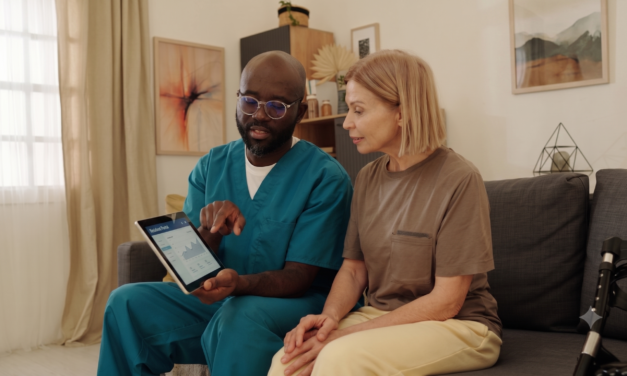
What The Industry Is Talking About
By Steve Moran
AI is at its best when it processes vast amounts of information that humans could never do. This is a look back at what people were talking about and thinking in senior living last week.
The big meta-theme
The industry is talking like the demand problem is being solved — but the operating model problem is not.
Occupancy is back, capital is interested again, supply is constrained, and the oldest boomers are turning 80. That creates optimism.
But underneath that optimism, the conversation is full of anxiety about margins, labor, acuity, regulation, affordability, resident expectations, and whether operators are actually ready for the next customer.
1. Occupancy and demand are the loudest “good news” story
NIC is setting the tone: senior housing occupancy hit 89.5% in Q1 2026, up from 89.1% in Q4 2025, with demand rising while new development stays slow. NIC also says occupied units rose to about 637,000 in Q1 2026. (National Investment Center)
That data is showing up everywhere. McKnight’s framed 2026 as a “critical juncture,” with expectations that occupancy could surpass 90% and maybe approach the old 91.3% record. (McKnight’s Senior Living) SHN is making a similar point, saying average occupancy is near 90%, but also noting that median occupancy is already around 92%, which means the “upside” story may be less uniform than the average suggests. (Senior Housing News)
What people are really thinking: “The market is finally coming back — but are we mistaking occupancy recovery for business-model health?”
2. Supply shortage is becoming a moral, political, and business story
The second major theme is scarcity. NIC’s line is that demand is accelerating while development remains stalled, “limiting availability for older adults.” (National Investment Center) France Media / REBusinessOnline framed the sector as facing the “predicament” of strong demand and limited supply, citing higher financing and construction costs, baby boomer aging, and constrained new supply. (REBusinessOnline)
Public press is picking up the same idea in more consumer terms: senior housing scarcity, older adults buying or reserving before they need it, and families potentially facing fewer local choices. MarketWatch summarized the supply gap as hundreds of thousands of units needed by 2030 versus far fewer likely to be built at current development rates. (MarketWatch)
What people are really thinking: “If we don’t build, the industry wins on pricing — until families, regulators, and the media decide scarcity looks like exclusion.”
3. Capital markets are getting excited again
The investor conversation is much warmer than it was two years ago. France Media reported that seniors housing outperformed all other NCREIF property sectors in 2025 with a 10.6% total return, more than double the expanded property index return cited in the piece. (REBusinessOnline)
SHN reported that senior living M&A is still “competitive, selective, hot,” with some deals beginning to trade above replacement cost and competition strong for stabilized properties. (Senior Housing News) Reuters also covered Janus Living’s senior-housing REIT IPO filing, positioning senior housing as attractive to investors partly because it is a “real economy” sector less directly disrupted by AI. (Reuters)
What people are really thinking: “Senior housing is investable again — but mostly if you already own, can buy stabilized assets, or can survive brutal development math.”
4. Construction is the bottleneck everyone keeps circling back to
Even with demand rising, construction is still stuck. SHN reported that tariffs, construction labor shortages, and persistent cost pressures are tempering hopes for a 2026 development rebound. (Senior Housing News) McKnight’s similarly described construction as moving with “cautious stability,” with tariffs, labor shortages, and cost pressures still in the picture. (McKnight’s Senior Living)
The visible construction conversation is not “let’s build like crazy.” It is more like: “Can we pencil anything? Can we convert? Can we renovate? Can we buy? Can we create middle-market or affordable options without losing our shirt?”
What people are really thinking: “Everyone says we need more inventory, but nobody has fully solved how to build it at a price residents can afford and investors will finance.”
5. Margins are the shadow story behind the occupancy celebration
This is where LinkedIn snippets were especially telling. One LinkedIn post captured the undercurrent well: occupancy recovery is getting attention, but rising labor costs, staffing challenges, and increasing resident acuity make the economics more complex than occupancy alone suggests. (LinkedIn)
SHN is also writing directly about operators trying to use expense control and technology to push margins higher, with the framing that demand is high but “occupancy is just part of the game.” (Senior Housing News)
What people are really thinking: “We can fill buildings again. But can we make money while delivering the level of care residents now need?”
6. AI is everywhere — but the conversation is maturing
A year ago, the AI conversation was more “look what this can do.” Now it is more practical: infrastructure, workflows, ROI, staffing relief, care coordination, training, and safety.
McKnight’s covered AI as a profit-enhancing operating strategy, citing major healthcare AI investment in 2025. (McKnight’s Senior Living) It also reported that provider groups told HHS senior living and care need infrastructure support, payment alignment, and technical assistance to adopt AI well. (McKnight’s Senior Living) Congress is also entering the conversation: McKnight’s reported on a bipartisan bill proposing a federal study of AI’s effects on older adults. (McKnight’s Senior Living)
On the marketing side, the conversation is shifting toward AI search, local demand, and better leads, not just generic digital marketing. (conversionlogix.com)
What people are really thinking: “AI is no longer a novelty. The winners will be the operators who use it to redesign work, not just buy tools.”
7. Data and BI are becoming core operating infrastructure
SHN reported that more operators now see data and business intelligence as “cornerstones” of operations, using analytics and predictive tools for revenue, staffing efficiency, and resident care coordination. (Senior Housing News)
This is one of the most important under-the-surface shifts. The old industry was relationship-driven, instinct-driven, and census-report-driven. The new conversation is about dashboards, predictive analytics, pricing, labor optimization, acuity, and resident risk.
What people are really thinking: “The next generation of operators will run senior living more like an integrated operating system than a collection of buildings.”
8. Regulation and assisted living scrutiny are heating up
AARP’s recent report says assisted living now serves nearly 1 million residents, and that about 44% of assisted living residents have Alzheimer’s or dementia — a higher share than the nursing home comparison cited in the report. (AARP) That is a huge narrative shift: assisted living is no longer easily defended as mostly hospitality with light support.
McKnight’s is tracking more regulatory movement: 18 states updated assisted living regulations with increased focus on staff training, and other stories point to state-level changes involving staffing, emergency response, cameras, memory care, and reporting. (McKnight’s Senior Living) The Washington Post’s earlier assisted living and memory care investigations still echo in the background, especially around elopement, understaffing, and dementia safety. (The Washington Post)
What people are really thinking: “The industry can either tell a credible data-backed quality story now, or have one imposed on it later.”
9. Workforce remains the unsolved constraint
The staffing conversation has shifted from “shortage” to “operating design.” People are still talking about shortages, but the sharper conversation is about retention, training, career paths, tech-enabled productivity, and whether communities can support higher acuity without burning people out.
McKnight’s workforce guide mentions starting small with AI by identifying repetitive tasks that are good candidates for automation. (McKnight’s Senior Living) McKnight’s also has current coverage around technology driving staff retention and ROI. (McKnight’s Senior Living)
What people are really thinking: “We are not going to hire our way out of this. We have to redesign the work.”
10. The consumer conversation is harsher than the industry conversation
Inside the industry, the tone is cautiously optimistic: occupancy, margins, capital, growth.
In public press, the tone is more worried: affordability, safety, hidden costs, confusing choices, staffing, dementia care, and whether families can trust what they are buying. AP’s consumer guidance on choosing nursing homes or assisted living facilities emphasized staffing, visits, pricing changes, Medicaid policies, discharge risks, and trusting what you see beyond the lobby. (AP News)
The FT’s “boommates” story points to something senior living should not ignore: some older adults are solving aging, loneliness, and affordability through shared housing and other alternatives, not traditional senior living. (Financial Times)
What people are really thinking: “Senior living is not just competing with other communities. It is competing with every alternative families invent when they don’t trust or can’t afford the product.”
11. Social Media
From what is publicly visible, LinkedIn senior living conversation clusters around:
One: optimism with a warning label. Occupancy is rising, but many posts immediately pivot to labor costs, acuity, margins, and whether operators are actually healthier. (LinkedIn)
Two: digital transformation / AI. Posts and company pages are using language around integrated platforms, occupancy growth, care quality, sales, marketing, and operational efficiency. (LinkedIn)
Three: the “new operator” thesis. There are posts arguing 2026 will reward operators who modernize care, memory care, tech, and integration — and punish those still using the old playbook. (LinkedIn)
My read: Social Media is less focused on policy nuance and more focused on “wake up, the playbook is changing.”
The Foresight Perspective – Really Worth Thinking About
“Occupancy is not the same as health.”
Great angle because it challenges the industry’s victory lap without being negative.
“The shortage is coming — but who gets left out?”
This connects supply, affordability, middle market, and public trust.
“AI won’t save senior living. Redesigning work might.”
This is exactly where operators are mentally headed.
“Assisted living is becoming healthcare whether we admit it or not.”
This is a provocative but defensible piece given dementia prevalence, acuity, and regulatory pressure.
“The next senior living operator is part hotelier, part healthcare operator, part data company.”
This ties together consumer expectations, acuity, AI, BI, workforce, and margin.
“The industry has pricing power. That is both a gift and a trap.”
As supply tightens, pricing improves — but public backlash and affordability concerns grow.
Finally
The senior living industry is in one of those rare windows where the market is giving it another chance.
Demand is rising.
Capital is interested.
Occupancy is recovering.
But the old operating model is not built for the next decade.
The conversation is not really about occupancy anymore. It is about whether the industry can become more sophisticated fast enough: better data, better labor design, better dementia care, better tech adoption, better consumer trust, and better affordability answers.
That’s the story underneath all the stories.

The 13 Bullet Points That Went Nowhere
By Steve Moran
A few weeks ago, I was at the California Assisted Living conference in Sacramento. The content was exceptionally strong. They were talking about really big challenges and really solid solutions.
Sitting at the same table with me was a C-suite executive with her notebook open, rapidly making notes. I could see at least 13 bullet points, and the talk was not yet over.
I got to wondering what she would do with those bullet points. Then I realized this was just a single session at a single conference. She would likely go home with 50 to 100 bullet points, even acknowledging that not every presentation would be as strong or as relevant as this one.
The Hard Part
I am not critical of what she was doing. I do the same thing, and I guarantee I attend a lot more conferences than she does. I have so much content right now that I need to write about, and a lot of it will never see the light of day.
The problem is…
Continue reading on Practical Passionate Leadership (Substack) for free …

The Promise of AI in Senior Living Is Not Dazzle — It Is Time
By Rebecca Wiessmann
In a recent episode of Tech Tuesday, Steve talks with Veronica “Mo” Carr, an Avendelle Assisted Living franchisee in Raleigh, North Carolina, about how she is using AI agents in the real world — not someday, not in theory, but right now. You can watch the full conversation HERE.
There is a lot of noise around artificial intelligence in senior living.
There are conference sessions. There are big promises. There are worries about hallucinations, HIPAA, job loss, complexity, and whether any of it is actually practical for operators who are already stretched thin.
Then there is Mo Carr.
Mo operates small assisted living homes — three now, with a fourth on the way — each serving no more than six residents. Steve calls her one of the most sophisticated AI users he knows in senior living, and not because she is running a giant technology department. She is not.
She is using AI because she has to.
Phone calls. Text messages. Family communication. Staffing. Scheduling. Financial management. Training. Resident updates. The endless stream of operational work that comes with running care homes.
As Mo puts it, AI touches every operational task in her business.
From Prompts To Agents
A lot of senior living leaders have played with AI as a question-and-answer tool. They open ChatGPT, ask for an email, summarize a document, brainstorm a training outline, or rewrite a message to a family member.
That is useful. But Mo says her work has moved beyond that.
She has shifted from prompting to AI agents.
Her explanation is wonderfully simple: regular AI is a one-time helper. You ask a question, and it gives you an answer. An agent is more like a personal assistant who never sleeps. You give it instructions, connect it to the tools it needs, and it keeps working.
That changes the conversation.
Instead of asking AI to help draft a training outline one time, an agent can help identify a training need, pull the relevant information, and generate a checklist or outline. Instead of manually searching systems, an agent can pull information from QuickBooks, a CRM, email, or other platforms and help complete a task.
The magic, at least for nontechnical operators, is that Mo says this does not require writing code. It requires knowing what problem needs to be solved, giving clear instructions, and building the right workflow.
That is still work. But it is a very different kind of work than most senior living leaders imagine when they hear the word “AI.”
Family Communication In Real Time
One of the most compelling parts of the conversation is around family communication.
Every operator knows this tension. Families want to know how mom or dad is doing. Caregivers want to be responsive. But answering the same kinds of questions over and over takes time. Looking through notes, checking the EMAR, summarizing updates, and sending texts or emails can pull caregivers away from residents.
Mo is using AI agents to change that.
Her agents can pull information from documentation and push updates to family members by text. Families can also communicate back, asking questions like, “How is Mom doing today?”
That is not just a convenience feature. It changes the nature of the interaction.
When families already have timely updates, in-person conversations do not have to begin with staff scrambling through records. The caregiver can be more present. The family member can arrive better informed. The conversation can become more relational and less transactional.
Steve immediately sees the potential, especially for friends and family members who are not nearby but still want to stay connected. A simple weekly update, generated from notes and sent automatically, could give people peace of mind without creating another manual task for a caregiver or family member.
AI As A Clinical Signal Finder
Mo also gives a practical resident-care example: PRN medications.
If a resident is receiving an as-needed medication repeatedly for a behavior, an AI agent could help identify the pattern and flag it. It could notify the operator that the situation may need review. It could generate communication for the clinician. Depending on the workflow and compliance structure, it might even draft an email to the care team.
The point is not that AI replaces clinical judgment.
The point is that AI may be very good at noticing patterns that busy humans miss — especially when those humans are juggling residents, families, staffing, documentation, and the thousand other things that happen in a senior living day.
Of course, Mo is clear that checks and balances matter. AI is a tool. It still needs to be checked, vetted, and built into a responsible system.
That is an important distinction. The goal is not blind automation. The goal is better support.
Why The AI Buzz May Be Fading
Steve raises an interesting observation from the conference circuit: For a while, AI seemed to come up in every session. Then the energy seemed to fade.
Mo’s explanation is simple and probably right: People are overwhelmed.
The tools keep changing. Just as someone gets comfortable with one system, an update changes the interface, the workflow, or the possibilities. For people who enjoy tinkering, this is exciting. For everyone else, it can feel exhausting.
That does not mean senior living can opt out.
AI is already here. It is already embedded in tools and systems. The question is not whether senior living will use AI. The question is whether leaders will use it intentionally.
Mo believes some leaders will build these systems themselves. Others will need help. That opens the door for a new kind of AI consultant — someone who understands operations, audits workflows, identifies repetitive tasks, and builds practical automations that save time.
Not theoretical AI. Useful AI.
The Human Reason Behind The Technology
The most powerful moment in the conversation comes when Steve asks how AI is making Mo’s life better as an owner and how it is improving life for residents, team members, and families.
Mo starts with her why.
In a span of about three months, she lost her mother unexpectedly to pneumonia and then lost her best friend, the founder of Avendelle Assisted Living. During those bedside moments, calls, emails, and texts kept coming. She had to choose between being present and responding to the demands of the business.
That experience changed how she thinks about time.
AI, for her, is not about being trendy. It is about being more intentional. It is about managing the business well enough to have time for family, friends, travel, and the things that bring joy. It is about not constantly choosing between a task and a person.
That is the real promise.
For caregivers, AI can reduce repetitive work and generate training more quickly. For residents, it can give caregivers more time at the bedside. For families, it can provide better and faster communication. For owners, it can create room to breathe.
The Bottom Line
Senior living does not need more AI hype.
It needs more examples like Mo’s: practical, human, operational, and honest about both the possibilities and the risks.
AI agents may sound futuristic, but in Mo’s hands, they are already helping with training, family updates, documentation workflows, medication pattern recognition, scheduling, finances, and communication.
Steve ends the episode eager to bring Mo back for a live demonstration. That may be exactly what the industry needs next — fewer abstract conversations about AI and more real-time, practical lessons from operators who are already using it to make life better.
Because the best AI in senior living may not be the one that dazzles at a conference.
It may be the one that gives a caregiver five more minutes at the bedside.

You Can’t Market Your Way Out of a Bad Product
By Steve Moran
For just a few moments, I am going to go full-burn cynic.
And yet … in my cynicism, I hope you will find great optimism.
This craziness will all make sense as you read on.
Connection, Not Care — Friendship Not … All That Other Stuff
There is so much conversation about how baby boomers want a radically different experience and a sense that senior living needs some repositioning. I mostly think that, as long as we are primarily a care model, the boomers’ needs and wants are going to be minimally different.
But … if …
We start leading with connection instead of care. Talking about belonging and social wellness rather than safety features and clinical oversight. I think that conversation could transform the industry and the aging experience.
I am not sure we really get it. It feels to me like this is what is really happening …
We change the language, update the brochures, and train the sales team to lead with connection and community. Except that when prospects tour our communities, they see the same old, same old.
If the programming calendar is still bingo on Tuesday and a movie on Thursday, we have a problem.
If we call batting around balloons with pool noodles exercise or entertainment, we have a problem.
If the common spaces still feel institutional, not like hospitals or nursing homes, but rather like 4- and 5-star hotels … nice institutional but still institutional. A kind of fake “just like home,” we have a problem.
If the most active thing on the activity schedule this week is a bus trip to the casino, we have a problem.
The Prospects We Want
The prospects we most want to attract, the earlier, healthier, more independent ones who could benefit most from choosing community before a crisis, are exactly the ones who will see through the gap between the pitch and the reality the fastest.
They’re sharper. They’re more discerning. They have higher standards for what a good day looks like. And they will go home from that tour, sit down at their kitchen table, and say to their spouse:
“The salesperson was great. The place itself … I don’t know.”
And then they’ll recommit to aging in place for another two years.
This matters because the reframe the industry is reaching for, connection-first, wellness-oriented, community-centered, is only as powerful as the lived experience it’s attached to. It’s not a repositioning if it’s just repositioning. It has to be a genuine redescription of something real.
The Hard Question
So the honest question every operator needs to sit with is this: if a healthy, active, socially engaged 70-year-old moved in tomorrow, would the day I’m offering them actually be compelling? Not to their future 85-year-old self. To them. Now. This week.
In too many communities, the honest answer is no. And no amount of better marketing language is going to fix that.
Here’s what gives me hope: some communities that have done the product work and have genuinely rebuilt the experience around what an earlier, more capable resident needs and wants are seeing the results. Not just in occupancy numbers. In culture. In word-of-mouth. In the fact that their residents recruit for them, because they’re genuinely proud of where they live.
That’s the prize. But you have to earn it by actually building it.
I said, “The communities that have done the product work are seeing the results.” I need to be more honest than that, because vague optimism isn’t useful, and I don’t actually know of many places where it’s working.
The one real example I can point to is Garden Spot Village in New Holland, Pennsylvania. A remarkable 22% of their new residents are between 50 and 69. But here’s the important context: Garden Spot is a faith-based community affiliated with the Mennonite Church, built entirely around purpose and service. Residents go on mission trips to Kenya. More than 60% volunteer regularly. People move in younger because the community gives them something to move toward, not just somewhere to land. It works. But it isn’t easily copied without the underlying culture that drives it.
Beyond that one example, I’m honestly not sure the industry has figured this out yet. The average move-in age for independent living is 77. Half of all assisted living residents nationwide are over 85. Less than 6% are under 65. The data says crisis-driven, late-stage entry is still the overwhelming norm.
So when I say the product has to change before the marketing can change, I’m not pointing to a wave of communities that have already solved this. I’m pointing to one community in Pennsylvania that has, and an industry that mostly hasn’t. That’s a more honest picture. And it means the opportunity is wide open for whoever gets there next.

Buildings Matter. Operators Matter More.
By Rebecca Wiessmann
This article is based on the Pivot with Pettit episode “From City Planner to Senior Living Pioneer: Mitch Brown on the Future of Senior Living.” Watch the full conversation on YouTube.
The Next Senior Living Boom Has A Catch
There is a lot of excitement around senior housing right now.
That comes through clearly in Bill Pettit’s conversation with Mitch Brown. Investor interest is rising. Demand is obvious. Demographics are not exactly subtle. Active adult continues to attract attention. And the industry knows the opportunity ahead is enormous.
But Mitch keeps coming back to one inconvenient truth.
The problem is not just getting capital interested.
The problem is who is going to run all of this.
That is the part of the episode senior living leaders should not miss.
Demand Is Real — But So Is The Affordability Problem
Mitch is not dismissive about the opportunity. He plainly sees the wave of demand. But he also cuts through the hype fast.
There is an affordability problem.
A big one.
Construction costs are high. Regulations are heavy. Labor is difficult on both the operating and construction sides. Experienced people have left the industry. The economics are hard. And while everybody can talk about hundreds of thousands of units that will be needed, meeting that need with a product that is both desirable and financially viable is another matter.
That feels like one of the most honest moments in the conversation.
Demographics do not automatically solve bad math.
They do not erase labor constraints.
They do not magically create operating talent.
The Real Scarcity Is Operational Excellence
Mitch makes a strong case that development itself may not be the biggest bottleneck. The bigger constraint is operating capacity.
That is a striking point because senior living often defaults to real estate language: Pipeline, cap rates, debt, land, starts, absorption. All important.
But Mitch argues that what investors increasingly want most is not just a site or a building. They want access to operators who can scale and grow without breaking the thing that makes communities work.
That is a huge distinction.
He even shares an example of an investor knowingly overpaying for a small portfolio in order to secure a relationship with a strong operator. That tells you everything you need to know. Great operating platforms are not just helpful. They are becoming strategic assets in their own right.
Maybe THE strategic asset.
Developers Are Not The Heroes
Mitch says something else that deserves to be repeated more often in this industry: developers are service providers to operations.
That may not be how every developer sees it, but it is probably how the best ones do.
The communities that succeed over time are not the ones with the prettiest rendering or the cleverest site plan alone. They are the ones where the operating team is involved early, where culture is built intentionally, and where the entire model is designed around the people who will actually serve residents every day.
That is a big deal.
Senior living still has too many moments where real estate gets celebrated, and operations get treated like the thing that shows up later. Mitch’s view flips that. As he tells it, the real job is to build something operations can make come alive.
That is not anti-development. It is mature development.
Why Active Adult Still Needs Operators
This becomes even more important in active adult.
From the outside, active adult can look simpler than traditional senior living. That can fool people. Mitch explains that the economics are leaner, the margins are tighter, and the management fee structures often look much more like multifamily than senior living.
So then the question becomes obvious: how do you convince great people to do something harder than it looks for less margin than they are used to?
That is not a small question.
It is one of the defining questions.
The industry still needs a model that properly values what it takes to operate active adult at a high level. Because if everybody says the future is in active adult, but nobody creates a structure that makes great operation sustainable, then the segment hits a ceiling.
What Boomers Actually Want
Mitch also points to something more hopeful.
He believes boomers want aspirational living. Not institutional living. Not surrender. Not the end of the road. Aspirational living.
That can take many forms. A flexible lifestyle. A community with intellectual energy. A two-home rhythm. A modular cottage with like-minded people. A place that removes hassle without removing identity.
That is a useful framing.
The future may belong to the companies that can create those experiences at more approachable price points. Not just premium versions for a small slice of the market, but products that feel desirable and human for many more people.
And that takes more than capital.
It takes operators who understand customers.
The Best-Kept Secret
Near the end of the conversation, Mitch and Bill hit on something that feels painfully true: active adult is still one of the best-kept secrets in the market.
People often do not fully understand it until they visit a community, meet residents, and see the lifestyle up close. Then it clicks.
That may be the challenge and the opportunity.
Senior living has spent years trying to explain itself. Maybe it needs to get better at helping people experience what a good community actually feels like.
Because once they do, the question is not usually “Why would anyone want this?”
It is “Why didn’t we do this sooner?”
And that may be the future in one sentence.

Finding Talent Hidden in Your Own Organization
By Jack Cumming
Every leader, no matter the leadership level, starts every important initiative with optimism and high expectations. In senior living, it might be a CEO or executive director wanting to open the culture to more resident inclusion, or it might be a financing provider or development business wanting to help operating providers find success.
Most People Mean Well
Good intentions prevail for everyone. A young employee seeking to manage his or her career brings hope and optimism to their first position. The same is true of first-time supervisors or functional directors (e.g., activities, food service, maintenance, care services) in a senior living enterprise. It’s even true of those residents who seek to be helpful by making suggestions.
The trick is to find the most talented people to support the leader in that vision. That requires a number of factors. First, it needs a leader who can recognize the most talented people, not all of whom may be aligned with the leader’s thinking. Great leaders learn to listen to those who do not agree with them. Other wannabe leaders emphasize loyalty and may sideline or dismiss thinkers who are less than loyally subordinate.
Second, it calls for a leader with the charisma and modesty to attract the most talented people to be willing to work as a team with the leader. Those charismatic, inspiring leaders are rare. Most “leaders” are little more than administrators.
Third, these barriers to unleashing talent for the good of the enterprise are particularly evident in hierarchically run organizations. I can’t remember the last time a major in the U.S. military was promoted to major general. The military is the ultimate in hierarchy. Rank is even openly flaunted on uniforms. That may be necessary for the military, but it can lead to mediocrity in competitive undertakings.
Timeless Truths
The drawbacks of corporate hierarchy are not new. In 1969, a book by Laurence J. Peter, titled The Peter Principle, first appeared. It may have been intended as comedy, consistent with the movie from the same era, How to Succeed in Business Without Really Trying. As is often the case with humor, it popularized a truth that might otherwise have remained buried in academia.
That truth: People are promoted up a hierarchy not by their suitability for a more authoritative position but by their reputation in their prior positions.
That truth leads to less suitable leaders stuck in smothering positions. The Peter Principle tenet in a nutshell.
“People rise to their level of incompetence.”
That blocks the rise of talent and leads to mediocrity in an underperforming enterprise, far from the vigor that made the organization a success in the first place. It takes that first generation’s success to fuel the comfort of hierarchy that leads to corporate drift.
No Tolerance for Complacency
Business requires constant rethinking since the pace of the business economy is rapid. The rising competitor that you’re overlooking is not going to wait for you to catch up. With subsequent generations, the Peter Principle can take hold, and a slow administrative pace can become entrenched and rationalized.
The most important task of a leader is to find, motivate, advance, and reward talent. It’s people, talented people, who determine how well the business purpose, aka mission, is fulfilled. For instance, it takes particular talent, infused with wisdom, business judgment, fast learning, and understanding people, to put into perspective what AI means for the future and how best to harness it.
Amazon?
I thought of that the other day when I was struggling with Alexa+, which is Amazon’s late-to-the-market foray into artificial intelligence (AI). Whatever else you may think of Jeff Bezos, it seems evident that he had an eye for talent. Alexa+ could benefit from some top talent right now.
The usual subsequent generation management response to a lackluster business unit is for the leadership – CEO, board, or executive – to ask the responsible business manager for a briefing. That can lead to a soporific PowerPoint presentation instead of the identification of needed fresh talent.
One source of talent is industry conferences, which can allow those looking for clear thinking to size up competitors’ leaders who might be just the tonic needed to shake up a lagging unit. That’s particularly true with the need for the kind of genius talent needed to prepare an enterprise for the opportunities and challenges of artificial intelligence and robotics.
Of course, there’s no reason why a mammoth organization like Amazon, under Jeff Bezos’s leadership, can’t hold its own conference, even inviting outsiders if desired, to allow inside talent to shine forth from under the weight of hierarchy above them. To the best of my knowledge and belief, such internal discussion forums are rare.
A Tough Leadership Transition
Andy Jassy, Bezos’s successor, got the top job after amazing results with Amazon Web Services. To an outsider, his focus appears to be on reducing costs to build profits, including eliminating or repurposing underperforming businesses. Loyal Amazon shoppers have noticed an increase in in-your-face pushes to get you to buy stuff as though Amazon were entitled to your patronage. Is that Jassy? It’s hard to tell.
AI is, of course, a challenge. Amazon’s Alexa proved to be an unlikely success. An attempt to attract businesses to what has been a consumer platform, called Alexa Smart Properties, is questionable and surprisingly disconnected from consumers and even from other Amazon initiatives like televisions. Into that murky siloing, Amazon has thrown its most prominent AI project, called Alexa+.
Needing a Closer Look
It doesn’t take much interaction with Alexa+ compared with other AI initiatives to realize that Alexa+ isn’t hitting the mark. The challenges are similar to those confronting senior living. When consumers are given second place in the direction of a business, it’s time to find new outside-the-box talent to win the enthusiasm of consumers. Ignoring consumer input, while claiming an overweening expertise, may bring short-term results but will inevitably fall short in the long term. Treating your consumer as a potential adversary is not a formula for success.
The key is always finding the right talent for the crucial positions. In senior living, that’s often the executive director position, but that’s another story for another day. Hint: good regional vice presidents can be more effective as autonomous executive directors than as a parking place for those caught by the Peter Principle. Executive directors make a community succeed or fail. Residents are not property. Senior housing is communal, much more than just a building. Residents are more than a revenue source.

What Do You Need to Fire Yourself From?
By Steve Moran
I might be the world’s best idea thief. Podcasts, LinkedIn posts, Instagram reels, books, emails, and articles, I steal from all of it, then write my own version. It used to bother me to give credit, because I wanted people to think I was the brilliant one. I have come to realize that all brilliant teachers and thought leaders are, at their core, great thieves building on the knowledge of others.
This one came from a reel I saw while on vacation in Europe last week. The thought leader talked about how most leaders have things they need to fire themselves from. When I sat down to write this, the link was dead, so I can’t say for certain who to credit. My best guess, with some help from AI, is Dan Martell, whose leadership content is all over the internet.
Fire Yourself From
Right now, as a leader, you are doing things you shouldn’t be doing. You are doing them because…
Continue reading on Practical Passionate Leadership (Substack) for free.

Can Two CEOs Be Better Than One?
By Rebecca Wiessmann
In this episode of Foresight TV, Steve talks with Shane Herlet and Tom Gaston, the newly appointed co-CEOs of Maplewood Senior Living, about what it means to share the top leadership role — and why Maplewood believes the model can make the company stronger. Watch the full conversation here: What a Co-CEO Model Could Mean for Senior Living.
Co-CEO structures are still rare in senior living. Maybe because the model sounds complicated. Maybe because most boards, investors, and leadership teams are more comfortable with one person at the top.
But for Maplewood, this was not some exotic leadership experiment. It was, as Tom describes it, a natural evolution.
Shane and Tom have worked together for roughly 15 years at Maplewood and even longer in the industry. Shane comes from the operations side, with a career rooted in assisted living and skilled nursing. Tom brings a deep background in technology, real estate, capitalization, and systems.
They are not two strangers forced into a shared title. They are long-time partners who already know how to work together.
A Leadership Transition No One Wanted
The co-CEO structure follows the sudden death of Maplewood’s founder and former CEO, Greg Smith, in 2023. Tom describes the loss as a shock to the organization, the industry, and to them personally.
It was also a real business test.
There were licenses to transition, ownership questions to resolve, and investors, team members, residents, and families to reassure. Through all of that, Tom says the goal was to maintain confidence while keeping the underlying business strong.
That matters because Maplewood was not in survival mode. It was performing well. The challenge was to preserve momentum while navigating grief, transition, and the practical complexity of leadership succession.
In many companies, that kind of moment exposes cracks. At Maplewood, it seems to have reinforced the value of continuity.
Defined Lanes, Shared Values
The obvious question with any co-CEO model is simple: Who does what?
Shane says the key is having defined lanes. He focuses heavily on internal operations — budgets, community support, compliance, and the day-to-day pieces that keep the company moving. Tom has taken the lead on investor relationships, legal issues, capital partner work, and the broader transition process.
But lanes only work if there is trust. Shane and Tom make clear that they agree on the big things: employee-first thinking, doing the right thing for people, and staying focused on the customer.
And when they disagree?
They joke that they never do, but the real answer is more useful: They have a long history, shared values, and enough mutual respect to work through the hard stuff.
That may be the hidden requirement for a co-CEO model. It is not about splitting power. It is about multiplying leadership capacity without creating confusion.
Performance Creates Optionality
The Co-CEO arrangement is working for Maplewood. Steve notes that the company has reportedly seen same-store NOI growth of 65% since 2022 and occupancy around 96%. In an industry still talking about recovery, staffing, rate pressure, and “the next shoe to drop,” Maplewood appears to be outperforming.
Shane points to a few reasons.
Maplewood came out of COVID strong. It never allowed occupancy to fall below 80%, recovered quickly, and moved north of 90% faster than many others. From that base, the company has been able to drive rate, supported by strong physical environments, quality care, continuity, and operating discipline.
Tom adds that after the restructuring and transition of the last two years, the company has never been stronger financially, operationally, or from an executive team standpoint.
That gives Maplewood something every operator wants: options.
It can grow. It can invest in people. It can improve systems. It can think about what comes next without being consumed by crisis.
Direct, Candid, and Serious About Performance
Shane is described as direct and candid, which leads Steve to ask the obvious follow-up: Is that a good direct and candid, or Steve Jobs direct and candid?
Shane laughs, but his answer is serious.
Senior living is a serious business. Maplewood has long-tenured leaders and long-tenured line associates, something Shane is deeply proud of. But tenure is not a substitute for performance.
His current message to the team is that when things are going well, that is when leaders need to double down. He compares it to pilots going back through the checklist one last time during a delay.
In senior living, that means preventing the elopement before it happens. Seeing the move-out risk early. Addressing the cultural issue before it becomes a crisis.
This is where “direct and candid” becomes less about personality and more about discipline.
The Customer Behind the Customer
One of the most compelling parts of the conversation is Shane’s view of the home office.
For Maplewood’s home office team, the primary customer is the field.
That may sound obvious. It is not always how the industry behaves.
Community associates are the ones showing up during holidays, weekends, snowstorms, and emergencies. They are the ones caring for residents and families in real time. The role of the corporate team is not to make life harder for them. It is to prepare, support, and serve them.
Steve has long argued that when frontline team members love coming to work, residents and families feel it. Shane agrees. If employees are happy and supported, they take great care of residents.
That is a simple idea. It is also one that the industry still struggles to bring into reality.
Leadership Training Without the Corporate Theater
Steve shares the results of a LinkedIn poll showing that many senior living leaders feel they received little or poor leadership training.
Maplewood’s approach is less about formal programs and more about exposure.
Shane says Maplewood is large enough to have resources but small enough to let leaders see “under the tent.” Community leaders get to see how different parts of the business connect — operations, finance, compliance, capital, staffing, and customer experience.
Tom adds that he and Shane have both done almost every community-level job at some point in their careers. Maplewood has a flat home office with roughly 25 to 30 people, which makes leaders more approachable and teaching more natural.
The result is that some Maplewood leaders have grown into senior roles inside the company, while others have gone on to leadership positions with competitors.
Shane and Tom see that as a win.
That is refreshing. The industry needs more companies willing to develop people, even if some of those people eventually leave. That is how the whole field gets better.
Technology Is Useful — Until It Isn’t
Maplewood is also investing in systems and technology, especially in back-office operations. Shane mentions tools such as UKG, PredictAP, Vena, Sunbound, and AI-based accounts payable and business intelligence systems.
The goal is not technology for its own sake. It is speed, clarity, and better information in the field.
But Tom is also candid that not every technology investment works. Some expensive systems get installed and then ripped out a few years later. Sometimes, simple is better.
That may be the most mature technology lesson of all.
The promise of AI and data is real, especially around predictive insights, fall detection, resident monitoring, and earlier warning signs of change in condition. But Maplewood is not pretending every shiny tool solves the hard problems.
The question remains: Does this make life easier inside the community? Does it help deliver better care?
If not, it is just another thing for team members to manage.
Premium Brands and the Trickle-Down Effect
Maplewood currently operates two brands: Maplewood Senior Living and Inspir.
Inspir is the company’s ultra-premium brand, designed for gateway cities and high-service environments. Tom describes the New York project as a kind of “luxury spaceship,” with complex building systems, demanding resident expectations, and sophisticated operations.
He compares it to Formula One.
The point of Formula One is not just the race car. It is the innovation that eventually trickles down into everyday vehicles. In the same way, the lessons Maplewood learns from its most complex Inspir communities can influence the rest of its portfolio.
That includes technology, service models, design, operations, and programming.
Tom also says Maplewood would love to figure out a third brand — something that appeals to a broader market where there is real need. They have not cracked that yet.
Neither has the industry.
But it is a question worth chasing.
Growth, But Not at Any Cost
When asked to dream about the next five years, Shane says Maplewood wants to be recognized as one of the best operators in the eyes of its customers.
That is the right benchmark.
Not biggest. Not flashiest. Best.
Growth is possible. Shane mentions perhaps doubling the company and maybe creating a third brand. But he emphasizes controlled growth, staying in core markets, and making sure Maplewood remains a great employer and destination for residents.
Tom adds that Maplewood does not have to grow. It will grow organically if it chooses to and if the opportunity makes sense.
That may be the strongest argument for the co-CEO model at Maplewood. It is not about ego. It is not about building an empire for the sake of size.
It is about shared stewardship.
And in a senior living world that needs stronger operators, better workplaces, smarter technology, and more leadership depth, Maplewood’s experiment is worth watching.

What Sun City Got Right And Senior Living Forgot
By Steve Moran
In 1960, Del Webb opened a retirement community in the Arizona desert, and people lined up.
They lined up not because they were scared. Not because their kids made them. Because at a certain age, the idea of a community built around people in the same life stage, with the golf courses and the activity clubs and the neighbors who weren’t going to judge you for retiring at 60, sounded amazing.
Sun City worked because it was aspirational. The Villages, in spite of all the negative press, works for the same reason. And Margaritaville, the retirement community concept built around the Jimmy Buffett lifestyle, is crushing it for the same reason. These are communities people choose with something that looks almost like enthusiasm. A 48-year-old doesn’t want to move there. A 63-year-old who’s starting to think differently about what the next ten years could look like? Different conversation.
Senior Living
Traditional senior living (assisted living, memory care, independent living) largely lost, or maybe never really figured out, the aspirational living proposition. I think it’s worth asking why and whether it’s possible to get it.
Here’s what I think happened: as the industry matured, it leaned harder into care. More regulation, more clinical sophistication, more focus on what the community could do for residents with increasing needs. All of that was appropriate and necessary. And if we are honest, it created a serious opportunity for increasing the rates we charged in the form of care fees.
The Problem
The cultural cost was real. Communities started feeling less like places people chose and more like places people ended up.
The marketing followed the culture. Brochures full of smiling seniors with kind caregivers. Emergency response systems prominently featured. Language about “dignity” and “peace of mind,” which, read honestly, is language about decline management.
Prospects, at least the younger, healthier, more independent ones the industry most needs to attract, said, “No thanks, not for me, not yet anyway,” doubling down on aging in place.
The Question
So here’s the Sun City question I keep coming back to: what would it take to build something that a healthy, active, socially engaged 70-year-old would actually look forward to? Not tolerate. Not accept as a reasonable option. Actually want?
Or is it even possible to do so and really call it senior living?
We have to start by being honest about the really hard reality that if we can do this, it requires a product change, not just a marketing change. You can’t slap new language on an unchanged experience and expect different results. If the programming calendar is still built around a frailer, more sedentary resident, the 70-year-old, or even the active 80-year-old, you’re trying to attract, is going to see that on the tour and leave.
I do believe there is an opportunity here to create something genuinely worth anticipating, something that will have a significant competitive advantage in the decade ahead. Not just in occupancy, but in culture, in word-of-mouth, in the quality of the experience they’re able to create.
The Key Insight
The key insight from Sun City isn’t the golf courses. It’s the aspiration. It’s the sense that moving there is a move toward something rather than away from something. That choosing this community is a statement about who you are and how you want to live, not an admission that you can no longer fully manage on your own.
Senior living can get back there. But it’s going to require honesty about what actually has to change and a willingness to build something different, not just describe the same thing differently.
That’s harder. It’s also more worth doing.

Unexpected Change in Sales Compensation
By Jack Cumming
Like insurance, senior living is a sales-driven industry. It’s often said that life insurance is not a product that people buy. It has to be sold. There’s some truth to that, though it’s less true for property and causality insurance. Some might say that it’s more true of senior living. Personal, human relationships make the senior living sale … most of the time.
Radical Change
With that thought in mind, a recent article in the Wall Street Journal was striking. The article reported a change in State Farm agents’ compensation that has the potential to dramatically reduce their earnings. At an all-agents meeting, State Farm’s CEO announced, “Next Gen – Good Neighbor,” a program to increase agent productivity by using AI to enhance human interaction.
State Farm has roughly 19,000 agents, and you can imagine the reaction across the sales force. It’s not positive, and it’s not pretty, but it may be necessary. Progressive® Insurance has been moving forward faster than State Farm. The WSJ cites “analysts” for a report that “Progressive sells over half its personal auto policies direct to consumers, using AI and tech to keep costs low.”
Wake Up
This can be a wake-up call for the slow-moving senior living industry, at least technologically speaking. Already, many shoppers for senior housing or other senior living services start their search online. Those shoppers can move past a particular community’s webpage very quickly if it doesn’t instantly engage them and get them thinking positively.
AI has great promise to help with that instant engagement, especially if what is on offer has distinct differentiating advantages over competitive alternatives. Here’s where know-how and ingenuity come into play. If all a community does is shop for a vendor to meet the challenge, then their offer is unlikely to be any better than that of all the vendor’s other clients. The vendor’s purpose differs from that of the buyer.
Better? or Good Enough?
The alternative is to develop a unique AI response that may use tools provided by the big players such as OpenAI, Google, Grok, and Anthropic. After all, they are pouring all that optimistic capital into LLM development and data-center processing that today’s AI requires. They differ from each other, but that doesn’t make your message unique. To be unique means that you have to have AI understanding and creative genius in-house. You needn’t settle for being just like all the others.
To prepare for this future, which is coming sooner than you can imagine, organizations need help identifying the talent that can give them that unique, differentiated advantage. Joe Velderman, for one, has the eye and maturity to recognize that kind of talent, so it was no surprise recently when he left the single-site community where he had long worked. The opportunity to lift the industry is vast.
Integrated Marketing and Tech
It will require marketing genius combined with technical genius. Progressive® outmaneuvered State Farm with (1) an effective TV campaign starring a single spokesperson and by (2) embracing direct sales mediated by a robust commitment to technology. The back-office matters, but it’s of no value unless the public knows about it.
Progressive® found Stephanie Courtney through an audition process, shaped her persona as the upbeat face for a previously little-known insurer, and the rest is history. Could something as imaginative as that give senior living the credibility it needs? So far, the media trend and the public perception have not been moving in a positive direction.
Could a high-tech approach and a creative marketing presence be the catalyst to move senior living out of the shadows of institutionalization and into the mainstream of empowered aging? Time will tell. For now, it’s not clear that anyone even has the vision to give it a try.
Gambling on Vision
State Farm is gambling that making its sales force more efficient and more up to date will revive the lead that the company once had with its “good neighbor” image. That might be a positive gamble for a transformative senior living entity as well. The expectation is that State Farm’s sales force won’t be disadvantaged over the long term. New tools will give them the chance to prove themselves and prosper. AI with a human touch may be our new good neighbor.

What Do I Need To Stop Believing About Myself? – The Brutal Truth
By Steve Moran
No pop psychology
Last week I wrote about the false beliefs that make us feel too small, the ones that whisper you’re not good enough, not worthy of the room. If you missed it, start there. This week is about the opposite problem.
And it will be a much harder, more brutal truth.
Most leaders are too impressed with themselves.
They tend to be overconfident, certain, unwilling to seriously consider that they might be wrong. I can read your mind; you are thinking … “I know some leaders like that, but not me.” Yep, you too. Honestly, it comes with leadership. It is 100% true. And 100% true about me.
I have conversations with a lot of leaders. C-suite people, founders, executives who have built real things. And they share a nearly universal trait. They love talking about what they’re doing. What they’re thinking about. What they’re building. What they believe.
They are not so good at listening.
I say that without judgment. I genuinely like these people. And I have to confess, I am the same. I like telling my story. I like talking about my ideas. I catch myself doing it, and I recognize the pattern from the outside looking in. It’s embarrassing.
Continue reading on Practical Passionate Leadership (Substack) for free.

Getting Old Is Not as Great as We Pretend It Is!
By Steve Moran
I am 71 years old, and I am living this experience. Don’t get me wrong. I have a great life at 71, and there are things about being this old that are amazing that I wish I had when I was younger. Better perspective, more peace, more chill.
But it comes with challenges: more time at the dentist and doctors’ offices, the need to pay more attention to diet and exercise. I am not as strong, don’t move as fast, and take longer naps.
We need to be more honest, more frank about the decision to move into senior living. We rarely want to talk about this out loud.
People don’t move into senior living communities because they’ve decided it’s a great lifestyle choice.
They move in because something has changed. Either decline has already started, a fall, a diagnosis, a moment when living alone no longer feels safe or manageable, or they can see decline coming, and they’re trying to get ahead of it. Or they are watching a spouse or partner decline.
That’s essentially the whole universe of move-in motivations. Crisis entry or anticipation entry. And right now, the vast majority are crisis entries.
I’ve been thinking about this a lot lately, partly in response to a yet to be publicly released white paper by my friend Russell Rush called The Isolation Economy. Russell makes a compelling case that senior living should reposition itself around connection and belonging rather than care and safety. I agree with him about the problem. I’m less sure about the solution.
My Pushback
Here’s where I push back: Russell’s argument nudges toward a world where people choose senior living the way they choose a gym membership: proactively, enthusiastically, because it sounds like a great idea. And Russell is far from the only person making this argument. I want that to be true. But I don’t think it is. And I don’t think pretending otherwise actually helps us.
The honest reality is that senior living will always be decline-adjacent. That’s not a failure of marketing. It’s human nature. Nobody thinks seriously about where they’re going to live when they can no longer fully manage on their own until they start to face that question. That’s not pessimism; that’s just how people work. It is why we have pharmacies, funeral homes, cemeteries, and hospitals.
So What Can Actually Change?
The entry-causation ratio can change, and it’s a huge opportunity. Right now, crisis entries outnumber anticipation entries by a wide margin. What if we could flip even part of that? What if we could help more people decide to move into senior living while they still have choices … while they can still participate fully in community life, while they’re still healthy enough to build friendships and establish routines?
The Payoff For Senior Living
The payoff isn’t just philosophical. It’s financial. Earlier entry means a longer length of stay. It means higher acuity, which means less staff time per resident. It means residents who are capable enough to help shape the culture of the community rather than just inhabit it. It means a fundamentally different and better operating model.
But I think the way you get there isn’t by pretending decline isn’t coming. It’s by making the anticipation of decline feel like wisdom rather than defeat.
There’s a version of this that I find genuinely compelling, and I’ve heard it resonate with people in their late 60s and early 70s when it’s said plainly: “You’ve been smart about every other big decision in your life. Why would you wait until you’re in crisis to make this one?”
That’s not denial. That’s not spin. That’s an honest appeal to the kind of person who plans ahead, who thinks clearly about the future, who has spent a lifetime making good decisions, and doesn’t want to stop now.
The goal isn’t to make senior living something it isn’t. The goal is to make choosing it earlier feel like the smart move, because it genuinely is.
That’s a different pitch than “connection-first wellness ecosystem.” But I think it’s a more honest one. And in my experience, honest usually works better.
S8E9- The Small Things Are Everything: Amy Birkel on Senior Living Culture, Leadership & Workforce Retention
What if senior living’s biggest challenge isn’t staffing—but culture?
In this inspiring episode of Foresight Radio, Steve Moran sits down with Amy Birkel, Chief Operating Officer of Heritage Communities, for a conversation about leadership, workforce retention, and the future of senior living.
From washing dishes in a rural Nebraska nursing home to leading a 24-community organization across six states, Amy shares the experiences that shaped her passion for serving older adults and building thriving workplace cultures.
You’ll hear powerful insights on:
Why “the small things are everything” in resident care
How workplace culture impacts staff retention and resident satisfaction
The leadership lesson that changed Amy’s career forever: “Being clear is kind.”
Why senior living needs to become a destination people want to move to
How Heritage Communities reduced turnover through leadership development
The importance of investing in frontline staff and emerging leaders
The “Dirty Jobs” initiative that connects home office teams to community life
Why purpose—not just pay—drives long-term engagement
Amy’s vision for the future is bold:
“I hope we’re a destination people want to come to and don’t feel like they have to.”
Whether you’re a senior living executive, operator, caregiver, or industry innovator, this episode offers practical leadership lessons and a hopeful vision for the future of aging services.
Topics Covered:
Senior Living Leadership
Workforce Retention
Employee Engagement
Resident Experience
Workplace Culture
Assisted Living
Memory Care
Leadership Development
Senior Housing Trends
Aging Services Innovation

The Only Thing That Helped Was Presence
By Rebecca Wiessmann
This article is part of Murry off the Mic. Watch the full episode here.
Murry’s second defining story shifts from staff culture to resident care — and it changes the temperature of the entire episode.
He remembers one of the first residents who moved into Aspen House: carrying a “thick chart,” with diagnoses that intimidate even experienced professionals — Lewy body dementia and Parkinson’s.
The resident was living with hallucinations, fear, urgency, and a constant sense that something critical was being missed — like needing to pick up kids from the bus stop.
Murry and the team tried what most systems default to:
Doctor visits.Orders.Medication changes.Documentation.
And none of it fixed the problem.
What Actually Helped
Murry says the only thing that helped was presence.
A willingness to sit in a low-lit room with calm energy.A willingness to share the space.A willingness to be there in the fear without trying to “solve” it too quickly.
Some nights included talking.Some nights included crying.Some nights included laughter at the absurdity of what life brings.Sometimes it’s a hug. Sometimes it’s ice cream.
And the point isn’t that the nights are magical. The point is that they are repeated.
They show up again the next night.And the next.And the next.
This is the version of leadership and care that the podium of leadership can’t teach.
Because it isn’t about knowing what to do.
It’s about being willing to be there.
Belonging As A Clinical Intervention
Murry connects the resident story back to the staff story — and he draws a straight line through both:
Culture is the product of the environment.
When staff feel seen, heard, and supported, they show up differently.When residents feel known and included, everything changes.
Belonging isn’t a “soft” idea in that framing. It becomes a practical tool that affects behavior, resilience, and care outcomes.
It changes how staff treat each other.It changes how residents experience their own identity.It changes what people believe is possible on a hard day.
Why This Is The Right Premiere
This episode works as a launch because it isn’t trying to impress anyone.
It’s trying to locate the truth about leadership where leadership actually lives: in the quiet, repeated moments where presence becomes a practice.
Murry’s invitation to the industry is clear:
Bring the stories that don’t fit a keynote.Bring the moments that shaped you.Bring what you think when you’re not performing.
Because in senior living, care doesn’t come from having the perfect answer.
It comes from showing up.

Never Have a Worthless Meeting Again
By Steve Moran
Since selling Senior Living Foresight to ProcareHR, the most common question I get is this: “How’s it going?” My answer is always the same: great. I get to do a lot more of the things I like doing and fewer of the things that need to be done but that I hate doing.
One big difference, though …
A larger, more complex organization means more meetings, and more meetings I am not leading. Like all leaders, I think the meetings I lead are way more important and necessary than other people’s meetings.
And of course, they feel the same way about theirs.
This has caused me to put a lot more thought into my own meetings. And more broadly, how leaders can make their meetings more impactful and more efficient. Because here’s what I know: most meetings end in conversation. Very few end in action. There’s a difference, and it matters more than most leaders realize.
Continue reading on Practical Passionate Leadership (Substack)…

Stagnant Jobs and False Stability
By Jack Cumming
Midway through my sophomore year in college, a classic book appeared describing the corporate experience. One observation was:
“Management has tried to adjust the scientist to the organization rather than the organization to the scientist. It can do this with the mediocre and still have a harmonious group. It cannot do it with the brilliant, only freedom will make them harmonious.” [William H. Whyte, The Organization Man]
That’s still true today of hierarchical organizations. Hierarchy is prevalent in senior living. No wonder that the industry lags others in technology and organization. Hierarchy often leads to job stagnation that leaves employees feeling vaguely dissatisfied. What was true all those years ago is still true today. It’s best to leave at home that which distinguishes you and, at work, adapt to the hierarchy.
Stay or Leave
Human nature remains human nature. We are individuals who are at our best when we come together naturally for a shared purpose. We have that when friends come together to build an innovative startup. We lose that when we are hired as subordinates to someone we don’t respect. Unfortunately, the latter happens more often than is generally recognized.
Innovative thinkers are inherently nonconformist, and they are not always pleasantly well-rounded. They may be the key to an organization’s future, but they may not fit into the sterile step-by-step advancement structure common in hierarchy. You may be one. If you feel unseen and unheard at work, it may be that you don’t belong there.
Now, a new book has just appeared that makes this point for today’s generation. Just as Whyte focused on “scientists” instead of brilliance generally, so this new book is narrowly focused on a single profession, even though its wisdom applies generally to people working in corporate structures. Plus ça change, plus c’est la même chose [meaning].
Be Your Best Self
If you are a regular reader of Senior Living Foresight, you likely are not a person who fits seamlessly into the mediocrity of corporate structure. SLF is uniquely focused on the future of senior living and on possibilities for positive change rather than defense of the status quo. For you, the message extracted from this new book may be just the push you need.
To get benefit from it, though, substitute “talent” for the author’s preoccupation with his own chosen profession. He’s an actuary, and the book is The Independent Actuary by Syed Raza, but it’s more than that. It could be titled The Independent Thinker,” and you can read it as that. In fact, you can act on its message without reading it. If you want to read it, though, you can without cost if you subscribe to Kindle Unlimited.
This article is not to hawk a book but to share organizational and personal wisdom. I include the book just to ascribe credit where it is due. You may like the regularity of a recurring paycheck effortlessly deposited into your bank account, but that comes with a high-risk exposure.
Safety in Numbers
Mr. Raza’s insight is that you can be much more secure if you have multiple employers, and that you will also gain personal growth. With several clients, instead of a single employer, you can lose a client and still have a livelihood bridge to a replacement client. The stagnation of a hierarchical corporate career can stunt your growth. To quote Mr. Raza:
“Early in your career, risk is lower, recovery is easier, and optionality is wide. Later on, though, your lifestyle locks in, your mortgage grows, your identity hardens, and fear increases. The result? The cost of waiting rises.”
The antidote to job stagnation leading to career stagnation and a lackluster work life is to break free from corporate seduction and to treat your career as your primary business challenge. In short, Mr. Raza observes that you can become a business instead of working for a business. The one choice leads to independence and income security. The other leads to dependence and stagnation.
Mr. Raza writes of how easy it is to be lured into a false contentment with an excessive workload, sacrifice of your family, etc., all in the name of carrying a corporate position. The risk of false contentment, he adds, “often goes unnoticed until something forces you to confront it, like: a layoff, a restructuring, or a desire to leave.”
To help you understand if this fits you, he asks, “Is your compensation determined by the market or by a salary band?” Good question. Are you paid what you’re worth or by HR policies?
It Just Makes Sense
The answer Mr. Raza and logic offer is to go out on your own. You can be a consultant, a freelance worker, a gig worker, or a project worker. What determines your work status for the IRS, a key determination, is primarily control. The more direction and control a business has over a worker’s schedule, methods, and equipment, the more likely that worker is an employee. It’s likely that this artificial control is exactly what is making you dissatisfied.
The challenge is to find clients. It’s best to have several clients or many. Start with where you work. Your current employer can be your first client. Never burn bridges to your employer by unloading in your departure all the injustice you may feel you experienced. If you’re leaving, you know that your employer has an opening. If the company has the flexibility to use an independent contractor to get the work done, you may be the best person for that.
The alternative to constructive leaving might be to form a union. We can put that out of our minds right at the start. Unionization immediately sets up an employee organization at odds with the employer. Better is to help conform the employer toward a better business model.
As an aside relevant to SLF readers, some residents in senior living have suggested forming consumer “unions” to bargain with providers by using the paying of fees into escrow as equivalent to a strike. Labor unions, though, are protected by law and consumer unions are not. It’s better to work with others than to foster conflict.
Beyond seeking to support the employer you are leaving, finding clients is the same as finding a new job after losing the job you’ve had. You, though, will be in an enviable position of controlling your leaving instead of being laid off or, worse, being let go for cause. The important thing is to make your availability known. You do that by publishing, posting, and networking. LinkedIn is a good place for that, and industry publications are another. Mr. Raza offers other suggestions.
It’s Less Risky Than You Imagine
My own experience, which Mr. Raza indicates is his as well, is that clients come more readily than what you fear. I remember a friend who preceded me into working independently telling me when I was first on my own, “Don’t worry about clients. Once people know you’re available, work will just come in over the transom.”
If you’re a low-level employee, start a trash management and cleaning business. If you’re midlevel, say a maintenance or enrichment director, start a related service, demonstrating how clients like your last employer can get better service at a lower cost by retaining you. You have the major advantage of being able to spread the cost of services over several clients.
It’s Not Your Fault
Finally, don’t blame yourself if your career is languishing in stagnation. You may rationalize that you deserve the treatment you’ve been enduring. You don’t. If you work in a hierarchical company, your boss may feel threatened by your know-how, competence, and pace of delivering results. You can never know when your boss may be poisoning your reputation within the company for the self-serving purpose of framing circumstances for your dismissal.
As employers move to the flexible economy, the ingenuity unleashed by moving beyond hierarchy will benefit their businesses as well. By going out on your own, you’re not being disloyal to your employer. It may start a laggard business on a new course toward greater success. If you still need encouragement, click on this sentence for an anecdote from renowned business professor Seth Godin. Take the jump, open your parachute, and land safely. If that’s too academic, click here to listen to Tom Brady.

Designing Senior Living for Connection — Not Just Convenience
What if a coffee shop, local bistro, or food truck could do more than provide a meal? In this clip, Gaurie Rodman explores how senior living communities can use outside partnerships to create social connection, improve staff quality of life, and make buildings feel more connected to the surrounding community. You can watch the full episode here.
Transcript:
Think about this from the resident’s perspective.
What if the coffee shop is actually a local bistro set inside the building in a way that the larger community can come in and residents can go there, too? Now we are socially engineering connection within the building without even thinking about it.
We have moved beyond the idea of, “I have a 100-unit building, and I am doing everything for myself.” We are now seeing buildings where people are talking about courtyards designed so a food truck can come in, plug in, and serve one of the meals.
We talked about this on the food service side. What if I can tell my food service staff, “One day a week, you are going to get off because we are going to rely on partnerships with a local restaurant or a food truck to provide that service”?
For somebody in the food industry, having a regular Sunday or Monday off is a big deal. Think about the value and quality of life we have just created for that staff member.

Senior Living Is Shifting From Care to Lifestyle
Senior living’s future is not just about care. It is about creating environments where older adults feel safe, supported, and fully alive. In this clip, Gaurie Rodman explains why the next generation of residents will expect more than protection — they will want choice, identity, energy, and a lifestyle that helps them stay connected to what makes life meaningful. Watch the full episode here.
Transcript:
If I’m aging, and I’m thinking to myself that part of it is table stakes — it’s looked after. Either the building is looking after me, or technology and systems, or people, or a combination of all three is making me safe.
But everything about this space empowers me to be my best self — whether it’s that I want to continue to travel, or I’m a foodie, or I just want a little crazy in my life. I want intergenerational connection. I need that, because that’s what drives vitality. That drives better health care. That drives better living.
It’s all about living your best life — and then not just being kept going.

What Do I Need To Stop Believing About Myself?
By Steve Moran
I attend 15 to 25 conferences a year. I have conversations with thousands of leaders, some casual and some amazingly deep. I’ve been doing this long enough that it should feel routine. And yet I am still terrified walking into every single one.
A while back I started doing short one-question street interviews. The format is simple: I walk up to a stranger and say something like, “I’m doing a series of one-question interviews. Can I interview you?”
That’s it.
Easy ask.
Low stakes.
Except it isn’t. Not for me.
Every time. Every day. That first approach is almost paralyzing. In truth, there have been days I didn’t do it at all because fear won. I stood there with every intention of walking up to someone and just … didn’t.
Continue reading on Practical Passionate Leadership (Substack) for free.

What Boomers Really Want From Senior Living
By Rebecca Wiessmann
Steve Moran talks with Gaurie Rodman of Direct Supply in this episode of Directly Speaking. Watch the full conversation here.
Senior Living’s Boomer Challenge Is Not About Age — It’s About Identity
Senior living keeps asking what boomers want.
That sounds like the right question, but Gaurie Rodman makes it clear that it is probably incomplete. The deeper question is this: how do you design for a generation that does not particularly want to get old in the first place?
That tension matters.
Boomers are not simply looking for a safe place to land. They want safety, yes. They want support, yes. But those things by themselves are not enough. Safety is not vitality. Security is not meaning. And being protected is not the same as feeling alive.
That is where the conversation around senior living design often goes sideways.
Aging Is Personal — Not Just Practical
Gaurie describes the challenge as partly cultural and partly personal. In America, aging has too often been framed as decline. Youth gets celebrated. Aging gets managed. That story gets stuck in people’s heads for decades.
So when someone begins to consider senior living, they are not just making a housing decision. They are dealing with identity.
Who am I now?What does this choice say about me?Will this place let me stay myself?
Those are not soft questions. They are central questions.
Too much of senior living has historically been built around circumstances instead of personhood. A resident needs care. A building provides care. End of story.
But that is not how people choose where they want to live for the rest of their lives. Every housing choice before that point reflects values, preferences, aspirations, and self-image. Senior living should not suddenly become the one stage of life where those things no longer matter.
The Taj Mahal Problem
Steve raises an issue that many in the industry understand instinctively. A lot of senior living has been shaped by real estate thinking.
That often means big, beautiful, impressive buildings — spaces meant to wow on first impression. There is logic to that. Investors like strong assets. Prospects like attractive environments. Everyone likes a building that feels polished.
But there is a danger too.
A building can be gorgeous and still feel wrong.
If the environment is scaled more like a grand lobby than a home, if it feels performative instead of personal, if it prioritizes image over connection, it misses the point. Gaurie says what many people have thought but not said out loud: some of these environments feel less like home and more like institutions dressed up in nicer finishes.
Boomers are not going to embrace that easily.
They want agency. They want relevance. They want spaces that help them continue being themselves, not spaces that quietly tell them their real life is over.
Flexibility Is Not Optional
One of the most important ideas in the conversation is this: the industry does not actually know exactly what the next generation of residents will want.
That uncertainty is not a problem to hide from. It is a design condition to accept.
Gaurie talks about the need for flexible, adaptable buildings. Not because flexibility is trendy, but because the market is changing too fast — and the consumer is too complex — for rigid thinking.
That means buildings should not be designed around one frozen model of aging. They need to support multiple lifestyles, evolving expectations, and changing levels of care. They need to make room for individuality.
That is hard. It is expensive. It requires discipline.
But the alternative is worse: building communities that are obsolete before they fully stabilize.
Community Matters More Than Containment
Another major shift is this: senior living cannot keep pulling people out of community and expecting them to feel whole.
For years, the model has often been to find a nice piece of land, place a beautiful building on it, and create a self-contained world. The intention is usually good. The result is often clean, efficient, and safe.
But boomers do not necessarily want to be removed from life in order to receive support.
They want connection to neighborhoods, to activity, to intergenerational energy, to ordinary daily experiences. They do not want to disappear into a protected bubble. They want environments that keep them linked to the broader world.
That is more than a location issue. It is a philosophical issue.
The best senior living design does not say, “Come here and retreat.” It says, “Come here and keep living.”
The Real Goal
The most powerful thread in this conversation is that design is not really about buildings. It is about human possibility.
Can the environment help someone remain adventurous?Can it protect without smothering?Can it support without diminishing?Can it create belonging without erasing individuality?
That is the challenge senior living has to solve.
Not how to build prettier buildings.Not how to create a shinier lobby.Not how to make aging look less old.
The challenge is how to create environments where people can still feel like themselves — maybe even more fully themselves — as they age.
That is harder work.
It is also the work that matters most.
A New Space for Honest Conversation in Senior Living
In this launch clip, Murry shares what excites him most about Murry Off the Mic: honest conversation, meaningful growth, and the people behind the work. Watch the full episode HERE.
Transcript:
Steve Moran here. As many of you regular viewers know, we are at a top tech gathering in Las Vegas, and today we are launching a brand-new show called Murry Off the Mic. I am so excited about it.
First, thank you so much to Procare HR and Foresight for even thinking of me for this. It is a real honor.
What excites me most about this opportunity is all of the people I have met through the years and the chance to bring them into an environment where we can have a real conversation. I am looking forward to growing through this experience, and I hope the audience is interested in growing with me.
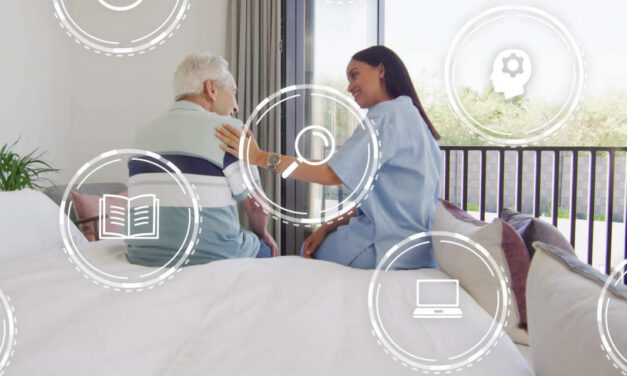
Revolutionizing Your Resident and Team Experiences at Zero Cost
By Steve Moran
This is something that has been rattling around as disconnected thinking in my head for months. I had the sense there was something here but was at a complete loss.
While at LTC100 in Scottsdale a while back, like magic, the dots connected. Two observations I couldn’t reconcile suddenly became one big idea.
The two observations:
When expenses start creeping up, it is a widely accepted practice to take a hard look at all expenditures, looking for even small ways to reduce costs. When you shave pennies in enough places, it creates meaningful, measurable improvements to the bottom line.
There are dozens, maybe hundreds, of technology vendors that promise higher efficiencies and staff savings. Mostly, the claims get dismissed because unless a technology can allow you to reduce headcount or scheduled hours, the rightful reaction is, “So what?”
A New Way To Think About It
Here is the problem that no one ever talks about: tasks always win. Team members are hired to do a job, and that job is ultimately a series of tasks. Meaningful connection with residents is also expected, but when time is tight, connection is what gets crowded out every single time.
As I was listening to some interesting AI technology pitches that included the usual claims of staff savings, it hit me hard that they were onto something big that no one is talking about.
It’s Huge
If organizations started looking for penny-sized savings in team workflows, those pennies would add up to meaningful extra minutes, maybe even extra hours, that could be used to create better experiences for residents.
Imagine your team members recouping 30 minutes a day. Or an hour.
Where the Minutes Could Come From
The savings are hiding in the friction nobody talks about. A few examples:
A care aide spends 12 minutes per shift tracking down a supervisor to ask a documentation question that an AI assistant could answer in 30 seconds.
A nurse dictates incident notes by voice instead of typing them out. That’s 8 minutes back per report.
Scheduling software eliminates three phone calls to fill an open shift. That’s another 15 minutes.
Automated family updates, a brief text or email triggered by a care event, replace the manually written message the charge nurse was composing at the end of a long shift.
The resident wears a patch or spends one minute in front of a technology-based mirror that captures vitals, loads them into the resident record, and flags possible changes in condition.
None of them is dramatic or even noticeable by themselves. But across the team and across a week or month, those moments become additional meaningful encounters between residents and team members.
What You Do With Those Minutes
This is where it gets good:
A caregiver sits down next to a resident who has been quiet all morning, not to complete a task, just to be present.
A dining team member notices a resident’s birthday is tomorrow and spends five minutes personalizing their place setting.
A nurse calls a family member not because something went wrong, but to share something the resident said that made the whole hall laugh.
A med tech finishes a pass early and takes a resident outside for ten minutes of fresh air because the weather is nice and the resident mentioned yesterday that she missed her garden.
None of those things cost money. Every single one of them is the difference between a community that delivers care and a community that delivers an experience.
The Real Opportunity
The senior living industry has been asking technology to solve a staffing problem. That is the wrong question.
The right question is, “What would your team do with their time if the friction got out of the way?”