
By Jack Cumming
Never before in the history of humankind have we had the healthcare-enhancing opportunity that we have now, in this moment.
AI Hopes; AI Fears
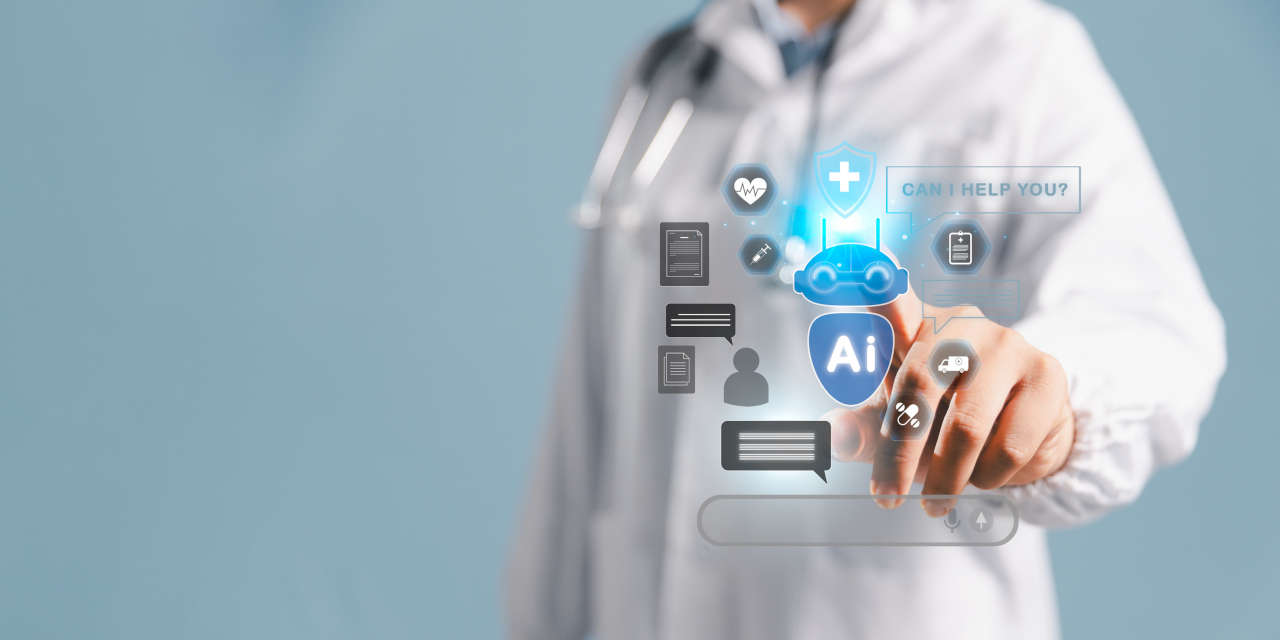
That opportunity exists within the technological miracle that we call “artificial intelligence.” AI can conduct a conversation with a layperson much like the conversation that occurs every time a physician hosts a “patient” in a clinical office.
At Davos, Bill Gates explained how this revolutionary capability can bring to the neglected peoples of the world the same access to healthcare information that wealthy Americans have with their access to the most knowledgeable physicians, specialists, and subspecialists.
Imagine a person concerned about possible malaise or abnormality able to instantly talk with a smartphone. The AI-empowered smartphone can quickly access the best information that all those physicians, specialists, and subspecialists have developed and mastered. The fear is that AI may make mistakes. Physicians, too, not only make mistakes, but they may also downplay that which later proves to have been urgent.
The Changing Role of Physicians
Most of the pundits have seen AI as helping primary care physicians serve more patients per day than has been the case in the past. That assumes that current structures remain. Click here for a Tedx Talk that reflects this thinking. The example given in the talk is doubling the patient load from about 30 patients a day to 60.
Personally, I trust AI more than a physician for whom I am just one of 60 in what must be an exhausting day. Even if a patient load of 30 per day is on the high side, it’s hard to imagine a physician who sees even 15 patients a day giving each the focus that best practice might demand.
The bigger opportunity, though, lies in improving the quality and relevance of that initial interaction while dramatically reducing the cost of healthcare delivery. Consider AI that does the whole job without high-cost human physician intervention at all. Is palpation of the abdomen called for? Ingenuity and medical engineering can deliver that. The same is true for most of what occurs during that initial visit.
Not only that, but it can also avoid the need for specialist and subspecialist referrals since AI, once trained, tested, and proven, can embody all of that knowledge. It can do it dispassionately, encapsulating intuition and gut feelings, and with more know-how than any human would be capable of mastering in a lifetime of study and clinical practice.
Pushback
It seems unbelievable. Skepticism is the reaction one gets when speaking of this possible future. That skepticism soon becomes fear. Fear is the engine for reactive regulation. That, too, is very human. As creatures, we are more emotional than rational.
Of course, there’s no assurance that such a future will materialize into reality. There are political and economic interests embedded in the status quo. Many ideas that are positive from an objective scientific and engineering perspective fall short due to negative political interventions driven by economics and catering to human fears of change. Still, the potential is there if we are able to realize it.
Senior Living
Senior living can be visualized as healthcare, or as hospitality, or as something else. Age-restricted housing, for instance, falls primarily into the “something else” category. It segregates older people from the wider community. It moves them out of sight, separated from most younger people who remain vigorous and vibrant. A corollary is that it offers hospitality and healthcare as attractions.
The fact is that older people are bigger users of healthcare than others, with the possible exception of newborns. Thus, the AI opportunity for extending and improving healthcare is particularly applicable to the senior living industry. Geriatric care is not well respected among most aspiring physicians, but AI virtual “physicians” are not impacted by such biases.
Improving Old Age
AI offers older people the chance to benefit from treatments that otherwise might be dismissed as “just a manifestation of old age.” Many of the afflictions of old age are widespread; think hypertension, fatigue, or medication interactions. AI can help with these routine aspects of aging, as well as targeting conditions like sepsis, pneumonia, cognitive loss, and more that are often dismissed as normal for old people. “After all, they’re going to die anyway.“
Opportunity Is Knocking
There is so much opportunity for senior services now. It seems inevitable that today’s conventional senior housing concepts will be challenged over the next few years. Obviously, there can be winners and losers whenever opportunity presents itself. For now, I, for one, and apparently Bill Gates, if you followed the link above, see a bright future. We’ll develop that appealing vision in articles over the next several months.
This is part of a series considering how AI, robotics, and technology in general can take senior living from laggard to leader.