

By Jack Cumming
There’s no question about it. The world of 2050 will be very different from the world of today. History can tell us how the world of today differs from that of 2002, which is the same number of years in the past as 2050 is now in the future. We can use that retrospect to have a measure for the likely pace of change in the future, though few people today are schooled to have an historical perspective.
Measuring the Future Against the Past
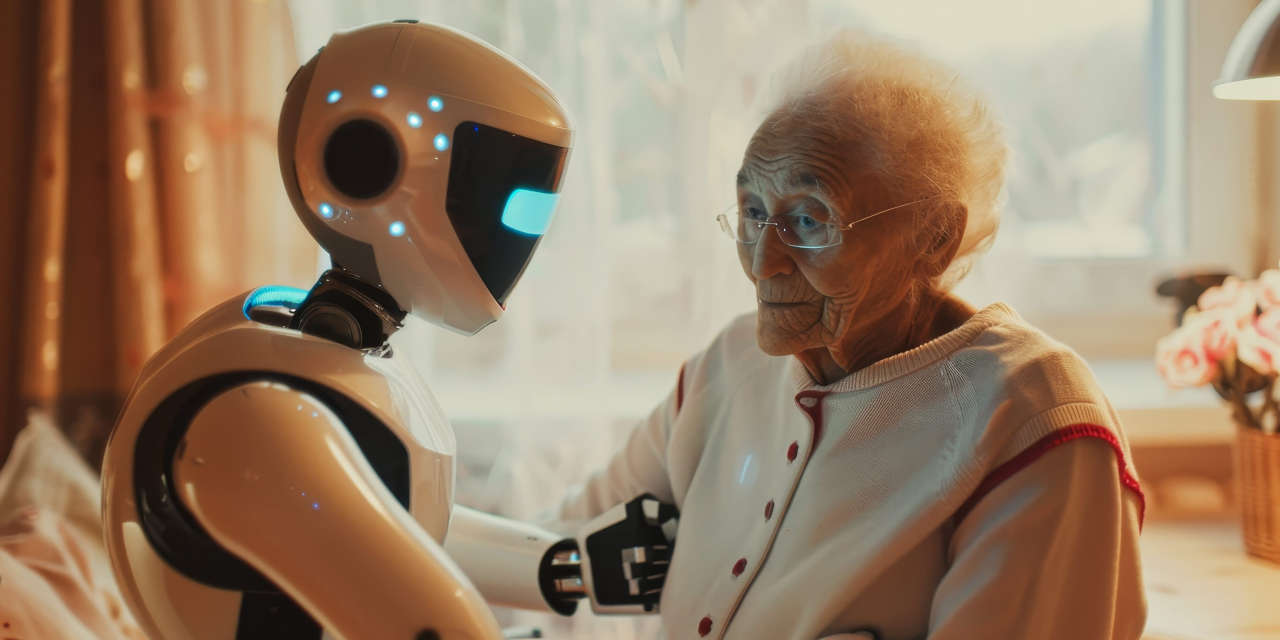
To be frank, a provocative video of humanoid robots in senior living recently brought this to mind. In 2002, the only thought of humanoid robots was fanciful. Even the HAL9000 from the fear-provoking movie, 2001: A Space Odyssey, was not humanoid, much less an army of humanoids. It was just quietly dramatic: “I’m sorry Dave, I’m afraid I can’t do that.” That was Hollywood. Machines lack independent will; even AI-aided robots are machines and lack their own will.
The video that recently caught my attention seemed both more imminent and more practical than HAL. The video on YouTube, which incidentally did not exist as a video platform in 2002, was titled, “$20,000 Tesla Bot: Free for Seniors on Social Security? — Cooks, Cleans, Never Sleeps.” It shows a humanoid robot integrated into the lives of elderly people as seamlessly as automatic teller machines (ATMs) and smartphones are integrated into our lives now.
Remember Paro? This Is More Practical
What makes it striking is that it proposes that having a government program like Medicaid give all qualifying seniors a Tesla (or other) humanoid robot would dramatically decrease the cost of assisted living. At first, I rejected that notion based on the recurring objection that people prefer human assistance to that of machines. Then, my thinking changed.
What changed my perspective was the evidence that most older people prefer to age alone in an isolated house, with just occasional human contact, rather than to be institutionalized in even a well-staffed care facility. If accepting needed assistance from a humanoid allows them to avoid institutionalization, then I think it would quickly gain acceptance.
Moreover, there is less embarrassment in being helped with intimate bodily functions by a machine-like device than having a human attendant do it. I can share that I fear that the time will come when I need assistance with toileting or showering. I can better imagine an appropriately programmed robot providing those services. Getting assistance while walking etc., would not be far behind.
Right Up There with Self-Driving Cars
Thus, the YouTube video of humanoid robots in eldercare is very much worth watching. This is particularly true if you can imagine you are the person needing assistance and if you can also imagine that the humanoid is far advanced beyond what now seems remarkable. The robots we see today are the crudest, embryonic humanoids we will ever have.
Frankly, the more I opened my mind to the imaginary robot-served world the videographer presented in the Tesla video, the more appealing it became. We can imagine the future, and some entrepreneur may unlock the potential embedded in that imagination. For most of us, though, it’s unlikely that the future will be either what we fear (AI) or what might free us (also AI).
It’s Not New
In that, we can learn from the ancients. Parmenides (ca. 540 BC – 460 BC) argued that the world is static and that change is just an illusion. It’s that old. Today, we might say that the world has to be in statis or we would consume all resources, making life unsustainable. Many believe that human nature, the balance of vice and virtue, is constant and doesn’t evolve, or as the French like to say, in case you want to sound erudite, “Plus ça change, plus c’est la même chose.”
The best advice from all this is to remain creatively imaginative, to be the early adopter, to be skilled at adapting to what works and at recovering from what doesn’t. Will humanoid robots dominate the future? That seems unlikely, though they may. Will robots take over from humans? That seems impossible. In reality, to save humankind, Dave will pull HAL9000’s plug even at the cost of his own life. That kind of sacrifice has also been part of human nature from the beginning. Just stand, as I have, in the quiet solitude of unshed tears at Punchbowl Cemetery in Honolulu, and you’ll feel the sacrifice.
Note: After viewing the video at “$20,000 Tesla Bot: Free for Seniors on Social Security? — Cooks, Cleans, Never Sleeps, check the comments. The video first appeared on May 6, 2026, and already, the comments are suggesting the probable demand.


You may be on to something. I was in the apartment of one of our residents this morning, and he was completely worn out from caring for his wife. I asked about the caretaker who had been there the last time I visited. He said, “I let her go; she was just in my home all the time. I had no privacy.” People need help when they need help. What they don’t want is someone underfoot all the time.