

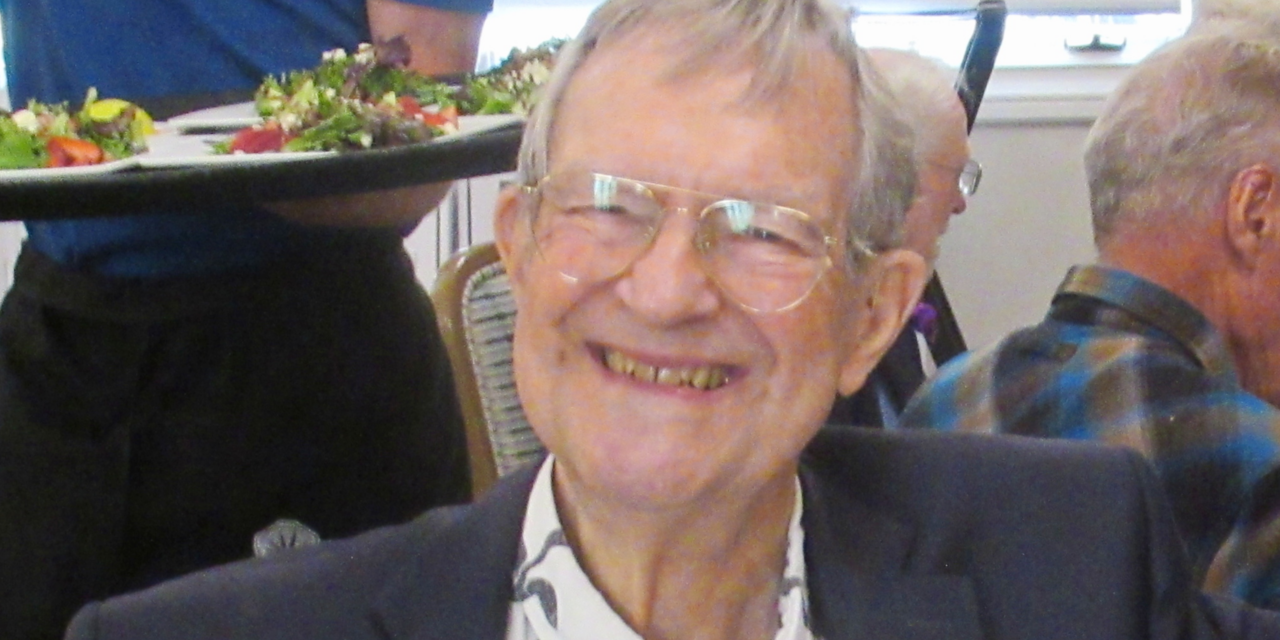
By Jack Cumming
Festschrifts and tributes are rare in a business context like senior living, but I was greatly surprised this morning, on my 90th birthday, to receive the following compendium from many of my friends who have sought to lift the industry to its potential. I thank all of you.
Tribute to Jack Cumming on the Occasion of His 90th Birthday
September 9th, 2026
One of the important events in life is the opportunity to express appreciation for people who have influenced your career. Today is just such a day. Jack Cumming and I came to know each other some twenty years ago. That was rather early in my days of academic research into how consumers may need specific safeguards when planning for quality of life, housing, and care as they grow older.
When I first met Jack, I had already written my first, rather naïve article about the phenomenon known as “Continuing Care Retirement Communities” (or CCRCs, now also sometimes known as Life Plan Communities), which was published in 2004. Jack recognized I needed to deepen my knowledge of economics, administrative law, contract law, accounting principles, and actuarial science if I had any hope of persuading anyone that residents are consumers who deserve better protection for these important options for “senior living.” There were a few lessons in German philosophy, too!
I learned that Jack was a resident at a CCRC in southern California, but more importantly, I learned that he was highly educated, very thoughtful, and was fully aware of the need for sound financial planning. Yet he freely admitted that he had bought into a high-end CCRC without first investigating the actuarial soundness of that community’s contract promises to current and future residents. Jack became my most important tutor. He has shared articles, books, and advice. He never laughed at my naïve questions (although certainly he and I spend a lot of time laughing). He explained to me about his moment of blind trust as a prospective resident in an attractive, well-located senior living community. He taught me, “Do not be beguiled by superficial details.” Do not assume that the mere fact that this is an industry with some “regulations” that regulations are “enough.” Talented, dedicated people are needed for oversight and effective safeguards.
Along the way, Jack and I became good friends during my education process about risks and benefits of continuing care. We also became great friends with other movers and shakers in this area of law, financial sciences, and more, including A.V. Powell, Scott Townsley, Karen Miller, and a host of wonderful, engaged residents from coast to coast.
I deeply cherish the time I get to spend with my friend and mentor, Jack Cumming, and I regret that usually we have three time zones separating us. Jack is, quite simply, a fountain of youth, knowledge, and friendship. Thank you, Jack, and my very best wishes to you on your birthday.
Katherine C. Pearson, Professor of Law, Penn State Dickinson Law
A Birthday Tribute to Jack: A Champion for CCRC Residents and Prospects
As a NaCCRA member, I first noticed Jack’s contributions to the NaCCRA Forums in 2021 and reached out to him with a few questions. He was always very kind, patient, and helpful. Because of his innate modesty, it took me quite some time to fully appreciate his impressive background and his extensive knowledge of history and of the complex world of senior living. His depth and breadth of knowledge combined with his fantastic memory never ceases to impress me.
Jack generously gave me access to NaCCRA’s old website, which he personally financed and populated with a vast library of highly instructive articles. I still return to this website from time to time, as most of the information remains just as vital and valid today as it was when first published. NaCCRA wouldn’t be where it is today without Jack’s significant contribution for many years.
As a prospective resident, Jack helped me acquire the essential background knowledge I desperately needed to navigate the world of CCRCs. He not only tirelessly advocates for current residents, but he also empowers prospects to make educated life decisions. For a number of years, Jack even hosted weekly gatherings for a group of us, creating a space where we could benefit from his expertise and learn from one another.
In my book, Jack is an extraordinary, dedicated, and selfless expert, a rare blend of an analytical, math-minded actuary who uses his retirement to fight for the legal and financial safety of fellow seniors. I am immensely indebted to him. I wish him the absolute best for his upcoming 90th birthday, and abundant good health in the years ahead!
Thank you, Jack, for everything you have done for me, and for every CCRC resident and prospect!
Susan Farkas
There is no better advocate for residents of retirement communities than Jack Cumming. He has been tireless in helping residents all over the country understand the industry much better than we did when we first considered moving in. He understands the benefits as well as the detriments and can give advice on pitfalls we should try to avoid.
If providers were smart enough to listen to Jack and heed his advice to pay attention to their residents, we and they would be better off.
Thank you, Jack, for everything you have done and everything I am confident you will continue to do.
Karen Miller
[email protected]
352 374-9999
A Nomination for the NaCCRA Residential Medal of Honor
Jack Cumming, NaCCRA Research Director
- For a lifetime of intelligent inquiring into the reality of aging in his time and place,
- To recognize the many challenges that both providers and residents face and in crafting purposefully living for the aging,
- For courageous and forceful communication of the reality of aging and constancy in forceful, effective voice in the public forum.
- For the complete dedication of his considerable intelligence and analytical capabilities in support of residents,
- For meriting a place of honor as THE best friend of the CCRC resident.
AS WE WISH YOU A VERY HAPPY BIRTHDAY, THE RESIDENTS OF YESTERDAY, TODAY, AND TOMORROW WISH YOU THE VERY BEST.
Personal Note: September 4, 2026
Thank you, Jack, for all you have provided me with; for your research and your writings. You set me a course of activity that I still pursue with vigor the well-being of my fellow CCRC residents. Your article, Not What We Expected, touched on the essential points that continue to vex an industry vital to an aging nation. To a friend, mentor, and critical thinker, and effective voice – Happy Birthday
Basil H. Pflumm, Brig Gen USAF (Ret’d)
Wade Taylor, Army Residence Community, San Antonio, Texas
Thank you for reaching out as Jack celebrates a significant “life well lived” milestone of 90 years. My short reflections (which do not do justice to Jack and his many contributions from my perspective) follow:
Jack is both a “legend in his own mind” (fondly said) as well as in the mind of many others. He has touched, influenced, and educated many with respect to senior living and CCRC/Life Plan living over his many years with NaCCRA and through other influential senior living associations and organizations. His early pioneer research published questions to ask before moving into a CCRC, and NaCCRAU videos influenced me greatly in my journey to search for a CCRC some 20 years ago. In sum, Jack’s published works/articles and his NaCCRA research were invaluable tools for many untold numbers of seniors.
More recently, our lives have intersected, and my relationship with Jack has become more personal, starting with my service as a NaCCRA Director, our Chat Group discussions, our personal correspondence, and his writings for Senior Living Foresight. His dogged, positive activism to critique/improve the business of senior living is notable. If there ever was a real “mover and shaker” in the senior living/CCRC/Life Plan business, it is Jack Cumming–a prolific contributor, activist, and good, decent person who has cemented his legacy many times over!
Wade Taylor
Ann Mackay, Charlestown Retirement Community, Catonsville, Maryland
I worked with Jack on the NaCCRA board over 10 years ago. I call him the “prophet” because he sees where we need to be, and he has worked very hard to educate residents and executive directors on the need for residents to be engaged and empowered.
Jack kept NaCCRA afloat with his time and money for the membership system and a website 10 years ago. He understands the importance of resident involvement and advocacy. Nara has emerged from those times with a stronger presence and strong leadership. I sometimes wonder if NaCCRA would have survived without his persistence.
He continues his thought-provoking, advanced thinking on a variety of topics, from community models to artificial intelligence and governance, in his regular senior foresight column.
Congratulations on reaching 90 years old. I will continue to read your columns and look forward to your continued contributions.
Ann MacKay, CAE (Ret.)
NaCCRA Past President
Gerard Hyland
Thank you for inviting me to contribute to Jack’s 90th Birthday tribute. Perhaps you can find something useful among some of my recollections of Jack.
My recollections of Jack go back to 2010 when I joined NaCCRA to learn about the CCRC business model. As I recall, Jack had joined NaCCRA sometime earlier than I. That might make Jack one of the longest-serving members of NaCCRA.
Jack was educated as an actuary and had a career as an executive in the life insurance industry in New York City. See attached copy of his bio.
He moved to a CCRC and became a NaCCRA member, well prepared with education and career as an actuary to contribute to NaCCRA. To explain, CCRCs were originally conceived by a faith-based organization and came into being in 1972, following the IRS Revenue Ruling 72-124. It allows homes for the elderly to qualify for tax-exempt status under Section 501(c)(3) of the Internal Revenue Code without needing to provide direct financial assistance or relief of poverty as long as the home satisfies three primary needs, that is, housing, healthcare, and security.
CCRCs intend to care for the elderly from independent living, through assisted living, and into skilled nursing, as required, without an increase in monthly service fees except for inflation, under the type A contract. Such a contract implicitly includes long-term care insurance. In the early years, CCRC bankruptcies were a big problem as faith-based and other organizations could not get the revenues correct to support the promised services to the elderly.
Professor Howard E. Winklevoss at the University of Pennsylvania, Wharton School of Business, came to the rescue by applying actuarial science to the problem. This story can be gleaned from “Life Care Communities: Promises and Problems,” Hearing before the Special Committee on Aging, United States Senate, May 25, 1983 (see attached). Jack, the actuary, retiring to a CCRC and joining NaCCRA was a perfect fit.
In recent years, Jack learned that I relocated from Oregon to Southern California, and I was then living in an assisted living facility that had been a CCRC. It was purchased out of bankruptcy by its new owner. Jack alerted me to the book by Patrick Dillon and Carl M. Cannon entitled “Circle of Greed.” The book is about the spectacular rise and fall of a lawyer who was instrumental in bringing a class-action lawsuit to court on behalf of residents in 14 CCRCs in California, Arizona, and Hawaii against Pacific Homes Corporation. (See Barr v. United Methodist Church, 90 Cal. App.3d 259 (Cal.Ct.App. 1979)).
Jack is the most intelligent, smartest, and more knowledgeable about CCRCs than anyone who I know. We have corresponded frequently over the years. I could ask him a short question and, to my amazement, receive a lengthy 15 pages of well-written, perceptive and intelligent response. See, for example, the attached review Jack wrote on the Government Accountability Office (GAO) report.
Jack had worked at New York Life Insurance Company (NYLIC), a company where my father had worked. When I told Jack, he promptly sent me a book on the history of NYLIC, for which I am most appreciative.
Jack told me the story of the problems that life insurance companies were having during the 1800’s when unscrupulous companies paid executives high salaries while the companies did not have the resources to pay benefits when the insured died. The industry was getting a bad reputation. The creation of the New York State Insurance Department (originally established in 1859 and the precursor to today’s New York State Department of Financial Services) is a landmark story of America’s transition from a chaotic, unregulated wild-west market to structured consumer protection.
The life insurance industry eventually embraced the legislation when they realized that strict, transparent regulation actually helped stable firms by weeding out fraudulent competitors and building public trust. All other states followed New York State in regulating the insurance industry. My sense is that Jack envisions an extension of state insurance laws to CCRCs to save CCRCs from themselves. As with life insurance companies, they resisted at first. Once regulation was implemented and clients had confidence in the industry, the life insurance companies were better off, as well as their clients.
Jack conveyed to me the impression that he was dismayed at the lack of similar strict, transparent regulation of the CCRC industry, given CCRC similarities to the insurance industry. He has tried to persuade the National Association of Insurance Commissioners to regulate CCRCs and to persuade LeadingAge to clean up their industry. Jack continues to work in support of the best interests of CCRC residents as well as the CCRC industry. He deserves thanks and appreciation of NaCCRA members.
Best regards,
Gerard Hyland
WHAT JACK WROTE ABOUT HIMSELF IN 2014
American Historical Association Perspectives Journal, Publication Date November 1, 2014, Career Paths
My career illustrates an opportunity that historians and humanists often overlook by leaving the preparation of business leaders principally to business and engineering schools. Skills familiar to historian analysis, writing, and integrity are what distinguish great business leaders. While case studies can bring a semblance of historical dynamism to business education, there is nothing like a historical perspective as preparation for business in a time of rapid change.
A transition in my preparation for a business career followed from a moment of insight on a warm early spring afternoon in 1956. My first two years of college were in engineering. I’d spent that afternoon in a laboratory measuring the strength of concrete blocks. Now that’s very important for engineers to know. No one wants a building to collapse under its own weight. But at 4:30 p.m., after three hours with those concrete blocks, I returned to my room to find my roommates still in heated discussion over a morning lecture on the Renaissance and Reformation. The lecture was given by “Jinx” Harbison, a consummate scholar and teacher. “My goodness,” I thought, “these guys are getting an education, and I’m crushing concrete blocks.”
The next day I initiated a shift in major from engineering to the humanities, specifically European area studies. I was afraid to jump right into a history major. History was considered formidable, and I lacked the prerequisite survey courses. Area studies allowed a historical focus with diversification into other humanities. I was fortunate to be allowed to start junior-level history courses after R. R. Palmer, the head of the history department, decided I could handle it. He had given me a stack of books, including his own, to read over the summer, followed by an informal oral exam in the fall.
Despite my shift to the humanities, my passion for a business career remained. Business serves to improve the human condition, to create employment, and to raise the overall standard of living. I wanted to be part of that practical world.
Until that moment in 1956 I had thought that an attraction to business and an interest in history were two dissimilar interests. As it turned out, that is not the case. It’s true that business is practical and history can be academic, but the academic can illumine the practical.
Like my passion for business, my interest in history began early. When I was nine years old, a captivating picture appeared on the front page of our local newspaper. Buchenwald had just been liberated, and we awoke one day to a photograph of a starving, under-clothed man standing by a bunk bed. You’ve likely seen that picture. The full horror of what our nation had been fighting suddenly was manifest before our eyes. How, I wondered, could such an atrocity have come to pass? Might it conceivably ever happen here, in the United States? Questions like these, I came to know, are the stuff of history.
My career has been as an actuary. Unlike many other business professions, including law or accounting, actuarial qualification does not require specific academic preparation. Fellows of the Society of Actuaries qualify by passing a lengthy series of examinations administered at worldwide centers. The opportunity to simply read a book and master the contents can spare the aspirant the tedium of vocational classes. The sole requisites are demonstrated mastery and good character. This can help a humanities graduate to establish the practical credentials that businesses expect.
After college I went to work in insurance, but my interest in history persisted. In that era, New York University allowed people to work for a PhD through evening courses. I was hungry to study history. The year was 1962, six years after my change of major, and four years after I’d earned my bachelor’s degree. I had become a junior officer at a major New York insurance company and was sitting for the actuarial examinations.
The self-study format of the actuarial program left me free to enroll at NYU. With the evening option, I was able to support my young family, to prepare for actuarial exams, and to pursue professional-level studies in history, all at the same time. The combination was perfect for me.
Working full-time at a demanding business position, while pursuing graduate studies at night, takes a toll. I reduced my sleep over a period of years to just three to four hours a night, though I made up for it on Sunday. To stay in shape I would run the distance from my office on 51st Street in New York City to the university building at 8th Street (roughly two and a half miles). Even though the combination of work and graduate school was stressful, I felt fortunate to have access to a first-rate university that offered evening classes.
I never revealed to my work associates that I was studying graduate-level history. They might have thought that I wasn’t serious in business, so I didn’t take that chance. I was ambitious for career advancement. I expected pushback from the business community and avoided it by studying covertly, but I was surprised to find that my dissertation adviser thought that, if I continued in business, I couldn’t be a serious history student. He wanted me to teach, but that had never been my intention. Finally, he told me he would never approve my dissertation since he couldn’t “certify” me as a historian if I remained in business. By that time, I had rewritten the first chapters of my dissertation three times. With his words I knew I would not progress. I dropped the pursuit of a PhD. Although I don’t have a degree to show for those years of effort, I gained the benefit of the education.
My business career blossomed, and I was given positions of increasingly higher responsibility. Those years of concentrated historical studies propelled my success. Historians are uniquely qualified to foresee change, to set change into context, to recognize practical innovation, and to manage the transitions from one era to the next. The sense of opportunity in a changing world distinguishes the historically trained businessperson from the graduate of a business program. It allows the historian in business to capitalize on change while others may only see change as an unpleasant challenge.
Beyond the historian’s grasp of change, practical skills from the humanities are critical to corporate leadership. Understanding of human nature tops the list. Other skills are nearly as important; not least among them is the craft of writing clearly, succinctly, and effectively. Good writing is followed closely by the ability to articulate a vision and to enlist others in the corporate cause. History provides a visionary perspective. Historians are trained to read rapidly and with comprehension; corporate leaders must absorb information quickly and cogently. Without these skills no business leader can be fully successful.
Of course, the pragmatics of business also matter. Businesspeople must know finance, accounting, marketing, organizational management, legal requirements, and the like. Historical preparation can facilitate even the mastery of these specifics. The rapid absorption of complex and varied information provides an advantage. Marketing requires deep understanding of people and what motivates them. Organizational management is not that different from the varieties of societal organization, which historians understand well. In short, a businessperson who has a strong grounding in the humanities and is rooted in history is well positioned to absorb the pragmatic vocational skills needed.
Graduate history programs can thrive if they avoid the narrow premise that graduate education is job training for teaching. Expanding the vision can bring wider awareness of the value of graduate-level historical training for business and other careers. Recognizing these broader career possibilities can create new opportunities for those with advanced history degrees.
Jack Cumming is a consulting actuary and research director for the National Continuing Care Residents Association. His aborted dissertation was on Walther Rathenau as a thinker, writer, business executive, and government official.
This work is licensed under a Creative Commons Attribution-NonCommercial-NoDerivatives 4.0 International License. Attribution must provide author name, article title, Perspectives on History, date of publication, and a link to this page. This license applies only to the article, not to text or images used here with permission.
WHAT THE INTERNET KNOWS ABOUT JACK
Jack Cumming is a prominent retired life insurance actuary and an active advocate, writer, and researcher in the senior living and housing industry. [1, 2, 3]
The biography below focuses on Jack Cumming, the life insurance actuary:
Career Summary
- Insurance Background: Spent his core corporate career working within the life insurance sector as an actuary by training.
- Senior Living Advocacy: After moving into a Continuing Care Retirement Community (CCRC) in 2006, he pivoted his focus toward senior housing and aging services.
- Research Director: He serves as the Research Director for the National Continuing Care Residents Association (NaCCRA).
- Credentials: In addition to his actuarial background, he qualified by examination as a Certified Aging Services Professional (CASP). [1, 3, 5]
Key Focus Areas & Publications
- Industry Commentary: He is a frequent contributor to platforms like the Senior Living Innovation Forum and Senior Living Foresight, where he writes about leadership, AI law, financial business models, and operational safety in senior care.
- Core Philosophy: He strongly advocates that the senior living market must evolve its business models to effectively sustain America’s rapidly aging population. [1, 3]
———————-
The digital footprint for “Jack” highlights several key facets of his life and career:
- Actuarial and Corporate Background
- Professional Roots: Before dedicating his time to senior living advocacy, Jack had a long and successful career in the life insurance industry. He is a Princeton University graduate and an actuary by training. [1, 2]
- Interdisciplinary Expertise: In interviews, he often speaks about his diverse academic journey bridging engineering, history, and actuarial science, emphasizing the deep value of the humanities in business. [1]
- A Leading Voice in Senior Living and CCRCs
- Certified Expert: After transitioning to living in a Continuing Care Retirement Community (CCRC) in 2006, he fully immersed himself in the senior housing landscape. He went as far as qualifying by examination as a Certified Aging Services Professional. [1]
- Prolific Writer: He is widely recognized on the web as a prominent contributing author for industry platforms like Senior Living Foresight. He frequently publishes deeply analytical thought-leadership pieces covering topics ranging from senior housing finance, corporate leadership, and industry ethics to the integration of technology and AI in eldercare. [1]
- The “Memory” and “History” Connection: True to your draft’s mention of his great memory, internet profiles track him as a resident who deeply understands the legislative, financial, and moral “trust” that non-profit CCRCs owe to their residents. [1]
- Advocacy and Community Building
- NaCCRA Leadership: The internet tracks his regular involvement with the National Continuing Care Residents Association (NaCCRA), where he has documented conferences, pushed for better hospitality standards, and fought against bad actors in the senior living space.
- Mentorship: He is publicly recognized as a passionate mentor who heavily champions consumer protection for prospective residents, matching your experience of him hosting gatherings to educate incoming seniors.
From the Board of the National Continuing Care Residents Association (NaCCRA)
The Board of the National Continuing Care Residents Association (NaCCRA) extends its heartfelt appreciation to Jack Cumming for his extraordinary dedication, generosity, and wisdom.
Jack has been a steadfast supporter of NaCCRA for many years. Whenever he has seen a need or an opportunity to strengthen our organization, he has stepped forward — generously sharing his time, knowledge, experience, and resources. Most recently, Jack demonstrated that commitment through a substantial financial gift to NaCCRA, offered simply because he recognized a need and wanted to help.
As Jack celebrates his 90th birthday, his passion and determination remain as strong as ever. He continues to speak out on issues affecting seniors and to generously share the wisdom gained through his many years of experience. Jack shows up — again and again — wherever there is an opportunity to advocate for seniors, exchange ideas, provide guidance, or help make a difference.
There are very few individuals who give so freely of themselves and remain so deeply committed to serving others. Jack’s 90 years have certainly not diminished his enthusiasm, his curiosity, or his determination to continue contributing.
NaCCRA has been truly fortunate to have Jack as a guiding light, trusted advisor, generous supporter, and friend. His dedication has strengthened our organization and inspired those of us who have had the privilege of working alongside him.
Jack, on behalf of the entire NaCCRA Board and our members across the country, we thank you for all you have done and continue to do. We congratulate you on this wonderful milestone of 90 years and look forward to many more years of your wisdom, friendship, leadership, and unmistakable Jack Cumming spirit.
Happy 90th Birthday, Jack — and with our deepest gratitude, thank you!
Luana Pinasco, President, National Continuing Care Residents Association (NaCCRA)
From Germany
Happy 90th birthday, Jack Cumming, the opener of worlds.
I first met Jack when I was 16 at Kolleg St. Blasien. During one of his visits to South Germany, he stepped in to teach a few English and history classes, sharing his vast knowledge simply for the joy of it. A year later, Jack and Valerie welcomed me into their home in Marina del Rey. For a teenager from the Black Forest, discovering Los Angeles opened an entirely new world.
That has always been Jack’s gift: helping people see possibilities beyond the limits of where they started. Over the years, he has positively influenced so many young people, encouraging them to pursue paths as varied as veterinary medicine, the film industry, and, in my case, the world of finance.
Decades later, my work in Mexico brought us closer again, and Jack remains a mentor to me. We now share memories of sunsets in Carlsbad, a family cruise with Jack and Valerie along the California coast, as well as a Kindle library that continually opens my eyes to questions outside my social bubbles.
Perhaps sharing Kindle libraries across generations should be a business model in itself: a way to keep our minds open.
This mentorship began before mentors became part of corporate development programs. It began unexpectedly when I was 16 and has quietly lasted a lifetime (although this post makes it a little less quiet).
Thank you, Jack, for opening worlds and enriching so many lives, including mine.
May your cup continue to run over.
Monika Rehner
Vice President Finance | International Finance & Business Transformation Executive | Strategy, M&A, Capital Allocation & Performance





Happy 90th Birthday dear Jack Cummings! You are a gift to all of us who have the pleasure of reading your thoughtful, astute, and wise comments about aging on Senior Living Foresight. Blessings always, Wellness Shepherd Wendy