


By Steve Moran
I stumbled onto this post in an activities director Facebook group, and I can’t figure out which emotion is stronger:
- Pissed off
- Broken-hearted
- Incredulous
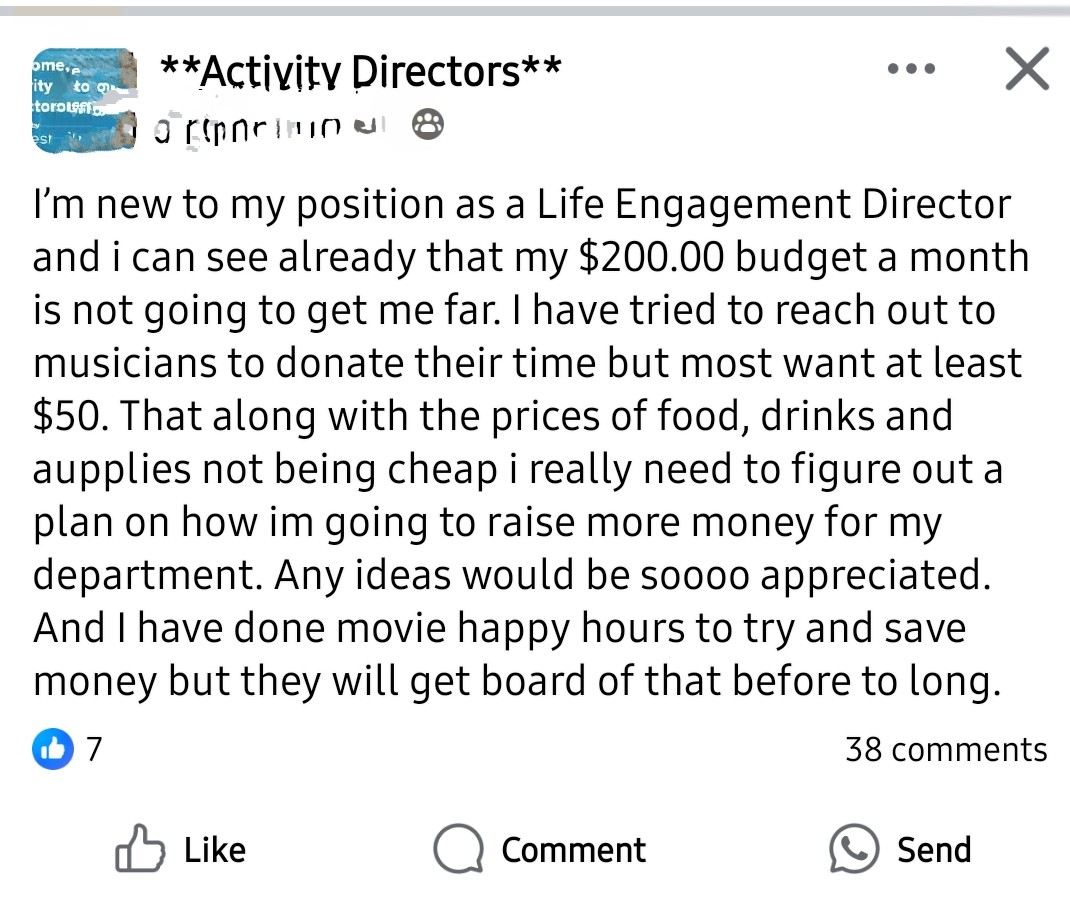
This post and the 38 comments that followed are a horrible indictment of the senior living industry — or at least a significant segment of it — and those who manage and own these communities.
5 Ridiculous Things That Should Outrage
Five things about this situation should drive every senior living professional absolutely crazy:
- It’s massively unfair and insulting to life enrichment directors. These are trained professionals being forced to operate like charity cases.
- It sets up directors for inevitable failure. How can anyone create meaningful experiences with pocket change?
- It’s insulting to residents. Management is essentially telling residents, “You’re not worth investing in.”
- It makes our entire industry look amateur. We claim to be hospitality-focused, then nickel-and-dime the very programs that define resident experience.
- This isn’t an isolated incident. The comments reveal that this budget starvation is disturbingly common across the industry.
The Comments Revealed Something Even Worse
What bothered me more than the original post were the responses. Comment after comment offered “creative solutions”:
- Tap into Facebook “Buy Nothing” groups
- Beg vendors for donations
- Invite school musicians to perform for free
- Organize fundraisers
These well-meaning suggestions prove that starvation budgets for life enrichment have become the norm, not the exception.
The Brutal Reality Check
If senior living is truly about creating exceptional experiences for residents, we need to start treating life enrichment directors like the professionals they are. That means giving them real budgets to create real experiences.
When we force directors to scrounge for supplies and beg for freebies, we’re not being resourceful — we’re being cheap. And our residents deserve better than our leftovers.






I would say number six is that it’s unfair to marketing directors who are selling “activities”. It’s a big part of the presentation. And then the activities aren’t so special because enrichment directors are on a shoestring.
I absolutely resonate with this post. I do feel that life enrichment isn’t set up for success. Even if they do have a good budget, they aren’t really set up prepared on how best to use it, how best to engage residents, what to do when they’re needed one place and they don’t have “life enrichment” staff to help in another area that needs activities. Life Enrichment is a full community endeavor with the Life Enrichment Director as the leader. Same as the Sales of the community is a full team effort, with a leader at the head. I also know that a lot of people in that role are not professionals, but are on their way to being one as senior living is often building people up in their ranks (one of the amazing things about this industry, people can grow within it!). Care of residents absolutely should come first, but I believe LE is a part of that care, but isn’t often treated as such.
To be fully transparent, likely there is a crappy budget because someone before them (or multiple people before them) didn’t spend well. Often budgets are made on a T12 Spend. When that is the case, the role of the savvy Life Enrichment Director is to spend EVERY dollar. Think ahead, plan for events and activities in a way that you can maximize that budget. AND, utilize the help of your dietary budget and marketing budget by combining forces with those departments. It will help increase the next year’s budget. Sometimes occupancy plays a role as well. $ X residents. In that case, the same collaborations and spend make sense, as new residents will equal greater opportunity.
A good CFO is going to fund all of these departments in a way that makes them engage because that is the goal of the community. Our dining services director should be helping create fabulous events and activities with our life enrichment and marketing department. Our marketing department should be aiming to get new people in the building by seeing how engaged our residents are and helping them all make friends together. It is a collaboration — a community if you will.