
By Jack Cumming
Dan Hutson recently posted the following on LinkedIn: “Thought Leader [thawt lee-der] noun: A person or organization that is a recognized authority in a particular field and whose innovative ideas influence and guide others. In senior living, someone who endlessly preaches change to an industry largely indifferent to innovation or doing anything in a significantly different fashion. Also see: Delusional Optimist.” [Source]
The Man
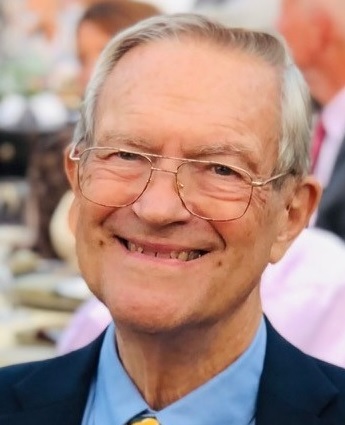
Dan Hutson is a senior living thinker brimming with ideas to improve the resident experience. His forte is marketing, and his career has focused on senior living. Dan can best be described as a practical idealist. He’s a strong proponent of designing communities with residents, not just for them. He is impatient to move the industry rapidly toward its potential before it’s too late.
Idealists give us the dreams that inspire entrepreneurs to seize opportunities to make our lives better. Entrepreneurs take the idealists’ utopias and make them the new reality. As Dan reminds us, technological and organizational developments are making the senior living industry — and, more generally, the experience of aging in America — ripe for dramatic reinvention. The Wall Street Journal recently published an article detailing how some consumers are already stealing the march on the aging services industry leaders.
Pace Matters
The slow pace of advance in senior living contrasts with the rapid pace of artificial intelligence (AI) development as documented by Karen Hao in her book, Empire of AI. Why aren’t entrepreneurial disrupters celebrated and emulated in senior living? To be blunt, I have no idea. Some say it’s not-for-profit thinking. Others point to stringent regulations, high capital requirements, and a difficult labor market. In short, it seems that there are other, more promising opportunities.
Ideas like those Dan Hutson refers to are easy to dream up but much harder to realize in practice. Moreover, moving in a new direction, even one likely to attract customers, is fraught with risk. It’s easier to defend the status quo. But, and this is a big BUT, the future will not stand still. Case after case demonstrates that staying safe in the status quo is a recipe for an enterprise to be superseded and rendered obsolete.
Clear Judgment
This is precisely the area in which a CEO earns the big paycheck and the accompanying authority. It takes considerable industry perspective and good judgment to determine how to innovate and at what pace. For instance, a sidestep into a related field may backfire and taint the core business that built the enterprise’s prosperity.
New Coke is the example that instantly leaps to mind. In 1985, Coca-Cola replaced its original formula with a sweeter, smoother version, popular in taste tests but unpopular in the market. This led the company to reintroduce the original formula as Coca-Cola Classic just 77 days later.
It might have worked if it had had a completely new name. Here’s an example. Rather than creating confusion with Levi Jeans, Levi Strauss called its casual slacks “Dockers.” That allowed it to innovate without creating confusion with its signature product. [Source]
The opposite is also true. Failure to innovate can be equally disastrous. Famously, Kodak failed to capitalize on the potential of digital photography. Xerox was notably innovative but let others gain the benefits of its research and insight. Corporate politics can damage even the most promising businesses. Apple famously faltered under John Scully but recovered when Steve Jobs was brought back in.
Financial Reality
Many senior living enterprises are now shaky. Many even have negative net asset positions, with liabilities exceeding their assets. That should be a red flag, but some explain it away as though it were of no matter. The work of addressing such a challenge is less glamorous and more demanding than the initial creative spark. Entrepreneurs tend to be optimistic creators, while their successors are often more workaday administrators. Both Eureka people and systematic analysts are needed for long-term success.
The Complacency Trap
To return to Dan Hutson’s definition, the danger for today’s senior living industry is the trap of complacency, believing, say, that boomers will bring effortless prosperity. Complacency can kill the creative spark, leading, as Dan fears, “to an industry largely indifferent to innovation or doing anything in a significantly different fashion.” Ideal is clairvoyant vision combined with the hard work and talent needed for execution. To quote Stephen Torres:
“Ideas are easy because they demand nothing but our imagination. They are free from the constraints of reality, the laws of physics, the unpredictability of human behavior, and the vagaries of the market. An idea is a personal utopia that asks for no permission, bears no cost, and is immune to failure in its embryonic stage.”
Enduring business success is a hard taskmaster. The marketplace can be unforgiving.