

By Rebecca Wiessmann
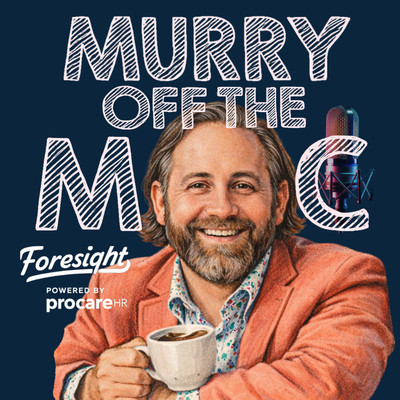
In this episode of Murry Off the Mic, Murry and Margaret Cabell of A Place for Mom talk about family behavior, technology, transparency, and the future of senior living. You can watch the full episode here.
Senior living loves to say it is misunderstood.
And it is.
But at some point, the industry has to ask a harder question:
Are families misunderstanding senior living because they are confused or because senior living is not explaining itself clearly enough?
Margaret Cabell believes transparency is one of the biggest opportunities in the industry. Murry promotes the same idea from another angle, noting that many communities struggle to own who they are.
They want to be a little bit of everything.
- A little hospitality
- A little health care
- A little lifestyle
- A little luxury
- A little affordability
- A little active adult
- A little assisted living
- A little clinical
- A little social
The result is often a mushy message that does not help families make decisions.
And families need help.
Families Want Agency
Murry raises an important point about agency in the digital process.
Senior living still funnels too many decisions through staff-controlled workflows. Families fill out forms, wait for callbacks, talk to salespeople, schedule tours, ask for pricing, request care information, and try to piece together the truth.
That may have worked better when families had fewer options and less information.
It does not work as well now.
Families are used to digital transparency in almost every other part of life. They can compare hotels, restaurants, schools, flights, doctors, contractors, and cars.
Then they come to senior living and often find vague pricing, unclear differentiators, confusing care levels, and marketing language that sounds like everyone else.
No wonder they are overwhelmed.
The industry says families wait too long.
Families might say the industry makes it too hard to start.
AI Can Help — But It Is Not the Hero
Margaret is clear that AI has a role to play, but she does not frame it as a replacement for people.
That is the right answer.
Senior living is still a human business. These decisions require empathy, judgment, listening, and experience. A chatbot cannot hold a daughter’s fear the way a skilled advisor or sales counselor can.
But AI can make people better.
At A Place for Mom, Margaret says AI is already being used to review calls, identify needs, understand objections, detect timeline triggers, spot budget confusion, and coach advisors.
That is practical. That is not shiny-object AI. That is AI being used to understand families better.
This may be where senior living should focus first, not on replacing humans, not on pretending technology can love residents. But on using technology to hear more clearly, respond more quickly, and remove friction from the decision-making process.
The Industry Will Be Embarrassed by Its Delay
Murry asks Margaret what senior living will be embarrassed about 10 years from now.
Her answer is technology adoption.
She compares it to the slow move from paper medication administration records to electronic systems. Looking back, it seems obvious that the industry should have moved faster.
The same may be true now.
Ten years from now, senior living leaders may wonder why they tolerated so much friction.
Why did families have to work so hard to get basic information? Why did communities fail to use data they already had? Why did staff spend time on tasks technology could have handled? Why did sales teams operate without better insight into what families were actually asking, fearing, and misunderstanding?
The embarrassment will not be that senior living failed to chase every trend.
It will be that it failed to use available tools to serve people better.
Differentiation Is Not Optional
Margaret says she would like to see operators better differentiate themselves and better understand how they overlap in a market.
That is a big idea.
In many markets, communities compete as if they are interchangeable. Same warm photos. Same smiling residents. Same dining language. Same care promises. Same “peace of mind” headline.
But they are not the same.
One community may be great for a highly social resident.
Another may be better for someone with complex care needs.
Another may be ideal for couples.
Another may be best for someone who wants independence but not isolation.
Another may have a culture that feels quiet, intimate, and family-like.
Another may feel energetic and full of programming.
These differences matter.
But they only matter if families can see them.
Transparency Builds Trust
Transparency does not mean every community has to be everything to everyone.
It means the opposite.
It means being brave enough to say, “This is who we are.” It means being honest about pricing. Honest about care capabilities. Honest about staffing models. Honest about lifestyle. Honest about what kind of resident thrives there — and honest about what kind of resident may not.
That kind of clarity may feel risky. But the alternative is worse: confused families, mismatched residents, frustrated operators, and a marketplace where everyone sounds the same.
The New Competitive Advantage
The communities that win the next decade may not be the ones with the prettiest brochures or the fanciest buildings.
They may be the ones who make the decision easier.
They will educate earlier. They will explain more clearly. They will use technology to reduce friction. They will give families more agency.
They will know who they are. They will say who they are.
And they will be transparent enough to help families decide whether they are the right fit.
Senior living keeps saying families need to understand the industry better.
That is true.
But the industry also needs to explain itself better.
Because the future may belong to the communities that are not just good at caring. It may belong to the communities that are good at being clear.






Good article. Transparency is (rather the lack of it) is a major issue. Marketing and sales staff refusing to share contracts when a prospect is asking for it, refusing to share some info about demographics, refusing to provide other important info stating that “we do not share this info” doesn’t help the community or the prospect. It wastes everyone’s time. AI will soon provide a lot more and more useful info than the sale staff. Making information “confidential” doesn’t inspire trust. If this happens during selling, waht can one expect after becoming a resident?