

By Rebecca Wiessmann
In this episode of Directly Speaking, Steve talks with Justin Smith, Senior Manager of Innovation at Direct Supply, about how robotics and automation are beginning to reshape senior living operations. Watch the full conversation here.
Senior living talks a lot about staffing.
Recruit more people. Pay more. Train better. Improve culture. Reduce turnover. Build career ladders. Create a better employee experience.
All of that matters.
But there is another question the industry may not ask often enough:
How much of the work itself is wearing people down?
That is where Justin Smith’s take on robotics becomes interesting. He is not talking about robots as some shiny new gadget for communities that want to look futuristic. He is talking about automation as a way to take the worst, most repetitive, least fulfilling parts of the job off the shoulders of human beings.
And in a staffing environment this tight, that may matter a lot.
The Staffing Problem Is Also A Work Design Problem
Senior living has a labor problem, but it also has a work design problem.
Too many team members spend too much time doing tasks that are necessary but not especially meaningful: walking back and forth for supplies, pushing cleaning equipment down long hallways, moving items from one place to another, doing repetitive tasks that drain energy without deepening relationships.
Justin frames the best opportunities for robotics around the four D’s: dull, dirty, dangerous, and duplicative.
That is a helpful lens because it keeps leaders from asking the wrong question.
The question is not, “Can a robot replace this person?”
The better question is, “What parts of this person’s day should no person have to spend so much time doing?”
That changes the conversation.
A housekeeper may still be essential. A caregiver is still essential. A dining team member is still essential. But if automation can remove some of the least satisfying work from their day, the job itself may become more sustainable.
Burnout Does Not Always Come From The Big Things
Burnout is often discussed in dramatic terms — crisis moments, emotional exhaustion, understaffed shifts, difficult family conversations, regulatory pressure.
But burnout also builds through the small things.
The extra trip to the supply closet. The hallway that needs to be vacuumed again. The resident call that gets delayed because someone is doing a task a machine could have done. The feeling that there is never enough time to do the part of the job that actually matters.
When those frustrations pile up, people leave.
This is where automation can make a difference, not by solving everything, but by removing some of the friction from daily work.
Justin shares that in some buildings, robotics can give back 15 to 20 hours a week on the low end and 50 to 60 hours a week on the high end. That is not just a budget number. That is staff time. That is energy. That is margin.
And in senior living, margin is often what determines whether people feel like they are succeeding or just surviving.
Better Jobs May Mean Better Retention
There is a tendency to think about automation mostly as a cost-reduction tool.
That is understandable. Labor is expensive. Margins are tight. Operators are under real pressure.
But the more interesting use of automation may be retention.
If robots can handle some of the work people dislike most, leaders have an opportunity to make senior living jobs better. Not easier in a lazy sense. Better in a human sense.
More time with residents.
Less running.
Less repetition.
Less physical wear.
More chance to complete work without feeling constantly behind.
That matters because people do not just leave jobs over pay. They leave when the work feels impossible, unsupported, or disconnected from the reasons they took the job in the first place.
Most people do not come into senior living because they dream of pushing a vacuum for six hours. They come because they want to serve older adults, build relationships, solve problems, and be part of something meaningful.
Automation can help protect that.
Staff Need To Be Invited Into The Conversation
There is one big catch: staff has to believe this is for them, not against them.
Justin is clear that when workers hear “automation,” many immediately worry that technology is coming for their jobs. That fear is predictable. Leaders cannot just dismiss it.
They have to address it.
The best implementation starts with staff input. Ask team members what parts of their jobs are most frustrating. Ask what tasks feel like a waste of their skills. Ask where they lose time every day. Ask what would help them spend more time with residents.
That conversation changes the rollout.
Instead of saying, “Here is a robot; use it,” leaders can say, “You told us this part of the job is draining. We are testing a way to take some of that burden off you.”
That is a very different message.
And it is much more likely to work.
The Human Workforce Still Matters Most
The irony is that robotics may become most valuable when leaders stop treating it as a replacement for human labor and start treating it as a support system for human labor.
Senior living cannot automate its way out of the need for great people. Residents still need warmth, judgment, empathy, humor, encouragement, and trust. Families still need reassurance. Communities still need team members who notice when something is off.
Robots cannot do that.
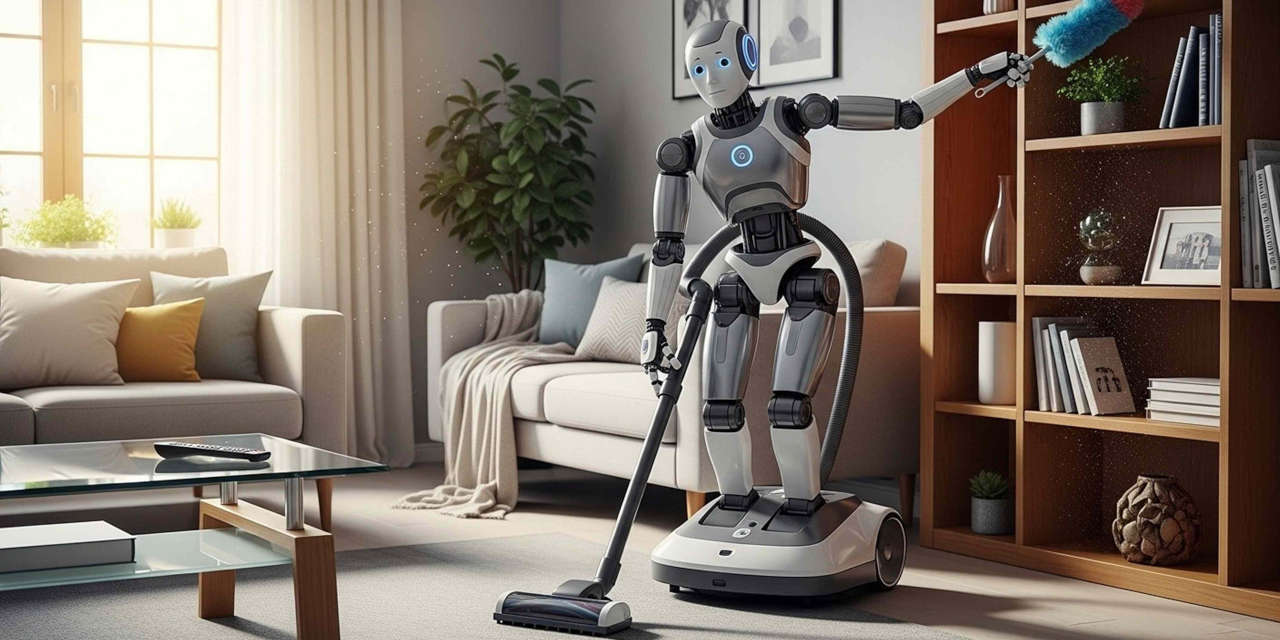
But robots may be able to clean the floor, move the supplies, deliver the items, or handle the repetitive tasks that keep people from doing those things as well as they could.
That is why this conversation matters.
The staffing crisis is not only about finding more people. It is also about making better use of the people already in the building.
And maybe, just maybe, one way to keep great people is to stop asking them to spend so much of their day doing work a robot would be perfectly happy to do.