

By Rachel Hill
This article is based on a conversation between Lynne Katzmann and Bailey Beeken on a recent episode of Women Who Reimagine.
The next generation may not want a better age-segregated community. It may want no age segregation at all.
When Bailey Beeken described the New York City apartment community she recently chose, she did not begin with granite countertops or an impressive lobby…. She talked about a feeling.
People were friendly. Residents used a shared digital network to find someone for a walk, a book discussion, or a musical collaboration. Amenities created opportunities to cross paths. Children, younger families, and older adults occupied the same environment. Residents ranged from roughly one year old to 99.
It was not traditional senior living. Yet it offered many of the things senior living claims as its strengths: community, activities, wellness amenities, accessibility, and help available in the home.
Most importantly, it was intergenerational.
Asked what would make her leave for a traditional senior living community, Beeken’s answer was direct: she would not. Being around younger families mattered too much.
That should get the industry’s attention.
People Want Community, Not Forced Merriment
Senior living often tries to manufacture community through calendars. There are events, classes, clubs, socials, and scheduled outings. Good programming creates important opportunities for engagement, but a packed calendar does not necessarily produce belonging.
Community is not the number of activities offered. It is the confidence that connection is available when someone wants it.
In Beeken’s building, technology helped make that possible. The resident network was not merely another app waiting to be ignored. People actually used it. Someone could express an interest and quickly find another person willing to participate.
That is a crucial distinction. Technology did not replace human connection. It lowered the barrier to it.
The physical environment mattered too, but not because it was the fanciest building in the city. Shared amenities gave people reasons to encounter one another. Residents themselves reinforced the culture by being open, welcoming, and visibly enthusiastic about where they lived.
The leasing agent did not have to declare that the building had a strong community. The residents proved it.
Intergenerational Living Is More Than a Feel-Good Program
Senior living has experimented with intergenerational activities for years. A preschool visits for an afternoon. Students volunteer. Residents read with children.
Those programs can be wonderful, but they are still visits. One group enters the other group’s world and then leaves.
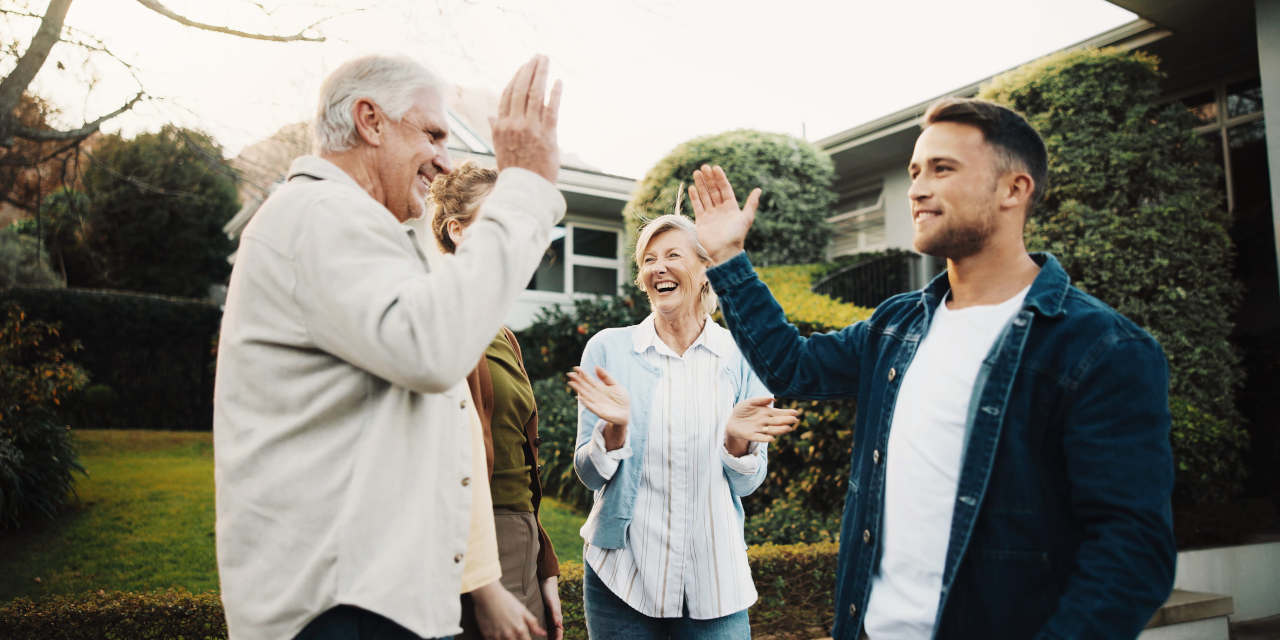
True intergenerational living is different. People of different ages share the same ecosystem every day. They see one another in the hallway, at the pool, in the fitness center, and during community events. The presence of multiple generations becomes ordinary rather than programmed.
That model can create social benefits, but it may also open new economic possibilities.
Younger households may need fewer services and more affordable housing. Older adults may pay more for added support. Both groups can use shared amenities. Families may need childcare. Older residents may want opportunities to mentor, teach, or volunteer. Some services can remain age-specific while the broader community stays open.
The model is not as simple as mixing age groups and hoping connection happens. Pricing, zoning, accessibility, staffing, risk, service delivery, and resident expectations all require serious work. The economics must be tested, not romanticized.
But the questions are worth asking.
Could independent living welcome younger residents at a different price point? Could assisted living sit adjacent to multigenerational housing? Could common spaces become genuine neighborhood assets? Could childcare, education, wellness, and home-based services create value across generations?
Stop Building Islands
For decades, senior living has often been developed as a destination apart from the surrounding community. The campus may be beautiful, but it is still an island.
The next consumer may see that separation as a drawback rather than a benefit.
Boomers have spent their lives in workplaces, neighborhoods, restaurants, gyms, civic groups, and cultural spaces filled with people of different ages. Why would they suddenly want every person around them to share the same birth decade?
The industry’s response cannot simply be a more luxurious island.
Developers should consider sites where senior living can be integrated into an active neighborhood. Existing communities should explore how their shared spaces can invite the outside world in. Operators should examine how home health, programming, and hospitality services can reach beyond the people who rent an apartment from them.
The future may be less about convincing people to enter senior living and more about extending senior living’s capabilities into places where people already want to live.
The Real Product Is Belonging
Senior living frequently describes itself as a real estate business, a hospitality business, or a healthcare business. It is all three, but those descriptions still miss something.
At its best, senior living is in the belonging business.
Belonging cannot be installed like a countertop. It emerges when people can see one another, find one another, and contribute to something larger than their own apartment.
If the next generation wants to keep being its best self, the industry will need to offer more than care in a beautiful building. It will need to create communities that remain connected to real life, including children, families, neighbors, and people whose ages do not fit neatly inside a target demographic.
The boldest future for senior living may begin by removing the boundary around “senior.”