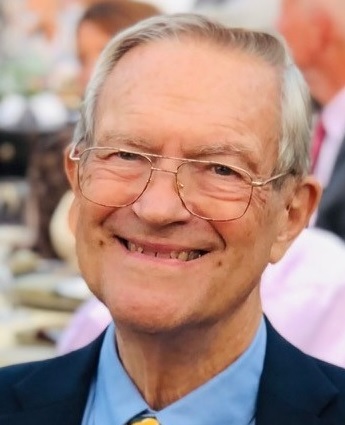


By Jack Cumming
Before his death, my friend Dan Engstrom used to hold forth about how humans would soon be living to 150. Dan hoped he would be one. Poor Dan didn’t make it. A short while ago, Vladimir Putin and Xi Jinping were heard sharing the same rumored hope. I thought of Dan.
Immortality Fantasies
Another friend, who is now over 100 and still vital, said to me years ago, “I always thought that God might make an exception in my case.” So far, God has. From ancient times, human mortality has been a source of anxiety and concern. It’s part of our shared human commonality.
It’s no wonder that the suggestion that people might live to 150 immediately took on a cloak of technological possibility. The idea of doubled longevity was advanced in a May 2021 article in the journal Nature Communications. It was picked up and publicized in Scientific American.
What a happy thought. It’s probably a happier thought for Messrs. Xi and Putin, who are now just 72 years old, than it might be for someone who is 149 and approaching that 150th birthday. Personally, I prefer the uncertainty of when to the certainty of a rigid cutoff.
Looking at the Science
As an actuary, the ultimate limit of life is a concept that has intrigued me ever since I first encountered survival curves in my early 20s. Then, the idea was that the limit was about age 120. That was based on the concept that normal human cells have a limited replication capacity after which they enter a state called senescence. Further research over the years has refined this premise by identifying causes.
To be specific, DNA research suggested that chromosomes “are capped by protective DNA sequences called telomeres, with a small section lost with each DNA replication.” Voila! Next was the hope that once we understood the mechanism, we might reverse the effect. My guess is that the possibility of reversed aging is what so fascinates Xi and Putin. Absent such a breakthrough, though, the telomere phenomenon is consistent with the life limit of 120 years.
Examples of Long Lives
Jeanne Calment is often claimed to have been the oldest living person, and she died of “unspecified causes” at age 122 in 1997. Perhaps … There is an alternative theory of Russian origin that her daughter, Yvonne, may have assumed her identity after Jeanne’s death in 1934, making Yvonne the one who died in 1997 at 99. Ms. Calment lived in Arles, which makes one wonder if she knew van Gogh as a young girl, but that’s just an intriguing digression.
This presents a common problem with tales of extraordinary longevity. Until very recently, many people were born at home, and births were seldom registered with anything credible to avoid the kind of identity assumption ascribed to Ms. Calment by the Russians. Thus, we can’t really know for sure, though the fantasy of living an active life till age 150 and then dropping dead without further ado seems more wishful than realistic.
Likely or Implausible?
Not long ago, Nature magazine, which published the article that led to the age 150 dream, published another article with a different conclusion. The more recent article is titled “Implausibility of Radical Life Extension in Humans In The Twenty-First Century.” If that makes more sense for you, you’ll find me in radical agreement with you.
Moreover, both articles rely heavily on social scientific thinking. There’s no question that social scientists contribute effectively to natural philosophy. Still, humans have a capacity for significant breakthroughs, and the effects of those breakthroughs do not lend themselves to predictive patterns, which are the essence of social science.
Penicillin was such a breakthrough. Vaccinations have likewise advanced human longevity and helped to preserve vitality. We’ve been living in the healthiest era in human history, though that has come to be so taken for granted that some now question that reality.
Follow the Money
Not surprisingly, the hope that the dream of living to 150 years old may be valid is drawing investors. After all, Ponce de Leon was well funded in his quest for the fountain of youth. Click here for a short video detailing the pragmatics that investing now in longevity will pay off soon. Trust your common sense and enjoy the video.
Not long ago, Dolly Parton was asked what she would like people to say about her 100 years from now. Her answer was quick: “Dang, doesn’t she still look good for her age?” Keep hope alive.