By Rebecca Wiessmann
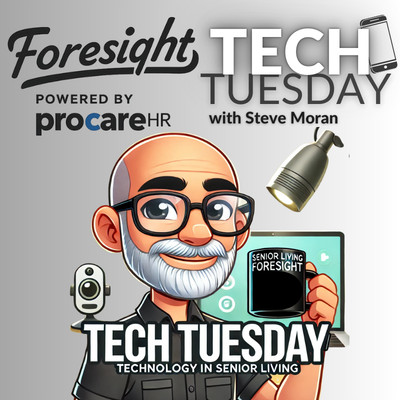
In this episode of Foresight TV, Steve sits down with Sam Tomlinson, EVP of Warchawski, for a candid conversation about what is broken in senior living marketing — and what operators can do differently. You can watch the full conversation here.
There is a marketing disease in senior living.
It is called sameness.
Same stock photos. Same “chef-prepared meals.” Same “caring team.” Same “vibrant lifestyle.” Same blog posts. Same guides. Same headlines. Same offers.
And then operators wonder why prospects do not see them as different from the community down the street.
That is the heart of the conversation Steve has with Sam Tomlinson. Sam works with senior living operators and other brands to help them generate more leads, more sales, and more move-ins. But what he sees too often in senior living is not just mediocre marketing. It is marketing theater.
It looks like marketing. It checks the box. It creates activity.
But it does not actually move the business forward.
Content Theater Is Not Content Marketing
Sam tells Steve about auditing senior living websites and finding something stunning: the same blog posts and guides appearing on multiple community websites, sometimes with only minor tweaks.
The operator thought the agency had created original content for them.
It had not.
The agency had technically delivered what was within scope — articles, guides, and posts. But the content was not unique. It did not reflect the community. It did not tell a story. It did not give prospects a reason to care.
Steve calls it what it sounds like: malpractice.
Sam is careful not to throw agencies under the bus, but he is blunt about the problem. If the content being created for a community is essentially the same as the content being created for everyone else, how could that community possibly stand out?
It can’t.
And that is the point.
Senior living operators often work very hard to create communities that really are different. Executive directors can explain what makes their team special. Care teams can describe their unique approach to memory care. Operators can talk about adaptations, innovations, programming, culture, and design.
Then the marketing strips all of that away and says, “warm, caring community.”
That is not differentiation — that is surrender.
The Industry Keeps Hiding Its Best Stories
One of Steve’s long-standing frustrations is that when he asks communities what makes them better than the community down the street, many cannot answer clearly.
Not because they are not better, but because they have not done the work of naming it.
Sam says senior living has been conditioned to appeal to the largest possible audience. The result is blandness. Everyone wants to be everything to everyone, so they end up sounding like nothing to anyone.
This is especially tragic because senior living has great stories.
Stories about residents who rediscover purpose.
Stories about adult daughters who finally sleep at night.
Stories about caregivers who notice the tiny changes no one else sees.
Stories about dining teams, life enrichment teams, nurses, maintenance directors, executive directors, and sales counselors who are quietly doing remarkable work.
But too much senior living marketing never gets there.
It stays at the surface.
It talks about amenities instead of outcomes.
It talks about services instead of transformation.
It talks about care instead of trust.
It talks about lifestyle instead of life.
Marketing Needs Accountability
The conversation then turns to another uncomfortable issue: accountability.
Sam says many senior living ad accounts look like they were set up years ago and barely touched. Operators may be spending tens of thousands of dollars a month but not really know what is working, what is broken, or what needs to change.
That is not just an agency problem — it is also an operator problem.
Steve pushes on this point: If an operator hires an agency, how much does the operator need to know?
Sam’s answer is simple: enough to lead.
The agency should be a strategic partner, not the person in charge of the business. Operators do not need to become marketing experts, but they do need to understand enough to ask good questions, demand meaningful reporting, and connect marketing activity to business outcomes.
Clicks are not enough.
Impressions are not enough.
Raw leads are not enough.
The real questions are: Are the leads qualified? Are they becoming tours? Are tours becoming move-ins? Where is the process breaking down?
That is where marketing becomes useful.
The Sales Circle Of Death
One of the most important moments in the conversation comes when Sam talks about what he calls the “sales circle of death.”
It works like this:
Sales teams believe internet leads are low quality.
So they deprioritize them.
Because they deprioritize them, they respond late.
Because they respond late, the leads perform poorly.
Because the leads perform poorly, the sales team concludes that internet leads are low-quality.
And the cycle continues.
Sam gives an example of a community where the median callback time was 36 hours.
By then, the prospect may not even remember filling out the form. They may have contacted 10 other communities. They may have already scheduled a tour elsewhere.
A good lead treated like junk will often behave like junk.
That is not a lead quality problem. That is a response problem.
Sam argues operators need to set a clear expectation: every inbound lead gets a professional, prompt response. Not just referral leads. Not just the ones sales likes. Every lead.
Bad Data Makes Good Marketing Hard
There is another hidden killer: data starvation.
Sam says many sales teams wait until the end of the month to update their CRM with tours, lead status, and move-in information. From a marketing perspective, that is a disaster.
Google, Meta, and other platforms need consistent data to learn what is working. If they get no useful feedback for 30 days and then a big data dump at the end of the month, the system cannot optimize properly.
Marketing platforms are powerful, but they are not magic.
Garbage in, garbage out.
Or as Sam puts it, technology is a tool — and a fool with a tool is still a fool.
Stop Asking For Contact Information Before Providing Value
Steve also raises one of his pet peeves: senior living website chatbots.
Too many of them respond to almost every question the same way: “What is your name, phone number, and email address?”
That is not helpful.
It is not a conversation.
It is a form pretending to be a chatbot.
Steve’s point is exactly right: consumers are not going to give contact information unless the community first gives them something of value.
Sam says this requires a shift away from raw lead totals and toward qualified contacts. Getting fewer leads can be a win if more of them are real prospects. It means less wasted time for sales teams and better experiences for families.
The Real Opportunity
The good news is that none of this is impossible to fix.
Communities can tell better stories. They can create original content. They can demand better reporting. They can respond faster. They can feed better data back into their marketing systems.
They can stop sounding like every other community.
But it requires courage.
The courage to be specific. The courage to say, “We are not for everyone.” The courage to measure what matters. The courage to stop doing content theater and start doing real marketing.
Senior living does not need more generic blog posts, prettier stock photos, or chatbots that beg for phone numbers.
It needs marketing that tells the truth about why a community is worth choosing.
That is where the move-ins are.