

By Rebecca Wiessmann
There is a phrase senior living operators use constantly: resident-first.
It sounds right. It feels right.
But Scott Hames, COO of Blake Management Group, makes a compelling argument that there is a step senior living too often skips.
Take care of the people who take care of the residents.
In this episode of Heard in the Halls, host Lindsay Daugherty of Sage talks with Scott about leadership, culture, and why the frontline workforce may be the single biggest factor in creating great senior living communities. You can watch the full episode here.
Residents Feel What Employees Feel
Scott has spent nearly 30 years in senior living, and his philosophy is pretty simple.
He focuses first on the team.
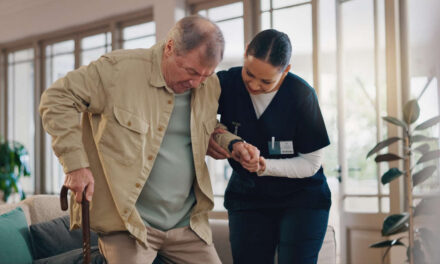
That means the caregiver giving a shower at 8 p.m. The dining employee preparing breakfast at 6:30 in the morning. The housekeeper, server, med tech, nurse, and concierge.
Corporate leaders are not delivering most of the resident experience. Those people are.
So Scott argues that if an organization trains them, invests in them, listens to them, and creates an environment where they can succeed, great resident care tends to follow.
It sounds obvious.
And yet, senior living has a remarkable ability to leapfrog right over the employee experience while talking endlessly about the resident experience.
That doesn’t work.
You Can Feel Culture
Scott also points out something executives sometimes forget: A spreadsheet can tell a leader a lot about a community … but it cannot tell them everything.
When Scott walks into a community, he watches and listens.
- Are team members talking with residents?
- Is there laughter?
- What does the building smell like?
- What does the food taste like?
- Does the place feel alive?
Those things matter because culture is something people experience long before somebody explains it to them.
Scott once took this even further by staying in a memory care guest room while visiting one of Blake’s Texas communities. It gave him the chance to see the building across first, second, and third shifts.
Not the cleaned-up executive-tour version.
The real thing.
That matters because the people closest to residents often know things no dashboard can reveal.
The trick is being willing to ask them.
And then, more importantly, being willing to hear the answer.
The Moments Nobody Sees
Some of the most important work in senior living never appears in a KPI.
A caregiver sits with a resident having a terrible day.
An employee comforts a grieving spouse.
A team member becomes a temporary stand-in for family while someone is receiving hospice care.
Nobody rings a bell. Nobody issues a press release. Often, nobody outside that community ever knows it happened.
Yet these may be the moments residents and families remember most.
Senior living gets plenty of attention when something goes terribly wrong. Scott would like to see the industry get better at recognizing everything that goes right every single day.
He is right.
Not because senior living should hide its failures, it shouldn’t.
But because the full story of this industry includes thousands of people quietly doing extraordinarily human work.
Leadership Starts There
One of the dangers of climbing the senior living leadership ladder is getting farther and farther away from the actual work.
Scott admits that it’s one of the hardest parts of being a COO.
As an executive director, if something needed fixing, he could often fix it immediately.
At the corporate level, change travels through systems, processes, and other leaders.
That makes having the right people even more important. The goal is not to have executives swoop into communities and save the day. The goal is to build teams that already know what great looks like.
When leaders begin seeing frontline associates as the foundation of the resident experience rather than simply a labor expense, something changes.
The caregivers get better.
The culture gets better.
And ultimately, residents get something much better too.
That feels like a pretty good place to start.