
By Rebecca Wiessmann
Steve Moran and Gaurie Rodman dig into this in the most recent episode of Directly Speaking. Watch the full episode here.
The Best Senior Living Communities May Start Thinking More Like Villages
If senior living wants to win with the next generation of residents, it may need to stop thinking so much like an isolated campus and start thinking more like a village.
That idea sits at the center of Steve’s conversation with Gaurie Rodman from Direct Supply. And it is not just about architecture. It is about daily life.
What makes a place feel alive?
What makes it feel social?
What makes it feel like somewhere a person chooses to live rather than somewhere they reluctantly accept?
Gaurie keeps coming back to a simple point: the answer is not doing everything alone.
Stop Trying To Do Everything In-House
Senior living has long been built around the idea that one building should provide every experience internally. Dining, activities, hospitality, wellness, social life — all under one roof, all managed by one system.
That sounds efficient. Sometimes it is.
But it also produces sameness.
And sameness is exactly what many future residents are going to resist.
What excites Gaurie most right now is seeing operators and developers rethink that model through partnerships. Instead of treating the building as a sealed container, they are beginning to imagine it as part of a larger ecosystem.
A coffee shop might operate more like a local bistro. A community dining program might incorporate restaurant partnerships or even food trucks. Outside businesses might bring energy into the building, while residents stay connected to the rhythms of normal life.
That does two important things at once. It improves resident experience, and it reduces the pressure to make every single service function entirely self-contained.
That is smart.
Food Is More Important Than the Industry Thinks
Steve has long argued that senior living often underserves residents when it comes to food. This conversation gives that idea real dimension.
The old model is operationally tidy: fixed meal schedules, standardized service, predictable production. It makes sense on paper.
It makes less sense if the goal is to let people live like actual human beings.
Most people do not eat breakfast the same way a senior living dining program serves breakfast. Many want coffee first. Some want something light. Some want something later. Some want to eat alone. Others want a social meal.
Boomers, in particular, are going to expect choice.
They are not going to quietly accept one-size-fits-all dining just because that is how the schedule works. They have lived too long, eaten too broadly, and become too accustomed to personalization in every other part of life.
Gaurie believes the industry is finally moving. À la carte approaches, more individualization, more flexible procurement tools, more varied food experiences — all of that points toward a better future.
And frankly, it needs to.
Food is not a side issue. Food is identity, comfort, pleasure, routine, culture, and community all rolled into one.
A Village Inside a Village
One of Gaurie’s best phrases in the discussion is the idea of creating “a village inside a village.”
That is exactly the right mental model.
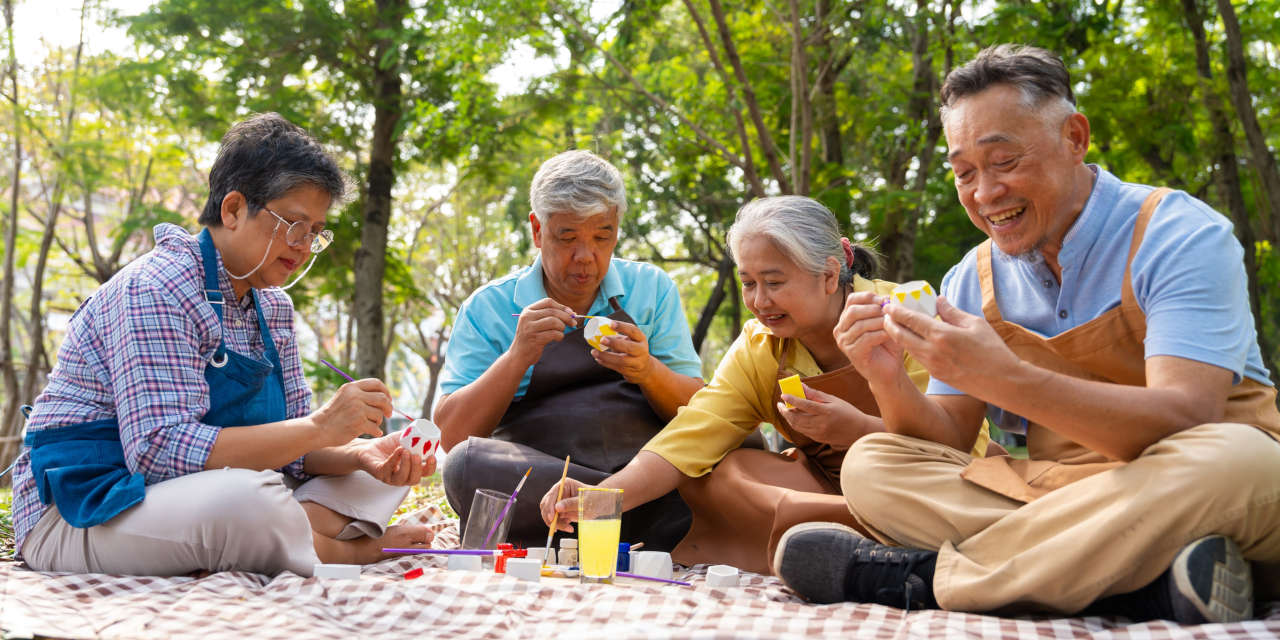
Instead of a building with a few scattered amenity rooms, imagine a place with distinct destinations and experiences. A wellness suite that feels like a real destination. A man cave for games and football. A painting and yoga room with an entirely different mood. Spaces that connect to the outdoors. Areas with enough character that people can see themselves in them.
Not every resident wants the same atmosphere. Not every resident wants the same kind of socialization. Good design recognizes that.
The goal is not just to fill square footage. The goal is to create a small world with variety, personality, and options — the kind of environment where residents can move through the day based on mood, interest, and identity.
That is what real living looks like.
Buildings Should Invite the World In
There is another important idea tucked into all of this: community integration.
Too often, senior living has been built apart from everything else. Not always geographically isolated, but emotionally and socially disconnected from the surrounding neighborhood.
That needs to change.
The future is likely to favor communities that feel porous, connected, and engaged with the places around them. That might mean neighborhood-facing dining venues. It might mean local partnerships. It might mean spaces where family members, visitors, and community residents naturally mix with older adults.
Not because it is trendy. Because it is human.
People do better when they remain part of life.
Better for Residents — Better for Staff
There is a hidden operational win here too.
When a community uses partnerships well, it can improve staff life. Gaurie gives one small but powerful example: if an outside food partner can occasionally cover a meal period, food service staff may gain more predictable time off.
That matters.
Senior living has spent years talking about staffing primarily as a shortage problem. And that reality does exist. But it is also a quality-of-life problem. Better design and better operating models can reduce friction, improve workflows, and create healthier jobs.
That is not a bonus. It is part of the strategy.
What This Really Means
The bigger lesson is not “add a food truck.”
It is this: stop designing communities around institutional convenience and start designing them around how people actually want to live.
People want spontaneity.
They want choice.
They want atmosphere.
They want ordinary pleasures.
They want a little surprise.
They want the freedom to decide who they are that day.
Senior living does not need more generic amenities.
It needs more life.