

By Jack Cumming
Recently, a YouTube video caught my eye. It was titled “No Vacation Nation,” and it asked, “Why Americans Don’t Take Vacation (and Why Europeans Do)?” For most of my life, I’ve enjoyed what I do. Even happy employees enjoy a change of pace; vacations are one of the prime benefits that an employer can offer to attract top-flight workers.
PTO Culture
Early on in my career, when my work was less satisfying, I did take a vacation. One year, when I was 31 years old, I took nine consecutive weeks off to spend time in Germany. That took some negotiation with my then-employer, but my work was not essential, my absence didn’t inconvenience others, and we made it work.
As the video notes, many Americans are reluctant to take vacation either because their work piles up, creating difficult days when they return, or because they would have to inconvenience others who would be forced to take up the slack while they’re away.
It hasn’t always been that way. The modern idea of a one- or two-week vacation arrived with the industrial age. In the extreme, not only did slaves not feel responsible, but they were denied any vacation whatsoever. That sad history, too, is a part of our American culture and heritage. Assembly line work was structured so that one worker could easily be substituted for another, so perhaps that is where our twentieth-century vacation concepts took root. Henry Ford famously doubled worker pay to make them grateful for their jobs despite the monotony of an assembly line.
Ideological Contrasts
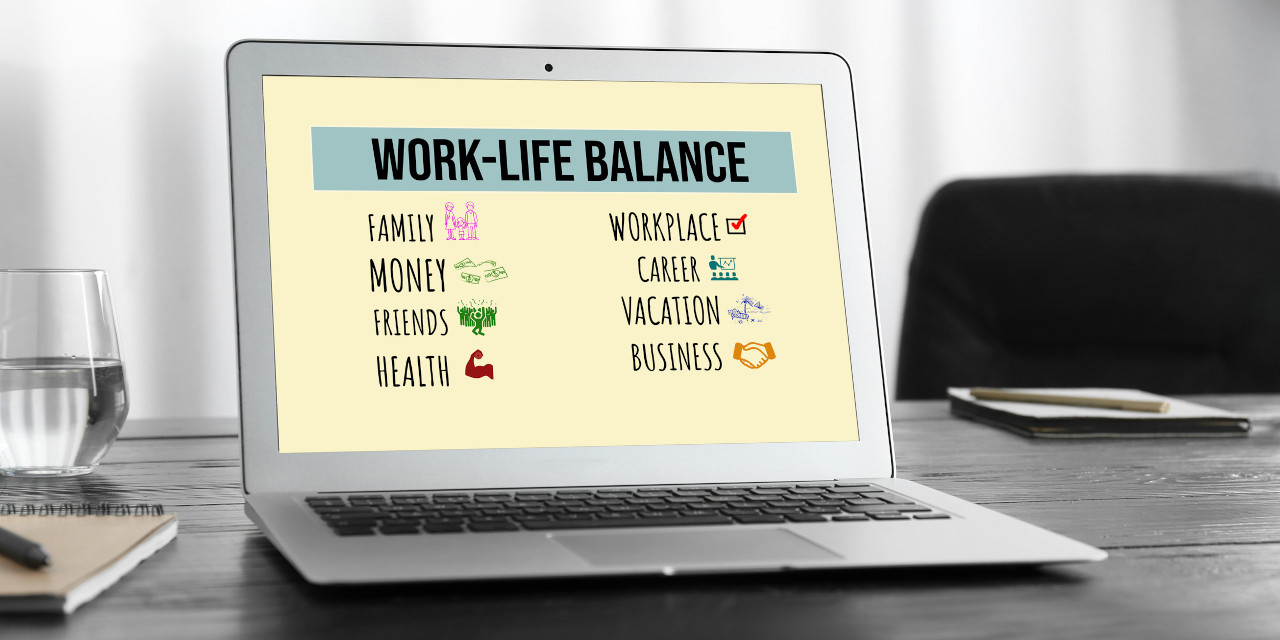
Now, in the twenty-first century, we speak of work-life balance. The video reports that the United States and Micronesia are the only countries in the world that do not legislate minimum vacations. Perhaps that reflects an ideological difference. Karl Marx concluded that work is exploitation and should be rewarded accordingly. The idea was that an employer only hires workers if the employer can profit from the worker’s labor. That, Marx concluded, made work exploitation much like slavery was exploitation.
The American Dream is predicated on a different ideology. James Truslow Adams, who originated the term, perceived America as a land of opportunity in which everyone can achieve their potential regardless of birth through hard work, talent, and a reasoned appetite for risk and seizing opportunities. That dream is still alive in our free enterprise culture, in which it is relatively easy to start a business enterprise. Nevertheless, Adams recognized that unchecked capitalism could lead to unjust economic inequality and that government oversight was necessary to preserve the equitable spirit of the American Dream.
Vacations
When it comes to vacations, we still leave businesses unchecked in their generosity, or lack thereof. Given a 52-week year, economically, granting a week’s vacation costs just 2% of payroll. Thus, an employer granting no vacation has to be astonishingly parsimonious. Still, in a two-person enterprise, an employer who gives that one worker a week off has to do double duty during that time. That can work if there is a slow time for the business. It can be difficult, say, in a small board-and-care home in which tasks are continuous.
Strangely but perhaps predictably, employers tend to give the most generous vacation plans to their highest-paid employees even though, arguably, their continuous attention to their work duties is the most critical for the enterprise. These higher-ups are also more likely to find their work satisfying. There are precious few people who enjoy cleaning up after incontinence, though many may come to see it as an essential service that lifts them in their own estimation.
HR Is Complicated
You may take the vacation policies of your employer for granted, but they are a key part of meeting the workforce challenge. Not all employers have difficulty hiring people. Thus, it’s wise to have a creatively expert HR collaborator when designing an effective employment platform. Happy employees are central to happy residents, and happy residents lead to a happy reputation and higher occupancy. Click here for the No Vacation video.