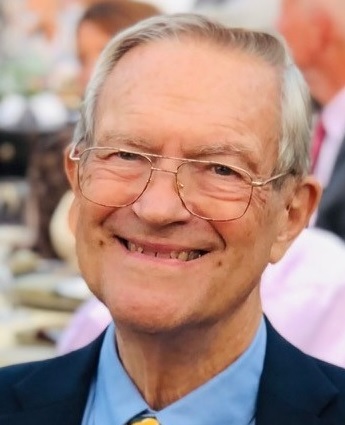


By Jack Cumming
One of the more perplexing challenges of our increased longevity is the growing problem of people with impaired cognition. We’ve treated this as a medical problem, and medically it correlates with brain changes. Lawyers draw a bright line between legal competency and incompetency, but that’s simplistic. Many providers treat memory as a profit opportunity, while others offer memory care to complete the continuum of care.
Scary Incidence Trend
The prevalence of diminished cognition leads to more and more research and thought about the challenge. It’s not just a challenge for older people. Social psychologist Jonathan Haidt has shed a spotlight on the growth of limited attention capability among young people. An inability to concentrate and learn is also a form of cognitive limitation.
This is a double concern because our cognition, our ability to reason, is the defining characteristic of humans and that which differentiates us from other animals. In senior living, we have a narrow focus that overlooks the growing presence of cognitive decline among all ages. The effect of attention deficit, perhaps due to overstimulation by short shock videos and headlines, is that cognitive decline is not just an age-related circumstance.
Loss of Competence
At the same time, the myth of democratization has led to pushback against elitism. What distinguishes the very elite universities from more vocational institutions is their requirement for concentrated reading, thoughtful writing, and skepticism toward putative authorities, including “authoritative” textbooks. When did a student ever get an A grade for debunking the textbook used by the author-professor in a vocational course?
This focus on authority, combined with shorter and shorter attention spans, gives us a diminished capacity to think through what dementia care might be. Today’s “memory care” is an asset class, designed by an architect, with locked doors and single rooms around a central room for eating and playing. Why should late-life cognitive loss mean life incarceration?
Alternatives For the Afflicted
Agrace in Madison, WI, is developing a dementia village along the lines of the successful Dutch prototype in the Netherlands. You’ve likely read about the Dutch concept. It’s an intriguing concept that seeks to normalize the lives of people who no longer meet the basic expectations of society at large. Canada, too, has such a village. Where? In British Columbia, of course.
Investment ROI. There are three approaches to dementia care. One is the investment-asset-class/architectural approach, which results in purpose-built dementia facilities. Those investments will be challenged as cures emerge for the physical causes of cognitive impairment. A cure could quickly render such facilities redundant. For these, design comes first, and patient/family/staff interactions follow.
Humane Living. Then, there’s the humane living concept. The Dutch village is an example of that. Those communities will likely be easier to repurpose if the need for memory care diminishes. After all, it’s easier to repurpose a village than it is a non-punitive prison.
Understanding and Insight. Lastly, and most valuable, is the approach of understanding, observation, and constructive response. That is best epitomized by Teepa Snow. Consider early-onset dementia. That is likely to explode rapidly if Jonathan Haidt’s observations prove as damaging as they seem to be.
Recently, Teepa Snow interviewed a couple stricken by early-onset dementia. The disease affected the couple as a couple, as is evident in the interview, even though it is the man who is directly afflicted. Click here for Part 1, here for Part 2, and here for Part 3 of that revealing interview.
Teepa significantly recognizes the impact on loved ones. The afflicted person often fails to realize the abnormal thinking that is evident to loved ones. That can leave spouses bewildered and blaming themselves. Guilt and lost self-confidence affect the spouse, while the afflicted person has no concept of the damage done to others. That’s the “contagion” that we often see with dementia.
What Makes Sense?
Of the three approaches, Teepa Snow’s acute observational common sense seems to me to show the most promise. She clearly recognizes that cognitive loss is not a single affliction. The brain is the command center of the body, so any change may trace to a segment in the brain. In the interview, eyesight is a telltale.
Money or Mission?
Agrace recognizes that locking people up is not a solution. People can freely wander the village. A day care option allows those stricken to go home every evening to their loved ones for as long as that proves practical.
The importance that businesses give to revenue realization is evident in the practice of many conventionally architected facilities to charge piecemeal for services, running up big bills and breeding anxiety. It’s not uncommon for enterprises, nonprofit as well as for-profit, to elevate the pursuit of revenue over consumer experience or value. That can seem plausible, but it can also be short-sighted.
Loren Shook, the Silverado CEO, is a sensitive independent thinker like Teepa Snow. He famously avoids shocking families by bundling residents into just two categories. The differentiator is the added cost when people become incontinent and need extensive hygiene assistance.
Takeaway
The care and treatment of people stricken by senility is in its infancy. That’s unexpected given the ancient origins of observed old-age dementia. Only now, though, are we beginning to understand the workings of the brain and its components.
At the same time, we are experiencing an explosion in people with diminished cognitive capacity. Part of it is the lengthening of the lifespan, leading to more people living to ages at which brain decline is common. Worrisome is the newly emerging insight that changes in child and adolescent usage may accelerate younger age onset.
For now, there is no established authority, and any source that claims such authority should be treated with skepticism. We can learn from insights, which is what makes a person like Teepa Snow an expert in the state of the art today. Expertise and inquiry are not the same as claims of authority. We know so little about brain plasticity, but we are learning, and in the meantime, miracles do happen, as you can learn by clicking here.