

By Rebecca Wiessmann
In this episode of Directly Speaking, Steve talks with Justin Smith, Senior Manager of Innovation at Direct Supply, about how robotics and automation are beginning to reshape senior living staffing, care, and operations. Watch the full conversation here.
For years, robots in senior living have been more promise than reality.
Steve remembers seeing his first robots in the industry more than a decade ago and thinking they were going to be a game-changer. Then, mostly, they weren’t. Every once in a while, a community would roll out a dining room robot or some shiny new gadget, but the technology never seemed to gain much traction.
Justin says the reason is pretty simple: early robots were often novelties. They were interesting. They were fun. They might have been good for marketing. But they did not always solve an urgent operational problem.
That is changing.
The reason is not that robots suddenly became cute enough or futuristic enough. It is that labor is becoming more expensive, staffing is becoming harder, and operators are being forced to rethink how work gets done.
That is the shift.
Robots are no longer just a “wouldn’t that be cool?” technology. In the right use cases, they are becoming a practical financial and operational decision.
The Work Robots Should Be Doing
Justin frames the opportunity around what he calls the four D’s:
Dull. Dirty. Dangerous. Duplicative.
That is where automation makes the most sense.
Not replacing the people who build relationships with residents. Not turning senior living into some cold, mechanical version of itself. Not taking away the human moments that make a community feel like home.
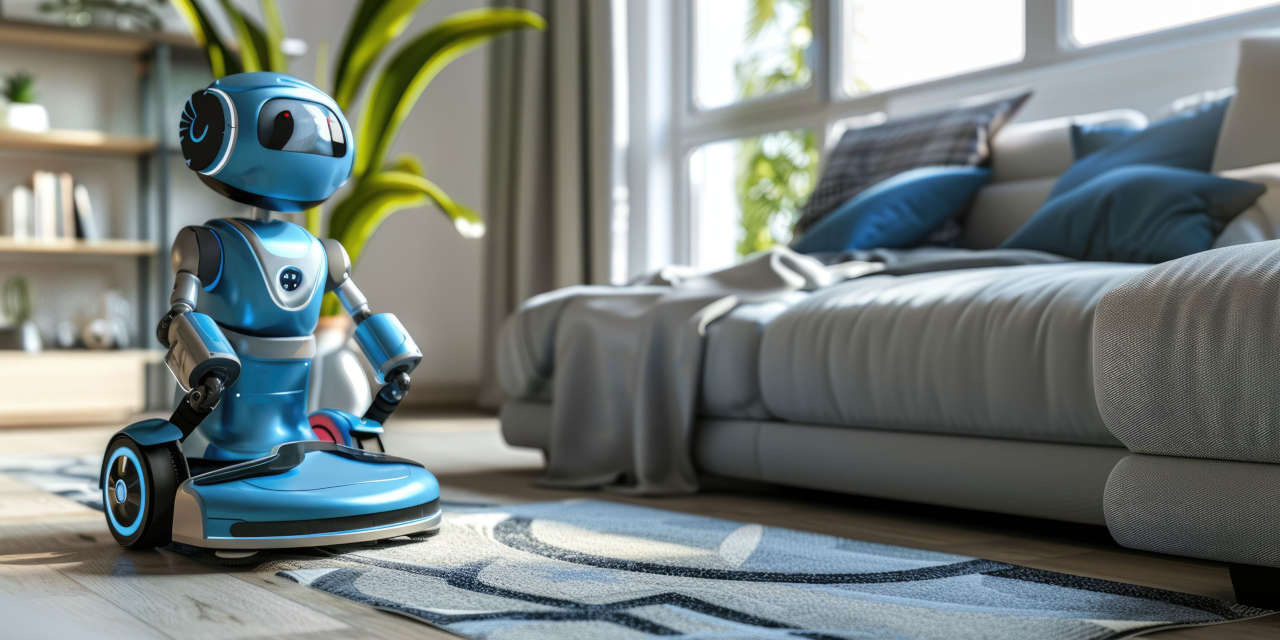
Instead, the opportunity is to look at all the work that surrounds care: cleaning floors, moving supplies, transporting meals, handling routine deliveries, and maybe even helping residents get from one part of a large community to another.
This is the kind of work that has to happen, but it does not always require a human being to do every step.
Steve brings up seeing floor-cleaning robots all over the Minneapolis airport late at night. Justin says that kind of application makes sense in senior living, too. Pushing a vacuum up and down hallways for hours is hard, repetitive work. It is also not necessarily the best use of a staff member’s time when that same person could be interacting with residents in more meaningful ways.
That is the real promise of robotics.
Not less humanity.
More room for humanity.
From The Airport To The Senior Living Community
One of the more intriguing examples Justin shares comes from Japan, where he saw autonomous wheelchairs being used in airports.
Think of it as an indoor Uber.
A person gets into an autonomous wheelchair, selects a destination, and the chair takes them there. No staff person pushing them. No waiting for someone to be available. More independence. More autonomy.
Steve immediately connects that to senior living.
In many communities, a meaningful percentage of residents need help getting to and from the dining room. In larger campuses, the distance can be enough to keep some residents from going at all. Maybe they are tired. Maybe they do not feel well. Maybe the trip just feels like too much.
Now imagine a resident being able to request a ride from their apartment to the dining room.
That could change more than transportation. It could change participation. It could change social connection. It could change whether someone eats alone in their room or joins friends for dinner.
That is not a small thing.
The Best Technology Is Not The Point
Justin makes an important point: residents do not choose a community because it has robots.
They choose it because they want community. They want service. They want support. They want to age in a particular way.
So the question is not, “How do we get more robots into buildings?”
The question is, “How do we use technology to protect and expand what matters most?”
If a robot vacuums the hallway, the resident experience does not necessarily change. But if that frees a housekeeper to spend five more minutes in a resident’s apartment, talking with them instead of rushing to the next task, the experience absolutely changes.
That is where this conversation becomes bigger than robotics.
It is about whether senior living leaders can stop treating staffing shortages as a problem to endure and start treating them as a reason to redesign work.
The future of senior living will still be deeply human.
But some of the best human moments may happen because a robot is quietly doing the dull, dirty, dangerous, or duplicative work in the background.