
By Rebecca Wiessmann
In this episode of Tech Tuesday, Steve talks with Patrick Tarnowski, CCO of OneStep, about gait tracking, fall risk, mobility, and why the way people walk may be one of the most overlooked health indicators. Watch the full livestream here.
There is a huge problem in senior living that almost everyone understands … falls are devastating.
They are devastating for residents, families, care teams, operators, and insurers. A fall can change everything in a moment. It can mean a hospitalization. It can mean a move to a higher level of care. It can mean a loss of confidence that is almost impossible to get back.
And yet, for all the technology senior living now has access to, much of fall prevention still happens too late.
Patrick Tarnowski believes there’s a missing piece.
It is not another wearable. It is not another complicated piece of hardware. It is something most communities already watch every day but don’t truly measure: how residents walk.
Gait Is More Than Walking
Steve starts with the obvious question: What exactly is gait?
Patrick explains that gait is simply how we walk and move from one place to another. But simple does not mean small.
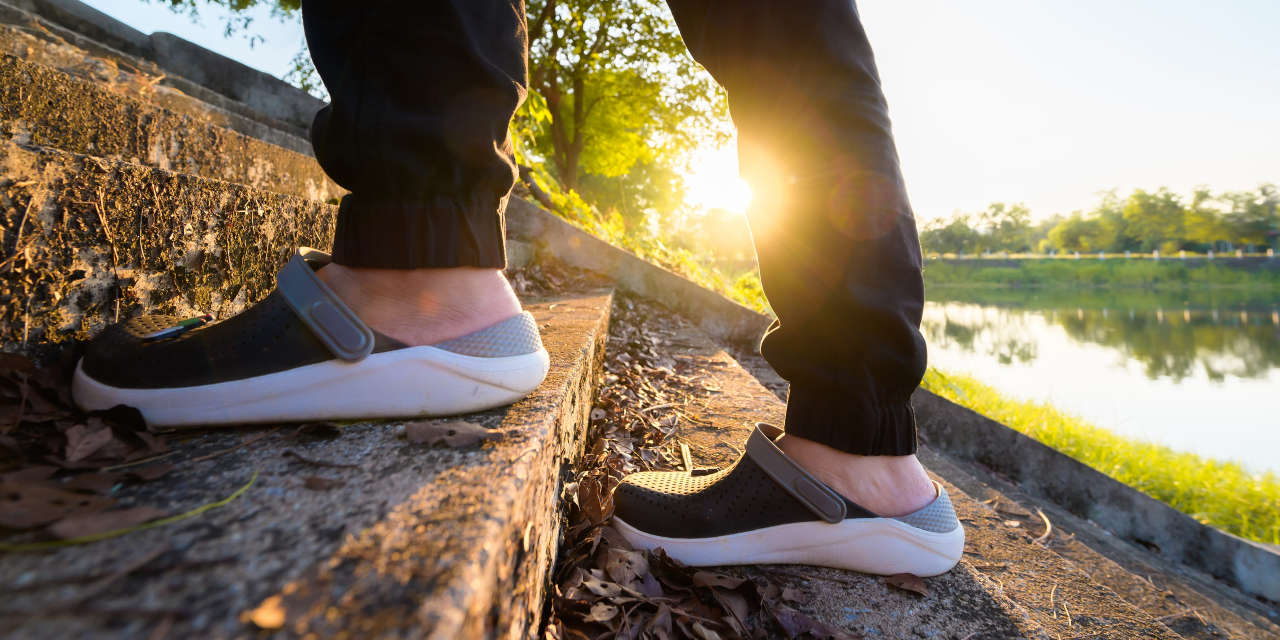
Walking is wildly complex. It involves the brain, muscles, joints, balance, breathing, energy, confidence, cognition, and even medication changes. When something changes in how a person moves, it may signal something bigger.
Patrick calls gait a leading indicator of health. That matters because senior living is trying hard to move from reacting to predicting. The industry is collecting more data than ever, but the question is still the same: Can we see a problem before it becomes a crisis? With gait, the answer may be yes.
Patrick shares that subtle changes in walking speed can correlate with increased risk of falls, hospitalization, heart disease, and even mortality. A small decline in walking speed may not look dramatic to the naked eye, but clinically, it can be meaningful. That is the point. The change may be visible in the data before it is obvious to the care team.
From Eyeballing to Objective Data
Traditionally, mobility has been measured in awkward ways …
A clinician marks off a distance, starts a stopwatch, watches the person walk, does the math, and makes a judgment. Or, at the other extreme, a person is evaluated in an expensive gait lab that is impractical for day-to-day use in senior living. Neither option solves the real problem.
Senior living doesn’t just need to know how someone walks in a clinic when they know they are being watched. It needs to know how someone moves in real life. That is where OneStep comes in.
Patrick says OneStep turns smartphones into clinical-grade gait and mobility labs. A resident can walk with a phone in a pocket or pouch, and the software captures data on how they move. It can be used for a quick assessment — for example, during “Measurement Monday” or “Testing Tuesday” — or it can run passively when a resident has the app on their own phone.
This is important because people do not always move the same way under observation. They may walk carefully in front of a therapist. They may move differently in their apartment, down the hallway, or on their way to dinner.
That natural movement may tell a more complete story.
The Power of Two Weeks
The most striking part of the conversation is Patrick’s statement that OneStep can often see mobility decline as early as two weeks before a fall occurs.
That is a big deal. In senior living, two weeks means time. Time to review medications. Time to check hydration. Time to look at shoes, flooring, lighting, assistive devices, balance, fear of falling, and therapy needs. Time to intervene before the fall happens.
Patrick says OneStep is now deployed in more than 500 senior living communities, and partners report falls are down by roughly 23% to 25%.
As always, Steve pushes on what happens next. Data by itself does not solve anything. A dashboard that says “fall risk is up” is only useful if the community knows what to do with it.
Patrick compares it to blood pressure. If blood pressure rises, the care team does not simply stare at the number. They ask why. Is it diet? Medication? Fluid retention? Stress? Something else? Gait data should work the same way.
If the resident’s risk changes, the team can look more closely. Has walking speed changed? Has balance changed? Is there more sway? Is fear of falling increasing? Is the resident taking longer to stand up from a chair? Is there a cognitive load issue?
The goal is not to restrict life … the goal is to target the right intervention.
Please Do Not Solve This With a Wheelchair
One of the most important moments in the conversation comes when Steve raises a philosophical concern.
What happens when technology identifies risk, and the easiest response is to limit the resident’s life?
Steve gives the example of a resident whose fall risk increases. The wrong response would be, “Fine, then we will just put them in a wheelchair.”
That may reduce one kind of risk, but it creates another kind of loss. This is where senior living has to be careful. Technology should not become a tool for making life smaller. It should help people live more fully, more safely, and with more confidence.
Patrick’s answer is encouraging. He says senior living leaders are increasingly looking at the whole resident — medications, nutrition, comorbidities, function, mobility, and other data points — to build a more complete care path.
That is where gait data becomes powerful. Not as a standalone alarm. As part of a larger picture.
One Less Thing, Not One More Thing
Steve also raises another issue every operator understands: technology fatigue. Senior living is drowning in point solutions. There is app fatigue. Alert fatigue. Dashboard fatigue. “One more thing,” fatigue.
Patrick gets it. In a previous health system role, his team literally kept a “one more thing” file — tracking every new click, requirement, or workflow added to staff. The list got ridiculous.
His point is that new technology has to become “one less thing.” That means integration matters. OneStep is designed to live inside the EMR rather than becoming yet another disconnected tool staff has to chase. That matters because even great technology fails when it doesn’t fit into a community’s real workflow.
This may be one of the biggest lessons for senior living tech companies … cool is not enough; useful is not enough. If it is hard for the team to use, it will not survive.
The Bigger Opportunity
The conversation keeps coming back to one simple idea: mobility is central to health.
- It affects independence
- It affects confidence
- It affects length of stay
- It affects value-based care
- It affects whether a resident remains in the setting they chose
For senior living operators, this is not just a clinical issue. It is an occupancy issue, a staffing issue, a family satisfaction issue, a liability issue, and a quality-of-life issue.
The best version of this technology does not say, “We found risk, so let’s shut things down.” It says, “We found risk early enough to do something smart.”
That is the opportunity.
Senior living does not need more data just for the sake of data. It needs the right data — the kind that helps teams act sooner, act better, and help residents keep living their lives.
Gait may be one of those missing pieces. And maybe, as Patrick suggests, it is time to start treating how we move like another vital sign.