
By Rebecca Wiessmann
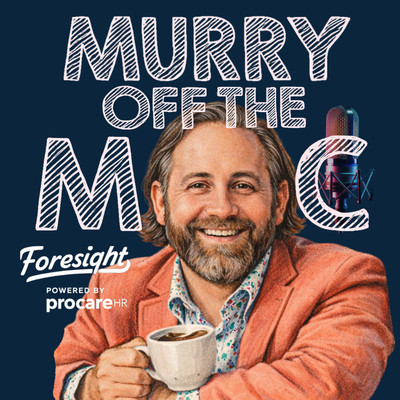
In a Tech Tuesday conversation, Steve sits down with Neal K. Shah, the CEO of CareYaya, to explore a deceptively simple idea: technology should scale human connection, not replace it.
It’s an episode that starts with a headline-grabbing title — “America’s Chief Elder Officer” — and quickly turns into a serious discussion about workforce shortages, the economics of home care, and why “relational care” matters more than the checklist.
The “Chief Elder Officer” Idea Is A Marketing Hack — And A Movement
Neal doesn’t pretend the title is conventional. He calls it a marketing hack — a fast way to signal what he’s about. But he also frames it as aspirational: society is aging fast, the care workforce isn’t keeping up, and the issue deserves more policy attention and more innovation.
He argues that aging is one of the largest, most under-focused realities in the country — despite the size of the older population and the resources tied to it. In his view, the U.S. needs the equivalent of a national-level role that takes aging and caregiving seriously, not just as a social issue but as an economic and workforce challenge.
From Hedge Funds To Caregiving
Neal’s origin story isn’t “lifelong health care guy.” It’s finance.
He describes coming from a middle-class background, attending the University of Pennsylvania, and shifting from computer science to finance after the dot-com bubble burst. In his 20s and early 30s, he built a career in hedge funds — eventually launching his own fund and growing it substantially.
Then life hit.
He became deeply involved in caregiving for his grandfather through dementia and other serious health challenges and later became the primary caregiver for his wife through a multi-year cancer battle. Those experiences have reshaped how he thinks about time, impact, and what “work” is for.
He wound down his fund, stepped fully into caregiving, and then turned his attention to building something that could make care easier for other families.
The Broken Economics Of Home Care
Neal describes the home care market as massive — but structurally broken.
He points to a user experience that often feels like a bad deal for everyone: families pay premium rates, caregivers receive a fraction, and quality can be inconsistent. He argues that when a large portion of the hourly rate goes to the agency’s overhead and acquisition costs, the person doing the work isn’t rewarded — and the family still feels like they’re rolling the dice.
He also describes why so many families move to the “gray market”: hiring directly through personal networks or online listings, managing vetting and scheduling themselves, and hoping nothing goes sideways. That path can work, but it creates friction and risk — and families often end up becoming unpaid care coordinators on top of everything else they’re already doing.
Relational Care Over Task Completion
Steve brings the discussion home with his own reality as a family caregiver. His almost-93-year-old stepfather lives in a small, high-end community and needs more one-on-one socialization than the community can realistically provide. Steve describes paying someone directly — “gray market style” — not for medical care, but for companionship: conversation, outings, waffles, football talk, human presence.
Neal lights up at that example because it illustrates what he believes the industry underprices and under-measures: the relational aspect of care.
He references “Who Cares: The Hidden Crisis of Caregiving, and How We Solve It” by Emily Kenway, noting that caregiving is often defined as tasks completed rather than the lived experience of the person receiving care. In Neal’s framing, care isn’t just what got done — it’s how someone felt while it was happening.
Why Students Are The Secret Workforce
CareYaya’s core model is straightforward: connect older adults who need help and companionship with healthcare-track college students who want meaningful experience.
Neal’s argument is that this labor pool is overlooked because it doesn’t fit the traditional home care staffing model. Students generally can’t do 40 hours a week as a long-term career, but they can do flexible shifts — and they’re often highly motivated, mission-driven, and incentivized to show up and do a great job because they want recommendations for medical school, PA school, nursing programs, or other clinical paths.
He also emphasizes incentive alignment: students want experience; families want reliability and connection; and the model is designed to reduce friction through technology — scheduling, vetting, background checks, and ongoing matching — without the “half the money disappears before it reaches the caregiver” problem.
Senior Living As The Next Frontier
Neal says CareYaya currently operates primarily as a consumer platform — adult children booking support for parents at home — but he’s increasingly seeing demand from families with loved ones already living in senior living communities who want supplemental one-on-one engagement and support.
He signals that partnerships with operators are a major strategic priority for 2026 and makes a striking claim: in some markets, CareYaya has more student caregivers available than it has families booking hours, largely because the company’s growth is driven by organic awareness rather than heavy advertising.
He also discusses research-oriented collaborations, including work supported by National Institutes of Health funding.
Yaya Bear And The Idea Of Tech That Brings People Together
One of the most intriguing parts of the conversation is Yaya Bear, which Neal describes as a voice-AI-powered soft teddy bear designed to spark meaningful life-story conversations.
He frames it not as “AI replaces companionship,” but as “AI helps structure and unlock it.” A student can bring the bear into visits, engage alongside the older adult, and over time, the conversations help capture life stories that can be shaped into a narrated autobiography. The idea is less gadget and more catalyst — a tool that helps two humans talk better and go deeper.
A Moonshot: Build A Tech-Native Community
Near the end, Neal shares a big, spicy idea for senior living: don’t just sell tech into communities — build a community that is tech-native from the start.
He references General Catalyst and its approach to health care, arguing there’s a similar opportunity in senior living: buy or build one community and “run it backwards,” integrating technology as the operating philosophy rather than bolt-on tools.
To frame the mindset, he points to “Ask Your Developer” by Jeff Lawson and the essay “Software Is Eating the World” as influences — not as slogans, but as a call to redesign the experience from first principles.





Wanted to share your article, but could only do so …after hitting SHARE, by signing up through Google to Gemini and gmail. I wanted to do this simply. The old way. ….. Hit share. Connect to my email, through which I received your article. Fill in address. Send.
If you are going to make it more difficult, I am sure fewer readers will expand your reach.
Hi Cynthia
Good point. I have sent your comment off to our team to figure out a better way. That being said, one of the things that is on our near term roadmap is a brand new website that will have a bunch of new features and be more user friendly.
Steve